The school year seems to fly by, and before you know it, you’re looking at a wide-open summer calendar. As parents, we want those months to be filled with more than just screen time and snacks. We want our children to explore, laugh, and grow. But when you type how to choose a summer camp near me into your search bar, the number of options can feel overwhelming fast. Do you go for sports? Arts? A mix of everything?
At Buttons ‘N Bows, we understand that finding the perfect fit isn’t just about filling time; it’s about finding a place where your child feels safe, seen, and celebrated. Whether this is your first time sending a little one off to camp or you are a seasoned pro looking for a change, this guide is meant to help you sort through your options and feel more at ease about your choice.
Step 1: Understand Your Child’s Needs
Before you even open a browser tab to start your research, take a moment to look at the little person standing in front of you. Every child is different, and the “best” camp is simply the one that fits your child’s unique personality and stage of development.
Ask yourself a few key questions:
- What are their current interests? Is your child obsessed with dinosaurs? Do they love getting messy with paint? Or do they have boundless energy that needs a physical outlet like swimming or soccer?
- What is their social style? Some children thrive in large, energetic groups, while others need a quieter, more intimate setting to feel comfortable opening up.
- What is their stamina? A full-day program might be perfect for a high-energy five-year-old but overwhelming for a toddler who still needs a solid afternoon nap.
When you focus on your child’s needs instead of just convenience or cost, you are already halfway to making a great decision.
Step 2: What to Look for in a Summer Camp Program
Once you have a sense of what your child needs, it’s time to dig into the details. Knowing what to look for in a summer camp program can turn a confusing list of options into a manageable shortlist.
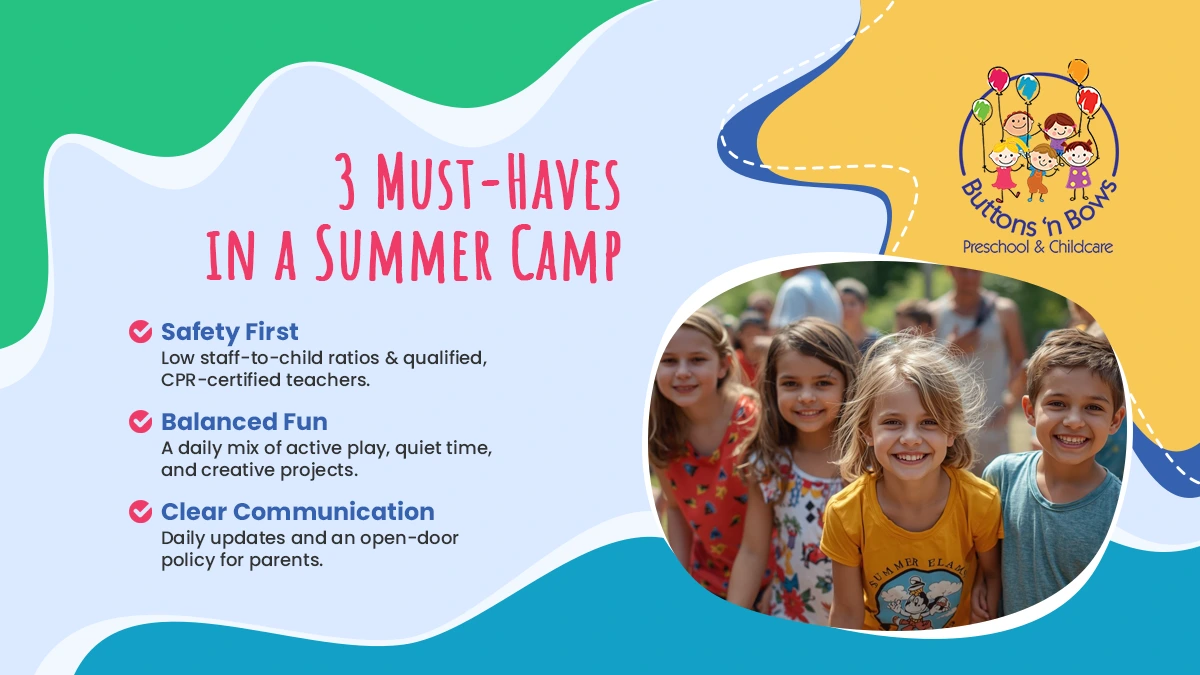
1. Safety and Supervision
This one really isn’t optional. You want to know your child is genuinely safe and cared for. Look for programs that are transparent about their safety protocols.
- Staff-to-Child Ratio: Low ratios ensure that your child gets the attention they need. In a chaotic environment with too few adults, shy children can get lost in the shuffle, increasing the likelihood of safety incidents.
- Staff Qualifications: Who are the counselors? Are they high school students looking for a summer job, or are they trained early childhood educators? At Buttons ‘N Bows, for example, our summer staff includes our regular school-year teachers who are CPR/First Aid certified and trained in child development.
- Physical Safety: If the camp includes transportation (e.g., field trips), ask about car seats and driver vetting. We use federally approved 5-point harness seats because road safety is just as important as classroom safety.
2. A Balanced Daily Schedule
Children thrive on routine, even in the summer. A great camp program shouldn’t be a free-for-all. Look for a schedule that balances structured activities with open-ended play.
- Active vs. Quiet Time: Does the camp offer downtime? Constant stimulation can lead to burnout and meltdowns. A good program will mix high-energy games with quieter activities like storytelling, yoga, or art.
- Indoor vs. Outdoor: Summer is for soaking up the sun (safely!), but having a cool indoor space is crucial on scorching July afternoons.
3. Clear Communication
You shouldn’t have to guess what your child did all day. A quality program views parents as partners. Look for camps that have clear channels for communication, whether that’s a daily app update, a weekly newsletter, or an open-door policy that lets you chat with the director at drop-off.
Step 3: Finding the Best Summer Camp for Young Children
If you are looking for the best summer camp for young children (toddlers through preschoolers), your criteria should look a little different from those for a teenager.
For our youngest campers, “specialty” camps that focus on just one skill (like only soccer or only coding) can sometimes be too intense. At this age, kids learn best when they get to move, touch, try, and explore.
The Power of Thematic Learning
We’ve found that young children engage deeply with weekly themes. One week might be “Under the Sea,” where they splash in water tables and learn about marine life. The next might be “Space Explorers,” building cardboard rocket ships.
This approach keeps things fun without asking kids to be ‘good’ at anything yet. It allows children to try a little bit of everything: art, science, movement, and music, all wrapped up in a fun, imaginative package.
Emotional Support and Transitions
For many little ones, summer camp might be their first experience with drop-off care. The right program for this age group will prioritize social-emotional support.
- Warmth and Affection: Do the teachers get down on the child’s eye level? Do they offer comfort when a child is sad?
- Separation Strategies: Ask the director how they handle separation anxiety. A good response should be compassionate and experienced, not dismissive.
Step 4: Summer Camp Program Comparison: Logistics Matter
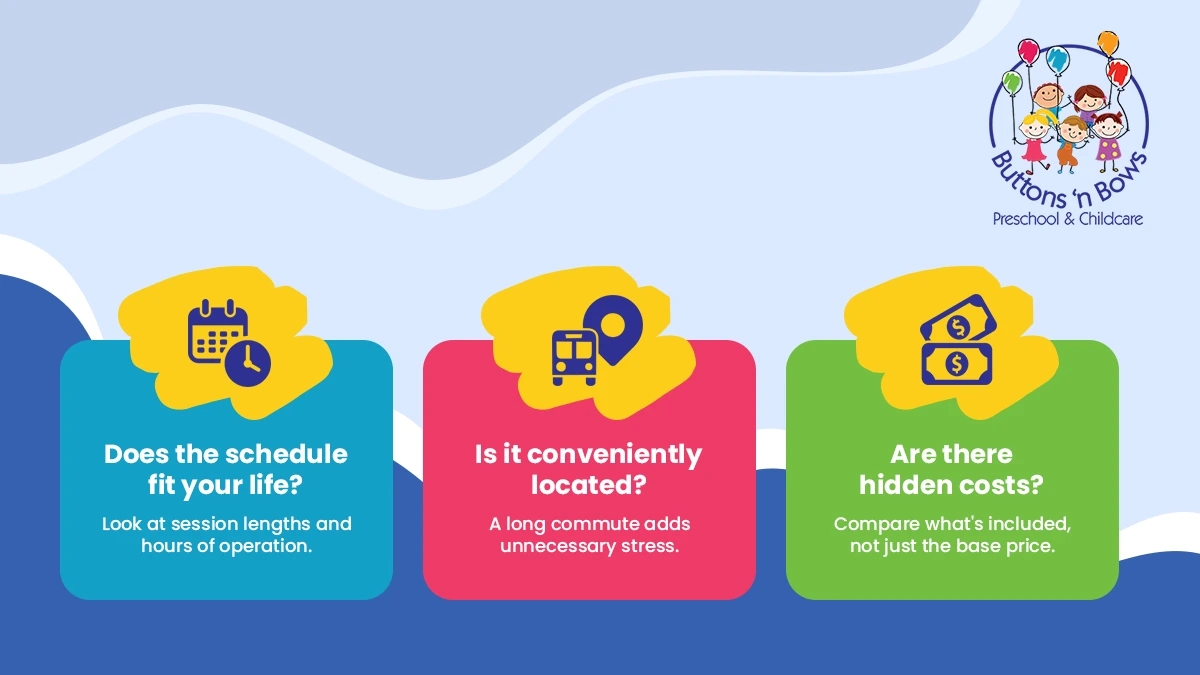
Let’s be honest: practical logistics play a huge role in your decision. When comparing summer camp programs, you have to consider how each camp fits into your family’s life.
Flexibility is Key
Summer schedules can be erratic. You might have a family vacation booked for mid-July or grandma visiting for a week in August.
- Session Lengths: Does the camp require you to sign up for the full eight weeks, or can you pick and choose? We offer flexible options (1 to 5 days a week) because we know life happens.
- Hours of Operation: If you work 9-to-5, a camp that runs 9-to-12 isn’t going to work without piecing together extra childcare. Look for programs that offer full-day care or extended hours that match your workday.
Location and Convenience
The “best” camp isn’t the best for you if it requires a 45-minute commute each way. Look for a camp that is convenient to your home or office. This minimizes stress during the morning rush and ensures you can get there quickly if your child needs you.
All-Inclusive vs. Add-Ons
When comparing costs, make sure you are comparing apples to apples.
- Hidden Fees: Does the tuition cover everything? Some camps charge extra for field trips, t-shirts, lunch, or before- and after-care.
- What’s Included: A slightly higher upfront cost might actually be a better value if it includes meals, snacks, and all activity materials.
Step 5: The “Vibe Check”: Visiting in Person
You can read every brochure and scroll through every website, but nothing replaces a physical visit. Once you have narrowed down your list using the criteria above, schedule a tour.
When you walk in, pay attention to the atmosphere:
- The Sound: Do you hear laughter and chatter? A silent center is suspicious, but a chaotic, screaming center is stressful. You want to hear the “hum” of busy, happy children.
- The Smell: It sounds funny, but does it smell clean? Cleanliness is vital for keeping stomach bugs at bay.
- The Interaction: Watch how the staff interacts with the children. Are they engaged? Are they smiling? Are they participating in the play, or just supervising from the sidelines?
Pay attention to your first instinct. As a parent, you have an intuitive sense of where your child will thrive. If you walk in and feel welcomed and at ease, chances are your child will too.
Red Flags to Watch Out For
As you research, keep an eye out for these warning signs:
- Vague Safety Policies: If a director can’t give you a straight answer about emergency procedures or background checks, walk away.
- High Staff Turnover: If the camp has a completely new staff every few weeks, it’s hard for children to form secure attachments.
- Lack of Structure: “Free play” is wonderful, but 8 hours of unstructured time can lead to boredom and behavioral issues. Children need a rhythm to their day.
Create Unforgettable Summer Memories at Buttons ‘N Bows

Picking the perfect summer camp is a big moment for your family, but it doesn’t need to feel daunting, especially when you know what to look for. At the end of the day, you want a place where your child can giggle their way through sun-soaked adventures, discover new talents, and build real friendships.
That’s exactly what we do at Buttons ‘N Bows.
Here, camp isn’t just a place to pass the time. Each week is a brand-new adventure, one day your child might be getting creative with arts and crafts, the next they’re a budding scientist with a hands-on STEM experiment, and by Friday, they’re cooling off with epic water play in our outdoor splash area. Our imaginative weekly themes keep things fresh and fun, while special field trips (think: aquariums, museums, and local parks) guarantee lasting memories and stories at your dinner table.
We know families are juggling a lot, so flexibility is built in. Need just a couple of days a week, or a full schedule for a summer of wonder? Prefer a half or full day? We’ve got you covered. And thanks to our friendly, experienced teachers and extra-safe practices (like five-point harness seats for every field trip), you can relax knowing your child is in caring hands.
Buttons ‘N Bows is more than a camp; it’s a summer filled with laughter, creativity, and true connection. Come take a tour, meet our team, and see why so many families come back year after year. Let’s make this summer your child’s “best one ever.” We can’t wait to welcome you!
Ready to Join the Fun?
We are always happy to answer more questions and help you figure out the best schedule for your family. If you’re local to Holladay or Cottonwood Heights, come by for a tour! Seeing the smiles on our campers’ faces is the best way to answer the question of whether it’s all worth it.
Here’s to a sunny, happy, and adventure-filled summer!