Choosing a preschool feels like one of the first big “parenting tests,” doesn’t it? You’re scrolling through websites late at night, drowning in terms like “Montessori,” “Reggio,” and “Play-Based,” wondering which one will help your child thrive. It’s overwhelming. How do you actually measure one program against another?
At Buttons ‘N Bows Preschool and Childcare, we understand the pressure. We’ve guided hundreds of families through this process in our 40+ years of serving the Holladay and Cottonwood Heights communities.
We believe that finding the “perfect” school isn’t about choosing the most expensive one or the one with the trendiest toys. It’s about finding a curriculum that truly supports your child’s development and individual strengths. This guide is designed to cut through the noise. We’ll help you understand how to look under the hood of different programs so you can compare them with confidence and clarity.
Why Comparing Preschool Curriculum Matters
It’s easy to think that preschool is just “glorified babysitting,” but science says otherwise. The experiences your child has between birth and age five build the foundation for all future learning.
Comparing curricula isn’t just about academics; it’s about understanding the daily rhythm of your child’s life. A curriculum dictates:
- How conflicts are handled: Does the teacher intervene immediately, or guide children to solve it themselves?
- How learning happens: Is it through worksheets and drills, or through messy, hands-on experiments?
- How independence is fostered: Are children told what to do, or are they given choices?
When you take the time to compare programs, you aren’t just picking a school; you are choosing the environment that will shape your child’s social skills, emotional resilience, and love for learning.
Types of Preschool Curriculum
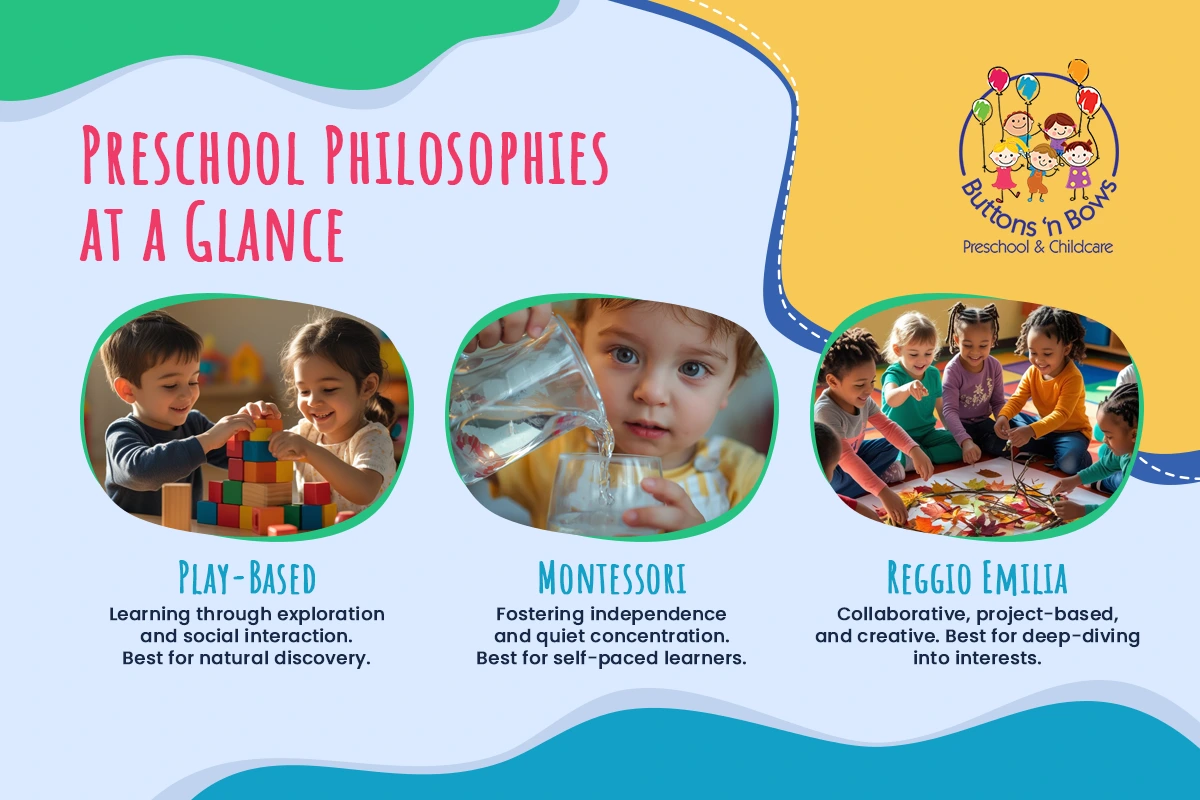
Before you can compare effectively, you need to know what you are looking at. Most schools lean toward one of these primary teaching methods, and knowing these terms helps you ask better questions when comparing preschool teaching methods.
1. Play-Based (Developmental)
This is the most common approach in the U.S. The philosophy here is that children learn best when they are following their own interests. The classroom is set up with “stations” (blocks, dramatic play, reading nooks). Teachers facilitate learning by interacting with children during play, rather than leading a lecture.
- Best for: Children who need freedom to explore and learn social skills naturally.
2. Montessori
Montessori programs focus on independence and individual pacing. Children choose activities from a set of specific, self-correcting materials and work on them for long, uninterrupted periods. The teacher acts as a quiet observer and guide.
- Best for: Children who enjoy order, quiet concentration, and doing things “by themselves.”
3. Reggio Emilia
This approach views the child as a capable citizen with rights. It is project-based and highly collaborative. The curriculum is emergent, meaning it changes based on what the students are currently interested in. If the class finds a spider, the next month might be spent studying webs and insects.
- Best for: Creative, expressive children who thrive on deep-dive projects and artistic expression.
Why Buttons ‘N Bows Shines: The Creative Curriculum & Thematic Learning in Action
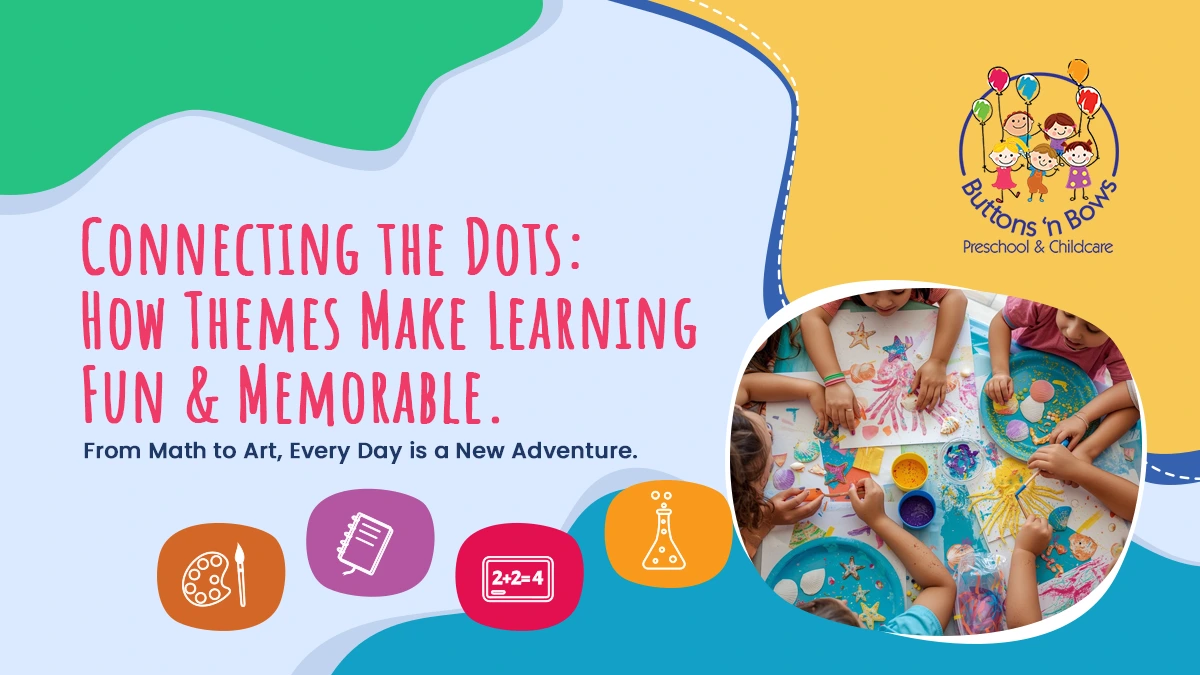
When it comes to choosing a preschool, Buttons ‘N Bows truly distinguishes itself through a passionate commitment to The Creative Curriculum, seamlessly blended with rich thematic and integrated activities. This isn’t just a label; it’s a cornerstone of the BNB experience and philosophy.
At Buttons ‘N Bows, the Creative Curriculum means that learning is never passive or generic. Children are invited to be active participants, exploring their world with all their senses and natural curiosity. Teachers set up thoughtfully designed classrooms where every corner is an opportunity for discovery: sensory bins, building stations, art corners, and plenty of hands-on experiments. Kids are encouraged to make choices, try new things, and express themselves as they interact with diverse materials and ideas.
Themes, like seasons, community helpers, or ocean life, tie each day’s learning together, making concepts more memorable and fun. Math, science, art, language, and social skills are interwoven throughout the day, ensuring every child can connect new knowledge to real experiences.
This approach is more than just engaging; it’s genuinely individualized. Teachers observe each child closely, adapting the curriculum to match their interests, strengths, and challenges. Through this hands-on and child-centered model, Buttons ‘N Bows helps every student build confidence, independence, and a lifelong love of learning.
- Best for: Children who thrive on making connections, enjoy variety, and benefit from a carefully balanced blend of structure, creativity, and exploration.
Key Factors to Consider When Comparing Curriculum
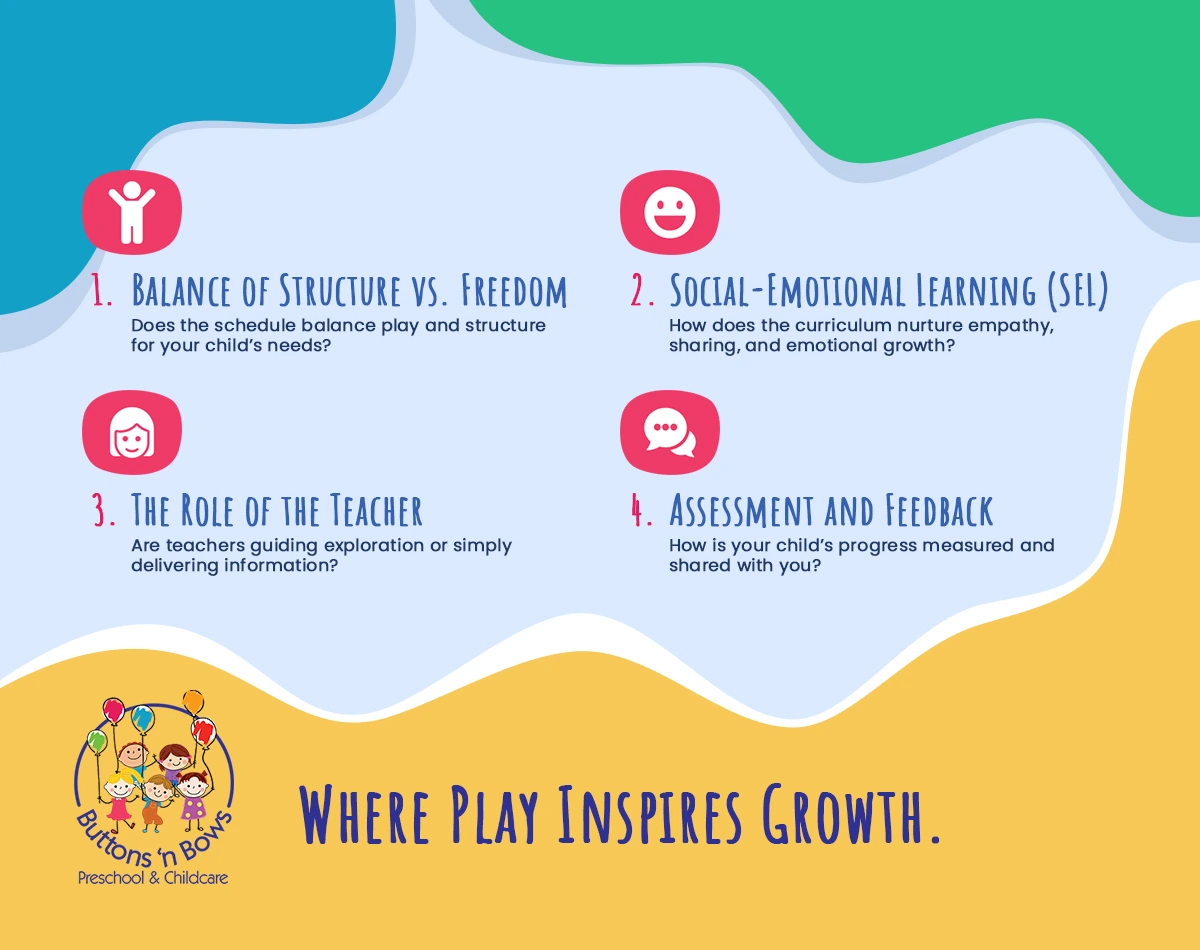
Now that you know the types of preschool curriculum, how do you weigh one against the other? When you tour a facility or read a brochure, look past the colorful walls and focus on these critical factors.
1. Balance of Structure vs. Freedom
Every child needs a different mix. Some thrive in highly structured environments where they know exactly what happens next. Others wilt under too many rules and need space to roam.
- Ask yourself: Does this schedule allow enough time for my child to get lost in play? Is there enough structure to help them feel secure?
- At Buttons ‘N Bows, we balance consistent routines with flexibility. Children benefit from the security of a daily structure, while our hands-on and thematic activities let them investigate and choose within that framework.
2. Social-Emotional Learning (SEL)
The best preschool curriculum for child development prioritizes emotional intelligence over academic rote memorization. Can the curriculum explain how they teach empathy, sharing, and identifying emotions?
- Ask the director: “How do you handle it when two children want the same toy?” or “How do you support a child who is having a hard drop-off?”
- At Buttons ‘N Bows: The Creative Curriculum’s focus on social-emotional growth ensures that children develop the skills to express feelings, cooperate, and resolve conflict respectfully.
3. The Role of the Teacher
Is the teacher the “sage on the stage” delivering information, or the “guide on the side” facilitating discovery? At Buttons ‘N Bows, our teachers are active partners in play. They don’t just watch; they ask open-ended questions like, “What do you think will happen if we add more water to the sand?” This turns simple play into a science lesson.
4. Assessment and Feedback
How will you know if your child is growing? Some curricula use formal testing (which can be stressful for toddlers), while others use portfolios of artwork and observation notes. Look for a school that values progress in all areas, not just who can write their name first, but who is learning to be a good friend.
- At Buttons ‘N Bows, we use individualized assessment and planning to measure each child’s growth across all areas and communicate this progress to parents regularly.
Summer Camp: Thematic, Creative, & Hands-On
It’s not just during the school year that children blossom at Buttons ‘N Bows; our summer camp is an extension of our hands-on, theme-based curriculum. Each week features a fresh theme explored through engaging activities such as songs, storytelling, painting, crafts, science workshops, games, and outdoor adventures.
Depending on the location, children may also participate in STEM exploration and field trips, all while building social skills and curiosity in a fun, dynamic environment.
Finding the Best Fit for Your Child
The goal of choosing a curriculum is not necessarily to find the “best” pedagogical model in existence, but rather the one that aligns with your child’s specific personality and learning style.
When evaluating your options, consider your child’s natural inclinations:
- Kinesthetic Learners: If they enjoy building and tactile exploration, a hands-on, experiential program like The Creative Curriculum often provides the right level of engagement.
- High Energy Levels: For children who are physically active, look for programs that prioritize gross motor activities, such as swimming, yoga, or extended outdoor play.
- Imaginative Thinkers: If they are drawn to storytelling and role-play, a thematic, play-based environment can help nurture that creative spark.
At Buttons ‘N Bows, we have spent decades refining our approach to blend hands-on discovery with structured routines and social-emotional focus. Whether your child is a “Jellyfish” toddler or a “Stingray” preschooler, our curriculum is designed to adapt to their unique developmental stage, providing the personalized support they need to thrive.
Why Buttons ‘N Bows is the Perfect Choice for Your Child
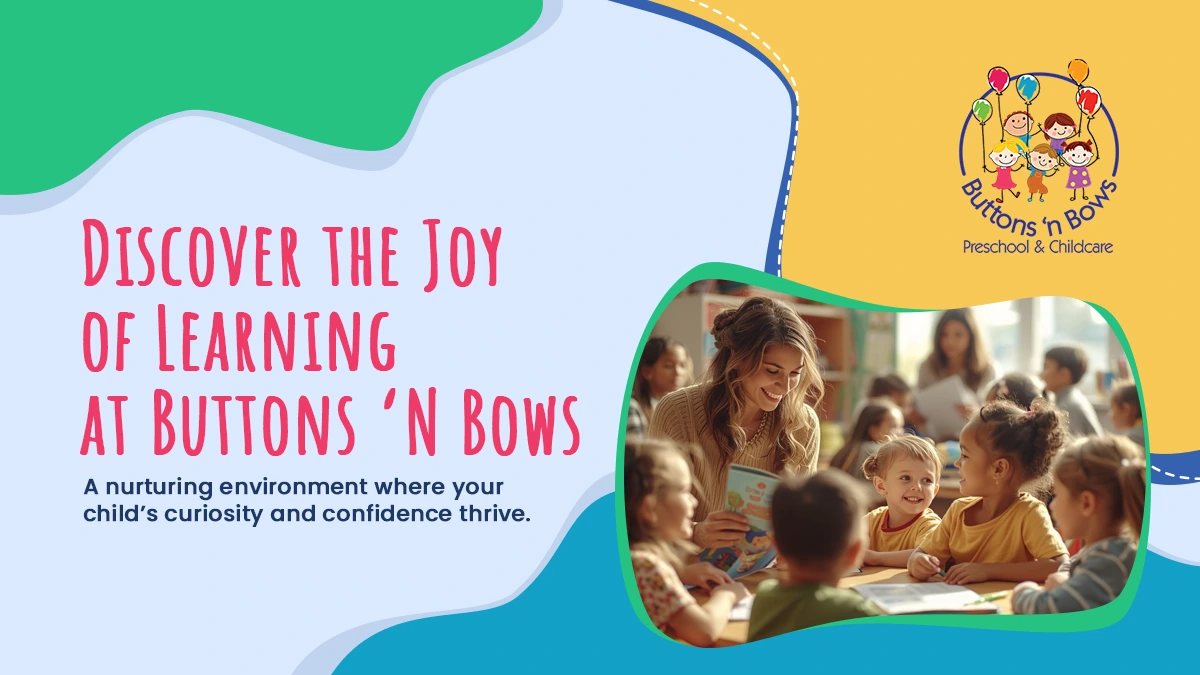
While research, checklists, and comparisons are important, nothing replaces your own sense of what feels right for your family. As a parent, your intuition is a powerful guide. When you tour a preschool, you should feel the warmth in the air: the buzz of happy children, the encouragement from attentive teachers, and the genuine smiles of staff who clearly love what they do.
At Buttons ‘N Bows, we take immense pride in creating a nurturing, welcoming environment where every child is celebrated for who they are. Walk into any of our classrooms, and you’ll see children deeply engaged in discovery, building, painting, singing, experimenting, and collaborating both indoors and out. Our teachers go above and beyond, blending expertise with heart to foster meaningful connections and inspire curiosity every single day.
With our hands-on, exploratory curriculum powered by The Creative Curriculum, your child doesn’t just “do activities”; they build confidence, develop social-emotional skills, and gain a lasting love for learning.
If you’re eager to see our joyful environment and dynamic teaching firsthand, we warmly invite you to visit. Come discover why so many families trust us to help their children flourish from the very start.