Preparing to send your little one off to preschool in 2026? We know it’s a major milestone, one that often brings a mix of excitement, a little bit of anxiety, and a lot of hope. You want to feel confident that while you’re at work or managing life’s other responsibilities, your child is not only safe and happy, but also genuinely learning and growing.
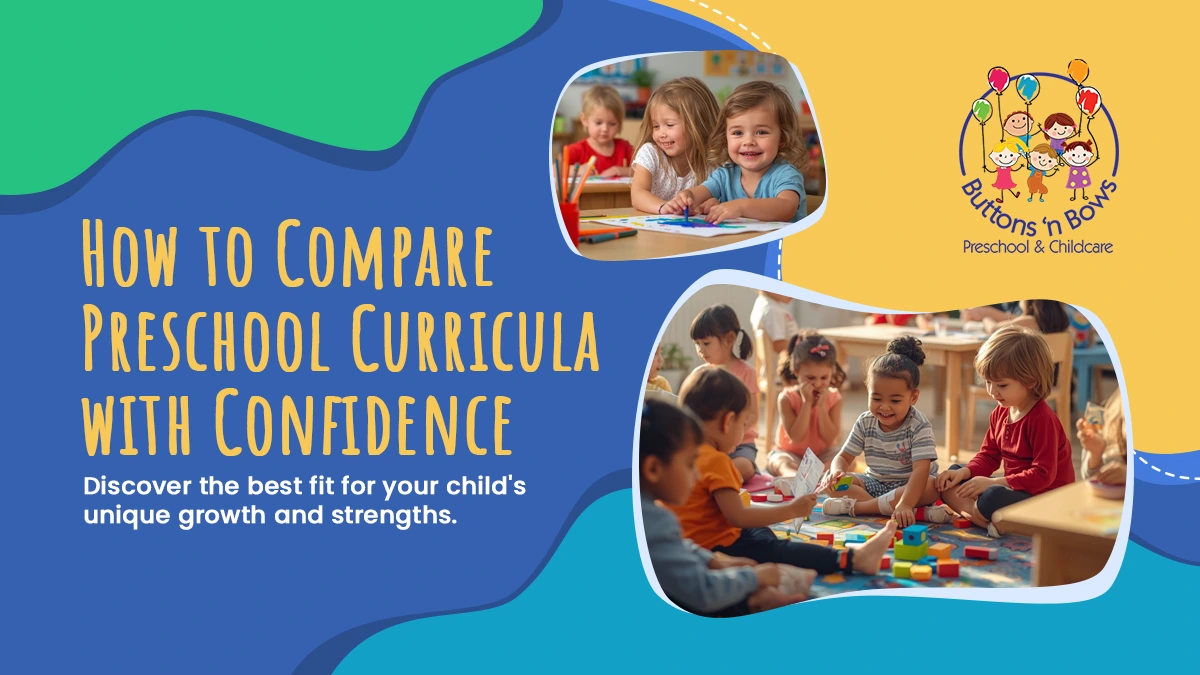
At Buttons ‘N Bows Preschool and Childcare, we often hear the same questions from parents touring our Holladay and Cottonwood Heights locations: “What will my child actually do all day?” or “Is it just playing, or are they learning real skills?”
These are fantastic questions. They strike at the heart of what early childhood education is all about: the curriculum.
Understanding what a preschool curriculum looks like, why it matters, and how to spot a good one can transform your search for childcare from a stressful chore into an empowering decision. Let’s dive deep into the world of early learning to help you make the best choice for your family.
Why Does Preschool Curriculum Matter?
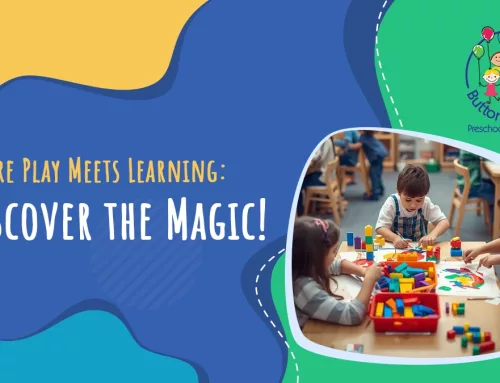
You might wonder if a “curriculum” is really necessary for a three-year-old. Isn’t childhood about free play and fun? Absolutely! But in early childhood education, fun and learning are not opposites; they are partners.
A high-quality preschool curriculum isn’t about forcing toddlers to sit at desks and memorize facts. Instead, it is a structured framework that guides how teachers interact with children, set up the classroom, and plan daily activities. It ensures that “play” has a purpose.
Did you know that a child’s brain develops faster between birth and age five than during any other period in their life? During these years, neural connections are forming at lightning speed. A well-rounded curriculum capitalizes on this window of opportunity by providing:
- Social-Emotional Growth: Learning to share, recognize feelings, and play cooperatively.
- Cognitive Development: Building foundations in math, science, and critical thinking through exploration.
- Language Skills: Expanding vocabulary through storytelling, songs, and conversation.
- Physical Development: Refining fine motor skills (like holding a crayon) and gross motor skills (like running and jumping).
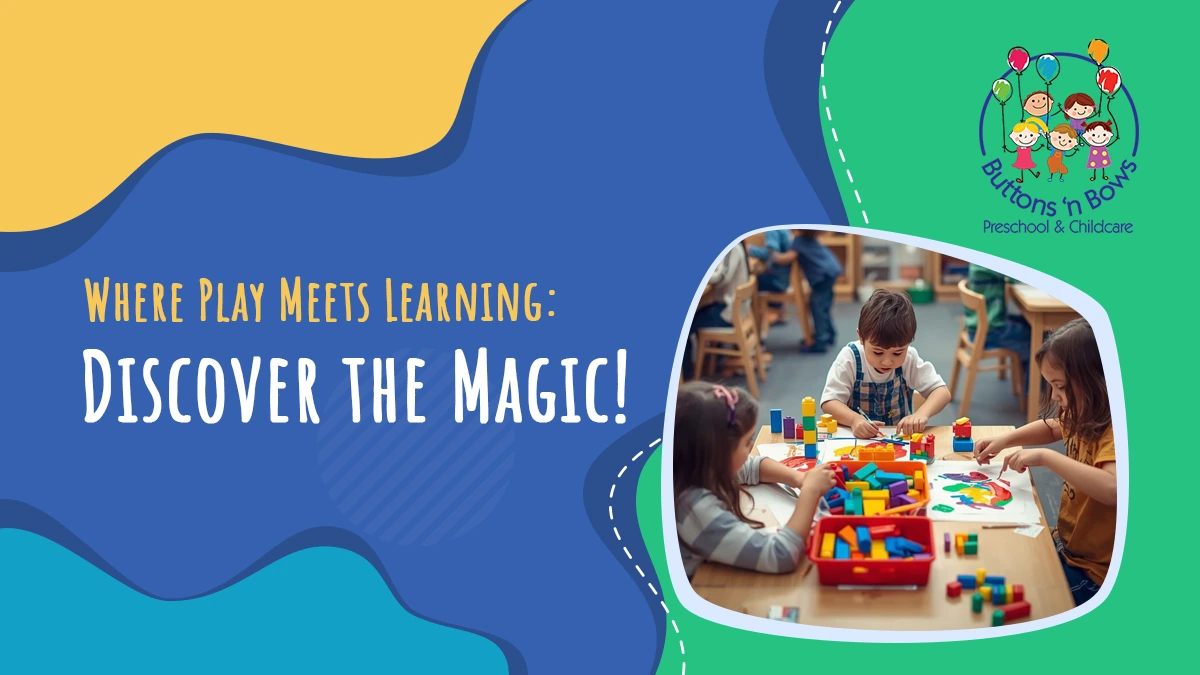
Without a curriculum, a day at preschool might be chaotic or repetitive. With one, every finger-painting session and block-building contest becomes a stepping stone for development.
The Building Blocks: What Are the 5 Main Types of Preschool Curriculum
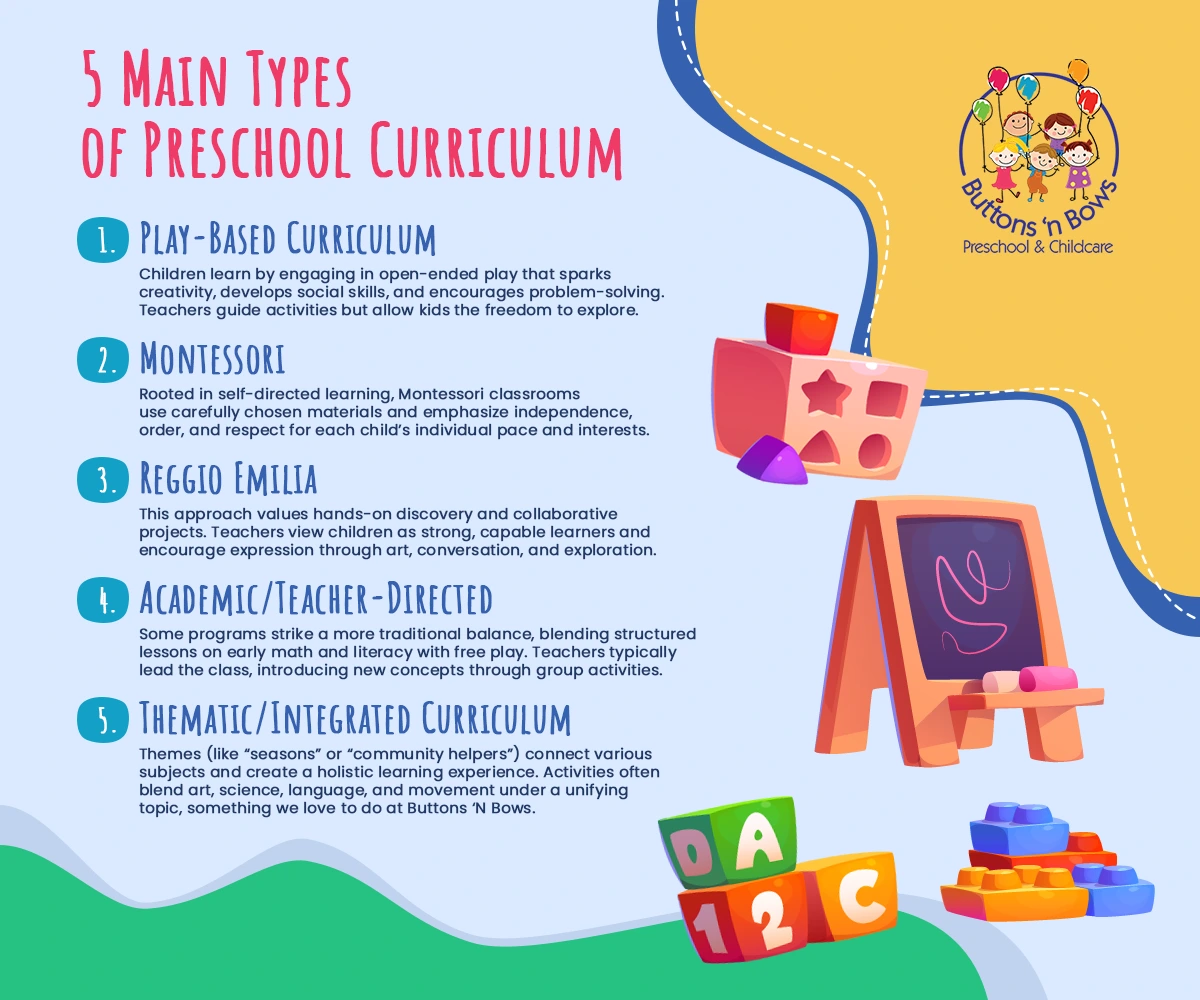
Preschool programs come in many shapes and sizes, each driven by a unique educational philosophy. Understanding the most common types can help you identify what might best suit your child’s learning style and your family’s values.
- Play-Based Curriculum
Children learn by engaging in open-ended play that sparks creativity, develops social skills, and encourages problem-solving. Teachers guide activities but allow kids the freedom to explore.
- Montessori
Rooted in self-directed learning, Montessori classrooms use carefully chosen materials and emphasize independence, order, and respect for each child’s individual pace and interests.
- Reggio Emilia
This approach values hands-on discovery and collaborative projects. Teachers view children as strong, capable learners and encourage expression through art, conversation, and exploration.
- Academic/Teacher-Directed
Some programs strike a more traditional balance, blending structured lessons on early math and literacy with free play. Teachers typically lead the class, introducing new concepts through group activities.
- Thematic/Integrated Curriculum
Themes (like “seasons” or “community helpers”) connect various subjects and create a holistic learning experience. Activities often blend art, science, language, and movement under a unifying topic, something we love to do at Buttons ‘N Bows.
No single approach is “best,” but understanding these options can clarify what feels like the right fit for your child.
Our educational philosophy weaves together the best aspects of these curriculum types, emphasizing thematic learning, hands-on exploration, and a blend of guided and child-initiated activities. This approach allows us to meet each child where they are and nurture a genuine love for learning that’s at the heart of every classroom at Buttons ‘N Bows.
The Buttons ‘N Bows Approach: Our Creative Curriculum Explained
At Buttons ‘N Bows, we believe that children learn best when they are active participants in their own education. Our philosophy centers on developmentally appropriate practice. This means meeting children exactly where they are, whether they are a “Guppy” at 6 weeks old or a “Stingray” in preschool, and helping them grow through methods that fit their age and stage.
Here is a closer look at the pillars of our curriculum and how they benefit your child.
1. Hands-On, Experiential Learning
Children are natural scientists. They want to touch, taste, smell, and manipulate the world around them. We don’t just tell a child that ice is cold; we let them hold an ice cube and watch it melt. We don’t just talk about plants; we dig in the dirt and plant seeds.
This hands-on approach builds deep understanding. When a child builds a tower of blocks, they are learning physics (balance and gravity) and math (shapes and counting). When they mix blue and yellow paint to make green, they are learning chemistry and art.
2. Thematic Modules
To keep learning cohesive and exciting, we organize our activities around themes. A theme might be “Under the Sea,” “Community Helpers,” or “Changing Seasons.”
Using a theme helps connect different areas of learning. During “Dinosaur Week,” for example:
- Math: We might count toy dinosaur eggs.
- Literacy: We read books about a baby dinosaur looking for his mum.
- Science: We pretend to be paleontologists digging for “fossils” in the sandbox.
- Art: We make dinosaur footprint art.
This interconnectedness helps children make sense of the world and retain new information more effectively because it is tied to a central, engaging concept.
3. Beyond the Classroom: Field Trips
We believe the world is the best classroom. Unlike many centers that stay strictly indoors, we love taking our students on adventures! Field trips are a core component of our curriculum for older age groups.
Whether we are visiting a local fire station to learn about safety or heading to a pumpkin patch in the fall, these outings provide rich, real-world experiences. They teach children how to navigate public spaces, interact with different adults, and observe their community firsthand.
4. Enriching Extracurriculars
A truly well-rounded child needs exposure to a variety of disciplines. That is why we include activities that you might not expect to find in a standard daycare.
- Swimming Lessons: Water safety is a critical life skill. Our swimming program builds confidence and physical coordination.
- Yoga: You would be surprised how much toddlers love yoga! It teaches balance, focus, and calming breathing techniques; skills that help with emotional regulation.
- Science Workshops: We nurture curiosity through specific workshops designed to spark wonder about how things work.
By integrating these extras directly into our program, we save parents the hassle of driving to multiple locations on weekends for enrichment activities.
The Role of Parents in the Curriculum
As a parent, you are your child’s first and most important teacher. That’s why a great preschool curriculum should build a strong bridge between school and home.
We believe that active parent involvement is key to a child’s success, and we love it when you get involved! We use the MyProcare parent portal to give you a real-time window into your child’s day. We also host regular events like “Donuts with Dad,” “Mothers’ Tea,” and parent education nights. These aren’t just fun social gatherings; they are vibrant opportunities for you to see your child’s learning in action and watch them interact with their peers.
We’ve all been there: you pick up your child and ask, “What did you do today?” only to get a shrug or a quick “I just played.” Don’t worry, there’s so much more happening behind the scenes! Simply check your daily sheet or the parent portal for a peek into their adventures. If you see they’ve been exploring “mixing colors,” you can turn that quiet car ride into a vibrant conversation. Try asking, “Did you see any magic happen when you mixed yellow and blue today?” or “What color did you choose for the butterfly’s wings?” It’s a wonderful way to connect with their world and keep the wonder alive
Connecting your conversations at home to the themes at school reinforces learning and shows your child just how much you value their education.
Discover the Joy of Learning at Buttons ‘N Bows Preschool
Choosing a preschool is about trusting a team to partner with you in raising your child. It’s about finding a place where the curriculum isn’t just a document in a binder, but a living, breathing part of the daily joy in the classroom.
We are incredibly proud of the environment we have built over the last 40+ years – a place where happy parents trust us with their most precious family members. From our Jellyfish toddlers taking their first steps to our Turtles preparing for kindergarten, every child at Buttons ‘N Bows is on a carefully crafted journey of discovery.
Ready to see our curriculum in action?
We invite you to schedule a tour at our Holladay or Cottonwood Heights locations. Come meet our amazing teachers, see our vibrant classrooms, and discover why learning is so much fun at Buttons ‘N Bows.