In the first months of life, so much learning happens before a baby ever says a word. They learn the sound of a familiar voice, the comfort of being held, the rhythm of feeding and sleep, and the feeling of safety when someone responds to their needs. So when parents begin looking for infant care, the question is rarely just, “Who can watch my baby?” It is often, “Will my baby be understood, comforted, and supported while their brain is growing so quickly?”
That is why understanding how infant daycare supports early brain development can bring real reassurance. High-quality infant care is not about early academics or keeping babies busy all day. It is about responsive relationships, gentle sensory experiences, predictable routines, and a safe early learning environment where babies feel secure enough to explore.
For families who feel unsure about choosing infant care, this distinction matters. The right program can offer babies consistent comfort and meaningful interaction while giving parents confidence that their child is known, cared for, and supported each day.
This guide explores how professional infant care nurtures your baby’s growing mind, what quality care should look like, and what to consider when choosing the right center for your family.
Why the First Year Matters for Brain Development

A baby’s brain develops quickly during the first years of life. Long before children can speak in full sentences or join structured preschool activities, they are building important connections through what they see, hear, feel, and experience each day.
Infants learn through relationships first. When a baby cries and a trusted adult responds, the baby begins to experience safety, comfort, and consistency. When a caregiver talks to a baby during feeding or play, the baby begins to hear language patterns. When a baby reaches for a toy, explores texture, or listens to music, these experiences can support attention, movement, sensory processing, and curiosity.
This is why infant care should never be viewed as “just watching the baby.” A strong infant care program creates daily moments where babies are comforted, spoken to, encouraged to move, and given time to explore at their own pace.
For parents, this can be especially reassuring. Babies do not need formal lessons, worksheets, or academic pressure. Their early learning happens through warm, repeated, developmentally appropriate experiences that help them feel secure enough to explore.
How Infant Care Supports Development Through Responsive Relationships
One of the most important parts of infant brain development is responsive caregiving. This means caregivers notice a baby’s cues and respond with warmth, patience, and consistency.
A baby may communicate by crying, smiling, turning away, reaching, babbling, kicking, or making eye contact. A responsive caregiver pays attention to these signals and adjusts based on what the baby needs. Sometimes that means offering comfort. Sometimes it means talking back when the baby makes a sound. Sometimes it means giving the baby a quiet moment when the room feels too stimulating.
The Harvard Center on the Developing Child describes this kind of back-and-forth interaction as “serve and return”. These responsive exchanges can support early brain architecture, language, and social skills.
In an infant care setting, these interactions occur throughout the day. They happen during feeding, diapering, rocking, tummy time, quiet play, and outdoor moments. Brain-building care is not limited to a scheduled activity. It is woven into the way caregivers connect with babies from morning to pick-up.
Responsive care also helps babies build trust. Over time, they begin to learn that adults are dependable and that the world can feel safe. That sense of security matters because babies are often more willing to explore when they feel protected.
Infant Stimulation Activities Daycare Programs May Include
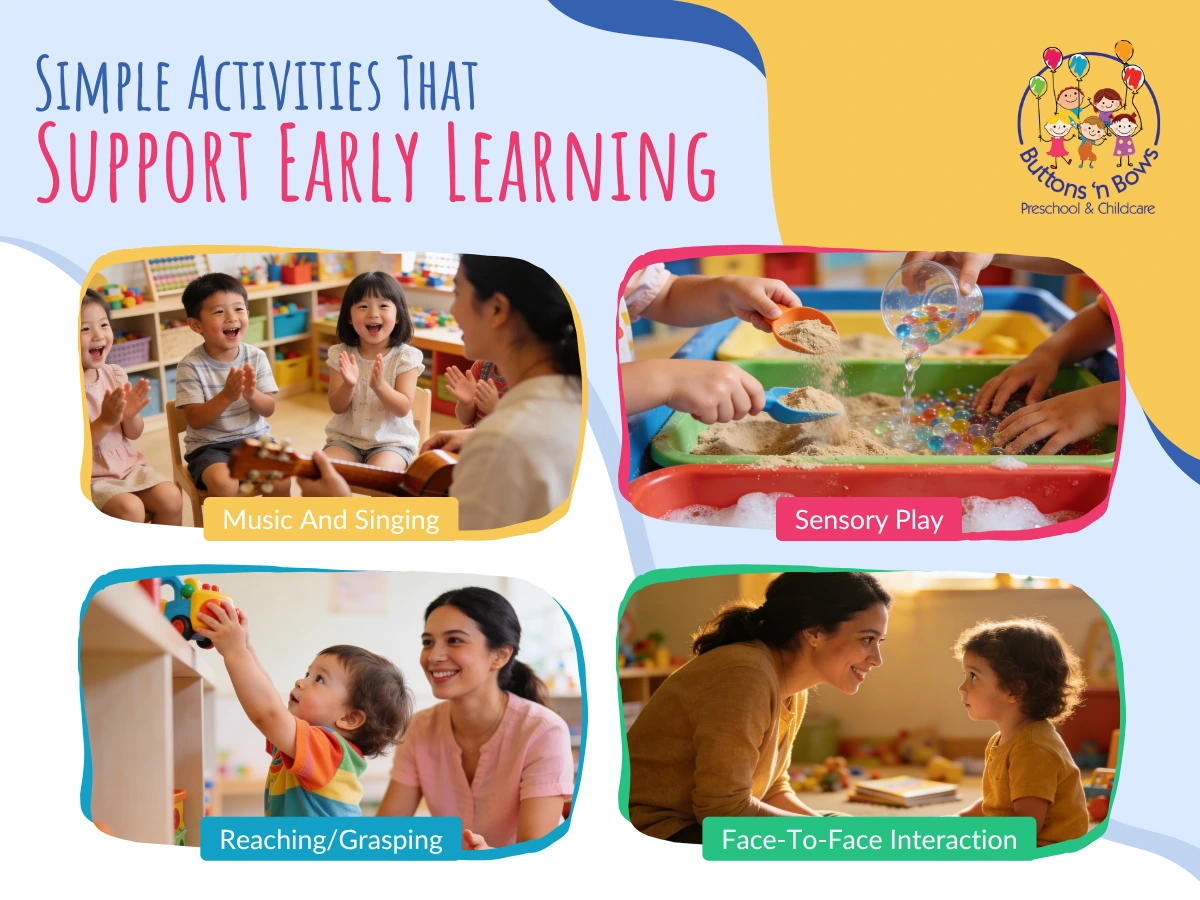
Parents often wonder what babies actually do during the day in infant care. The answer should not be constant activity or overstimulation. Healthy infant stimulation is gentle, age-appropriate, and guided by each baby’s readiness.
Common infant stimulation activities that daycare programs may include:
Tummy Time
Supervised tummy time helps babies build neck, shoulder, arm, and core strength. It also gives them a new view of their surroundings and prepares them for rolling, reaching, crawling, and other movement milestones.
Reading and Story Time
Even very young babies benefit from hearing books read aloud. The rhythm of language, tone of voice, facial expressions, and repeated sounds all support early communication.
Music and Singing
Songs can help babies recognize rhythm, patterns, and transitions. A gentle song before nap or during clean-up can make the day feel more predictable and comforting.
Sensory Exploration
Soft fabrics, textured toys, safe mirrors, rattles, water mats, and other age-appropriate materials help babies explore touch, sound, sight, and movement. Sensory play should be simple, safe, and not overwhelming.
Face-to-Face Interaction
Babies are naturally drawn to faces. Eye contact, smiles, gentle expressions, and back-and-forth sounds help babies practice early social connections.
Reaching, Grasping, and Cause-and-Effect Play
Simple toys that make a sound, stack, roll, or move can help babies learn that their actions create responses. These early discoveries can support curiosity, coordination, and problem-solving.
Language During Daily Routines
Some of the best learning happens during ordinary care moments. A caregiver might say, “I’m changing your diaper now,” “You found the soft ball,” or “It is time for your bottle.” These simple phrases help babies connect words with experiences.
The goal of infant stimulation is not to rush development. The goal is to offer safe, meaningful experiences that support each baby’s natural curiosity.
The Benefits of Structured Infant Care Programs for Babies and Parents
The benefits of structured infant care programs are not about strict schedules or one-size-fits-all routines. For infants, structure should mean predictable care, thoughtful daily rhythms, and individualized attention.
Babies often feel more secure when their day has a gentle pattern. Feeding, naps, diaper changes, play, and soothing moments create a sense of familiarity. When babies know their needs will be met, they can relax and use more energy for exploration and connection.
At the same time, every infant is different. One baby may need more frequent naps. Another may need extra comfort during transitions. Another may be ready for longer floor play or more sensory exploration. A strong infant program respects individual routines while still providing a calm and consistent environment.
Structured infant care can support babies by encouraging:
- Emotional security
- Early trust with caregivers
- Healthy sleep and feeding rhythms
- Safe exploration
- Early communication
- Social awareness
- Confidence during new experiences
Structured care also supports parents. When families receive clear updates about feedings, naps, diapering, moods, and activities, they feel more connected to their baby’s day. This communication can make the transition into infant care feel less stressful and more collaborative.
For many parents, the right program provides reassurance that their baby’s routines, cues, moods, and milestones are being noticed each day.
What to Look for in an Early Learning Environment for Babies
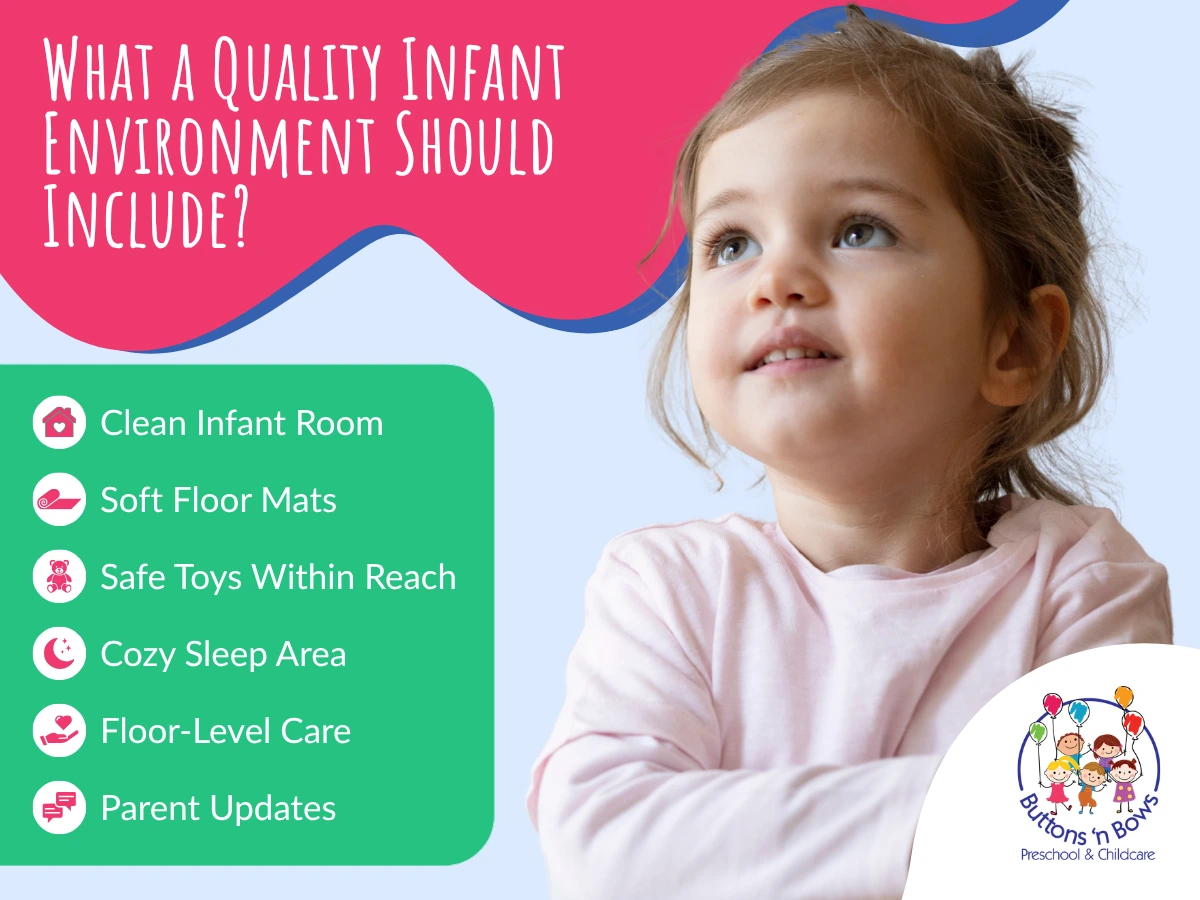
An early learning environment for babies should feel peaceful, closely supervised, and prepared for the way infants actually learn: through movement, touch, rest, and connection. It should not look or feel like a classroom for older children. Babies need space to move, observe, rest, and build trust with caring adults.
A strong infant environment usually includes several important elements.
Safety and Cleanliness
Infant spaces should be designed for babies who roll, reach, crawl, and explore with their whole bodies. Clean play areas, safe sleep spaces, age-appropriate toys, and attentive supervision are essential.
Calm, Gentle Stimulation
The room should offer interesting things to see, touch, hear, and explore without overwhelming babies. A thoughtful infant setting gives babies enough to engage with while still allowing quiet moments for rest and comfort.
Floor-Level Exploration
Babies learn through movement. Soft mats, safe mirrors, tummy time spaces, and reachable toys encourage stretching, rolling, reaching, and early mobility.
Warm Adult Presence
The adults in the room matter most. Babies benefit from caregivers who speak gently, respond consistently, and take time to build trust.
Individualized Routines
Infants should not be expected to follow the same schedule in the same way. A strong care environment supports each baby’s feeding, nap, and comfort needs.
Open Family Communication
Parents should feel informed and included. When caregivers communicate regularly, babies benefit from stronger consistency between home and care.
This kind of environment helps babies feel safe enough to explore. For infants, that sense of safety is the foundation for learning.
Questions to Ask When Choosing an Infant Care Program
If you are still unsure about infant care, asking the right questions can help you compare programs with more confidence. Convenience matters, but the quality of care matters most.
When touring or researching infant programs, consider asking:
How do you follow each baby’s individual schedule?
This helps you understand whether the program respects feeding, sleep, and comfort needs.
How do caregivers communicate with parents each day?
Look for clear updates about naps, bottles, diapering, activities, and overall mood.
What kinds of activities do infants experience?
The answer should include developmentally appropriate experiences like tummy time, reading, music, sensory play, and one-on-one interaction.
How do caregivers respond when a baby is upset?
The response should reflect patience, comfort, and emotional warmth.
What safety training do teachers have?
Ask about licensing, CPR, First Aid, and other training requirements.
How do you balance stimulation and rest?
A thoughtful program understands that babies need active exploration and quiet recovery time.
How do you build relationships with families?
Infant care works best when caregivers and parents communicate openly and respectfully.
These questions can help parents move from general worry to a clearer understanding of what high-quality infant care should look like.
How Buttons ’n Bows Supports Infants in Their Earliest Stages
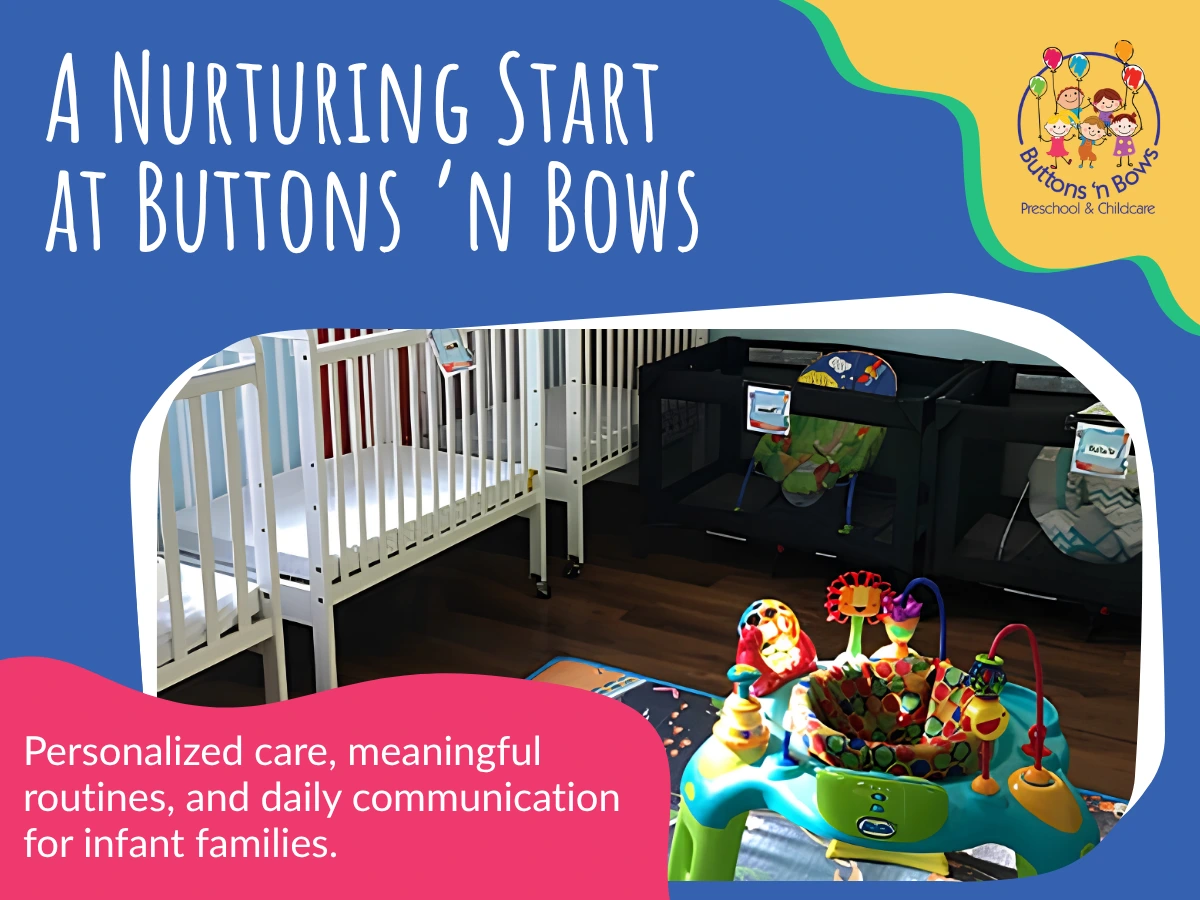
At Buttons ’n Bows, we build our infant care around warmth, security, communication, and developmentally appropriate learning. Our Guppies program is designed for infants and toddlers, giving young children a nurturing place to begin exploring the world with caring support.
We emphasize a stimulating and secure environment where babies can learn and grow in their own way. Infant development is not one-size-fits-all, which is why our program supports personalized care, gentle encouragement, and simple daily moments that help babies feel safe, seen, and ready to explore.
Personalized schedules are a key part of our infant care approach. Rather than treating every baby exactly the same, our program supports individual routines for feeding, rest, comfort, and play. This helps babies feel secure while giving families confidence that their child’s needs are being respected.
We value educational play, hands-on learning, whole-child growth, and meaningful relationships. Our goal is not to rush babies into academics, but to support their social, emotional, physical, and cognitive development through caring interactions and age-appropriate experiences.
For families in Holladay, Cottonwood Heights, and nearby communities, Buttons ’n Bows offers more than a place for infants to spend the day. We provide an early learning environment where babies are cared for with tenderness, supported through routine, and encouraged through safe exploration.
Choosing infant care is a personal decision, and it is normal to have questions. The best next step is often to see the environment in person, meet our team, and talk through your baby’s routine, needs, and transition.
Contact Buttons ’n Bows today to schedule a tour or ask about infant care and learn how our infant care environment can support your baby’s earliest stages of growth.
FAQs About Infant Care and Early Brain Development
Is infant daycare good for brain development?
High-quality infant daycare can support early brain development when babies receive warm, responsive care, safe exploration, language-rich interaction, and predictable routines. The most important factor is not how many activities a baby completes, but how consistently caregivers respond to their needs.
What are good infant stimulation activities in daycare?
Helpful infant stimulation activities include tummy time, reading, music, sensory exploration, face-to-face interaction, reaching and grasping toys, and simple language during daily routines. These activities should be gentle, safe, and matched to each baby’s developmental stage.
What should I look for in an infant care program?
Look for caregivers who are warm and attentive, a clean, safe infant room, individualized schedules, age-appropriate play, clear communication with parents, and a calm environment that balances stimulation with rest.
How does Buttons ’n Bows communicate with infant parents?
Buttons ’n Bows uses daily diaries to help keep parents informed about feedings, diapering, naps, activities, moods, concerns, and needed supplies.