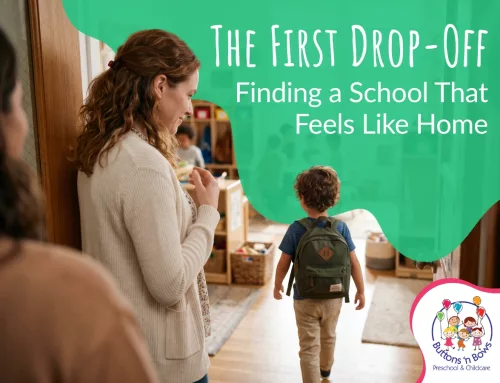
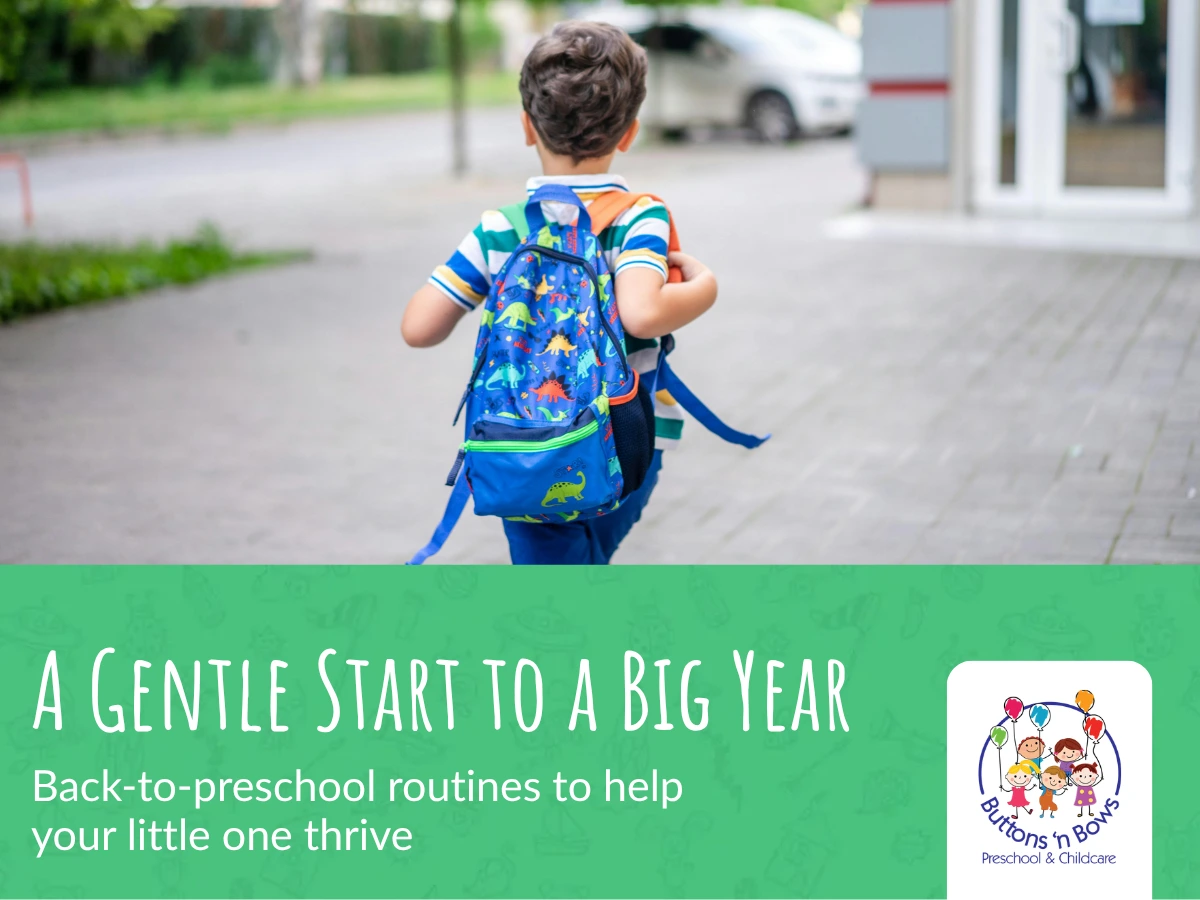
Picture your child on the first morning of kindergarten. The backpack looks a little too big, the hallway feels loud, and a room full of new faces waits on the other side of the door. In that moment, knowing the alphabet matters far less than knowing how to say hello, ask for help, and share a crayon without falling apart.
That quiet confidence is the real story behind how preschool builds social development skills. Long before a child sounds out their first word, they are learning to take turns, read a friend’s mood, and trust the grown-ups around them. These are the very abilities that make kindergarten feel exciting instead of overwhelming.
If you have ever worried that your little one is too shy, too attached, or too easily flustered in a group, you are in good company. At Buttons ‘n Bows, we believe learning is fun, and we have spent more than 40 years helping Utah children grow into confident, kindhearted classmates. Let’s walk through how a thoughtful preschool experience prepares your child for that big leap ahead.
The Everyday Routines That Quietly Build Confidence
Social growth rarely happens in one big lesson. It builds gently, through the small, repeated moments that fill a preschool day.
Think about everything a child practices before lunch:
- They greet a teacher at the door.
- They hang their coats in the same spot each morning.
- They wait their turn at the sink.
- They hear the cleanup song and move with the group to the next activity.
None of these feel like skills to a four-year-old, yet each one strengthens patience, cooperation, and independence.
Predictable routines do something powerful for young children: they make the world feel safe. When a child knows what comes next, anxiety eases and confidence grows. Day after day, your child learns to follow simple directions, communicate needs with words, and move through transitions without melting down. Those are the very same expectations a kindergarten classroom will ask of them, practiced now in a warm and forgiving place.
How Peer Interaction Develops Through Play
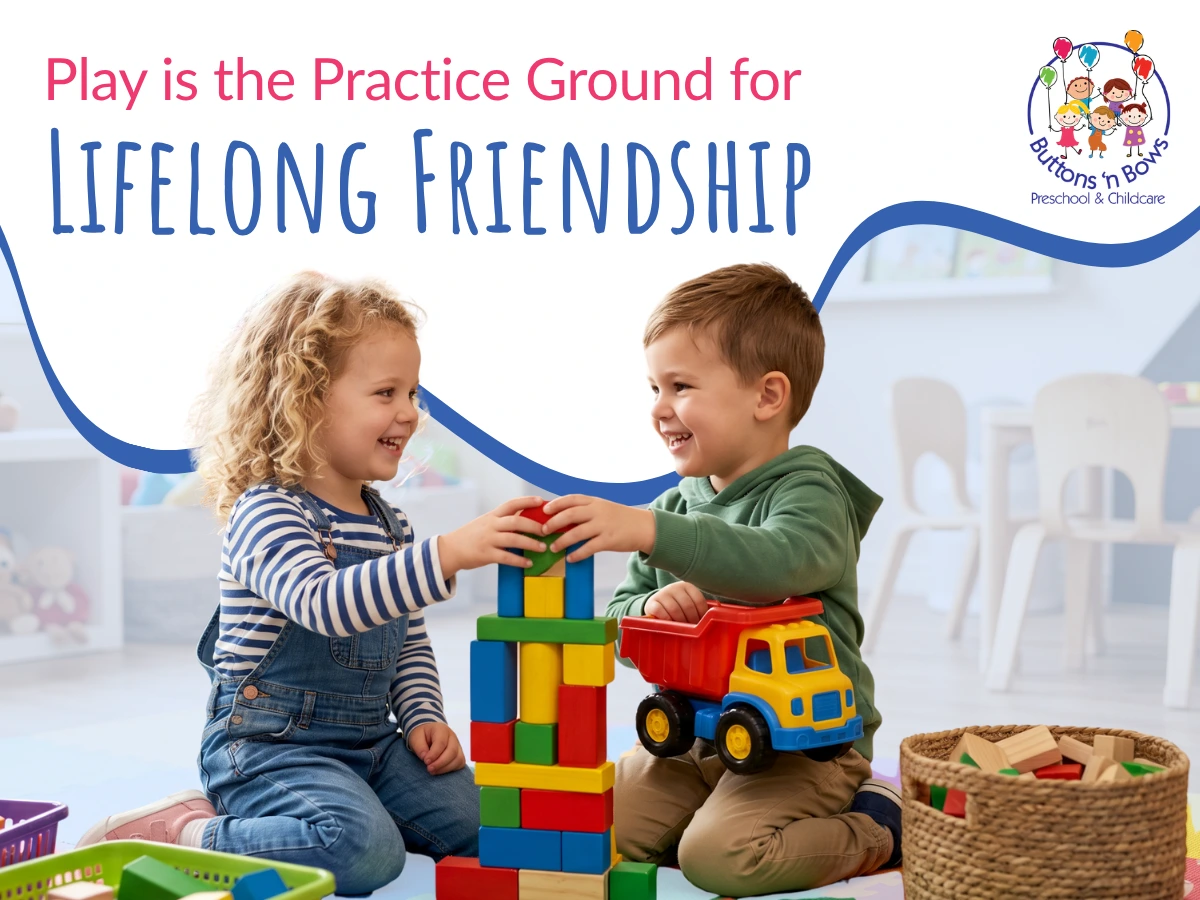
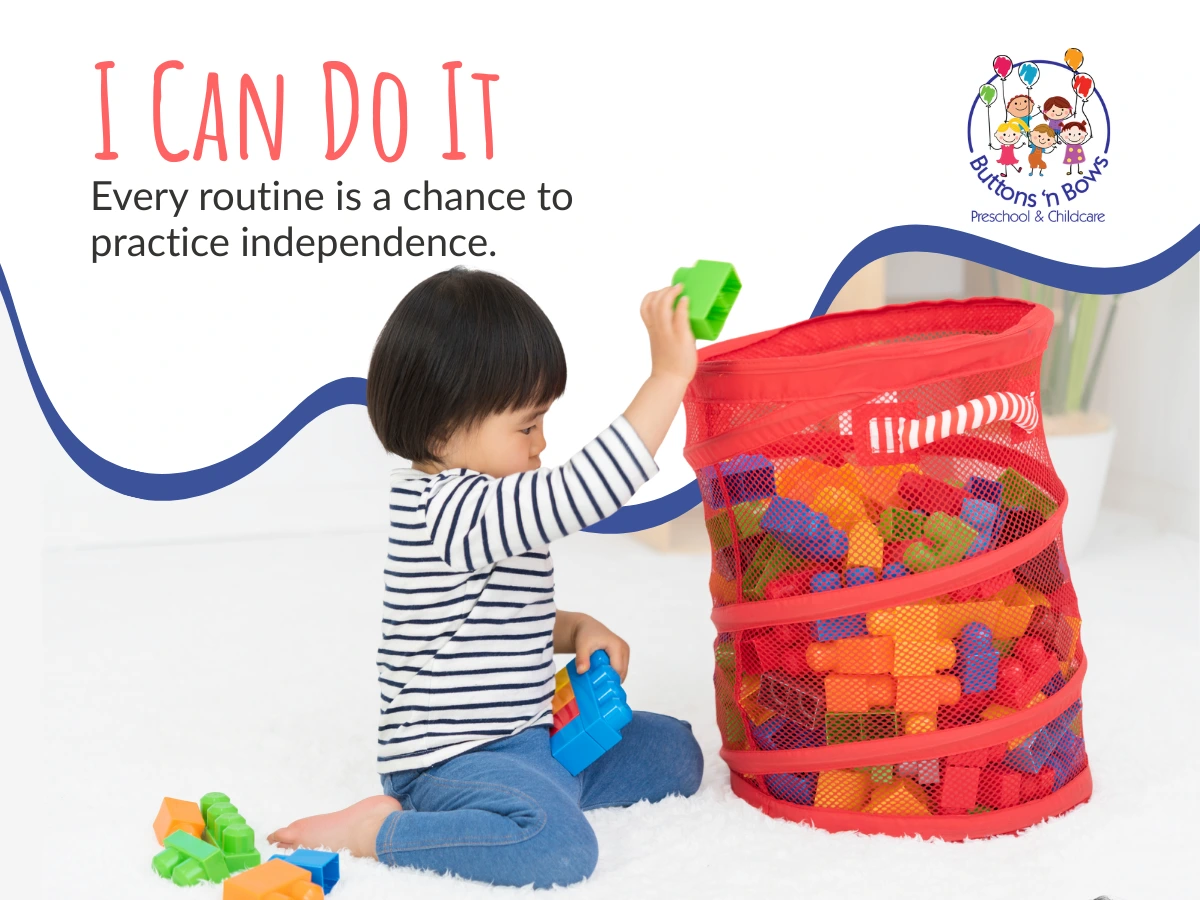
Watch a group of preschoolers build a block tower together, and you are watching serious work unfold. Play is where preschool peer interaction development truly comes alive.
When children play side by side and then with one another, they bump into real social puzzles. Who gets the red truck first? What happens when the tower falls? How do you join a game that has already started? These tiny negotiations teach lessons no worksheet ever could.
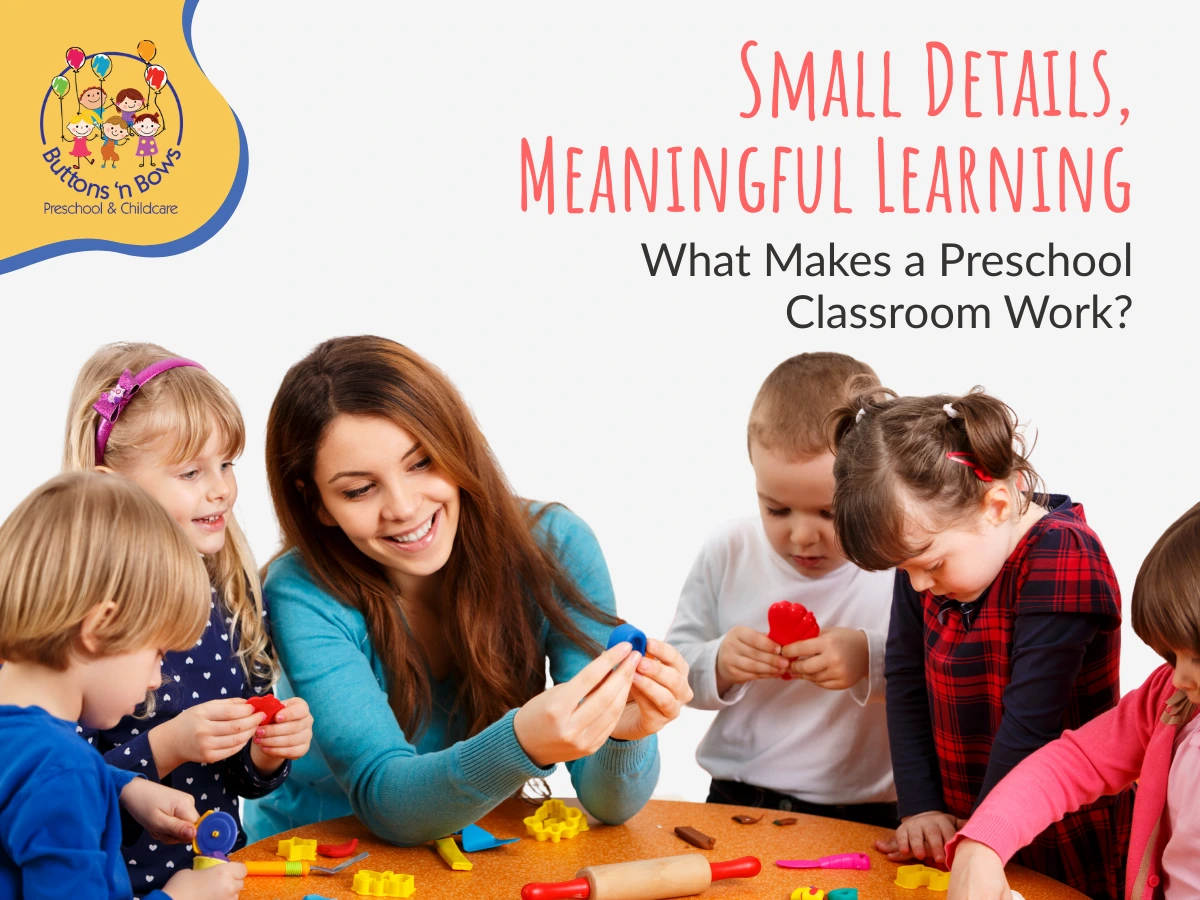
Our hands-on, thematic curriculum gives these moments even more meaning. A cooperative art project teaches children to share space and ideas. A puppet show invites them to step into someone else’s shoes and practice empathy. A science workshop done in pairs shows them that two heads really are better than one. Through it all, children learn to take turns, negotiate roles, notice a friend’s feelings, and welcome others into the fun.
This is the part many parents worry about most. Will my child handle squabbles over toys? The honest answer is that conflict is not a problem to avoid. It is a practice ground. With gentle guidance from our teachers, every disagreement becomes a chance to learn fairness, find the right words, and make things right again.
How Early Childhood Education Builds Stronger Learners
Here is something that surprises many families: the social skills we nurture in early childhood education are deeply tied to a child’s ability to manage big feelings.
A child who can name their frustration is far more likely to ask for help than to throw a block. A child who can wait for a turn can also sit through a lesson.
Emotional regulation and social success grow hand in hand.
In our classrooms, children practice this all day long. They learn to recognize what they are feeling, take a breath before reacting, ask a grown-up for help, and bounce back after a disappointment. Calming activities play a meaningful role here too. Something as simple as a few minutes of kids’ yoga teaches a child to slow their breathing and reset, a skill that serves them for a lifetime.
This is also where the play vs. academics question deserves a clear answer. Play-based learning is not the opposite of rigor. It is rigor, dressed up in joy. A child who feels overwhelmed cannot focus on letters and numbers. But a child who feels calm, capable, and connected is wide open to learning. Social and emotional growth is not a detour from academics. It is the runway.
From Circle Time to Kindergarten Social Readiness
Kindergarten moves fast. There are bigger groups, more rules, longer stretches of focused time, and far more independence than home offers. Building genuine kindergarten social readiness means giving children the chance to rehearse all of that in advance.
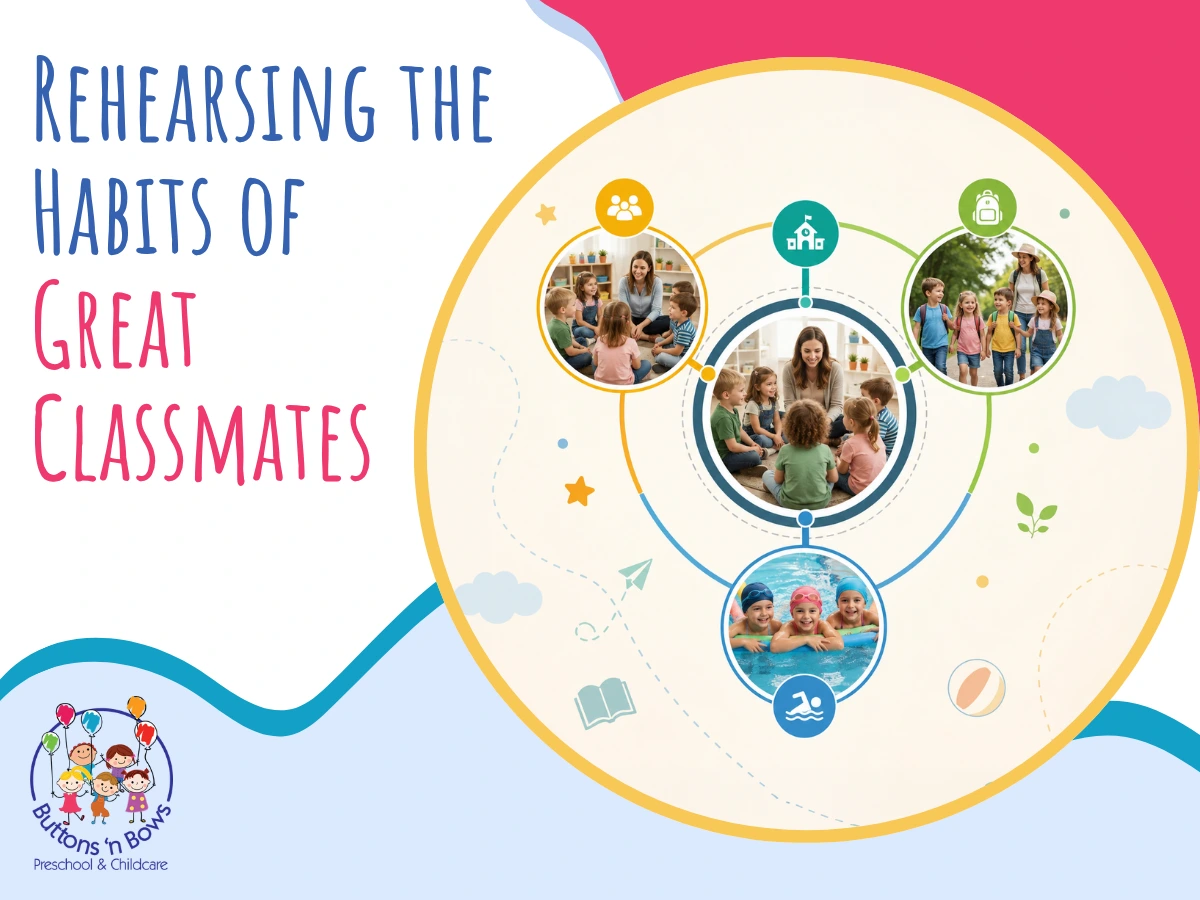
Circle time is a perfect example. Sitting with a group, raising a hand, listening while a friend speaks, and waiting for a turn to share are exactly the habits a kindergarten teacher will expect. Practiced gently over a preschool year, they become second nature.
Our group adventures stretch these skills even further. A field trip asks children to stay together, follow directions in a brand-new place, and look out for one another. Swimming lessons build courage and the willingness to try something hard. Science workshops invite children to wonder out loud and share what they discover. Each experience teaches your child that they can step into something new and come out the other side feeling proud.
Why Caring Teachers Make All the Difference
Underneath every social milestone is a relationship. Children learn to trust the world by first trusting a caring adult.
When a teacher kneels to a child’s level, listens, and helps them name a feeling, that child learns what respectful communication looks and feels like. Trusted teachers also help bridge the gap across separation anxiety. A child who feels genuinely loved and safe at school finds it far easier to wave goodbye at the door, both now and later at the kindergarten gate.
Familiar faces, steady routines, and gentle guidance through moments of conflict give children the security they need to take social risks. That is how a shy child slowly blossoms into a confident one.
Frequently Asked Questions
It is completely normal to have questions about how your individual child will adapt to a group setting. To help you navigate this transition, we have compiled answers to some of the most common questions families ask about early social development:
How can I help my child build social skills at home if they don’t have siblings?
You don’t need a full house to practice socialization. Set up structured playdates with one or two peers to practice sharing in a controlled environment. You can also use family game nights to teach your little one how to win and lose gracefully, or use role-play with stuffed animals to practice sharing toys, taking turns, and saying “please” and “thank you.”
What should I do if my child is naturally very shy or prefers to play alone?
First, remember that “parallel play,” where children play side by side without interacting deeply, is a completely normal developmental stage. A quality preschool won’t force a shy child into the spotlight. Instead, teachers will gently pair them with a single compatible play partner or assign them a special role in a small-group activity to help them build confidence at their own pace.
How do preschool teachers handle pushing, biting, or toy-snatching without making a child feel bad?
In early childhood education, these behaviors are viewed as communication miscues rather than bad behavior. Teachers address these moments immediately and calmly by getting down to the child’s eye level, stating the rule clearly (e.g., “Hands are for helping, not hurting”), and helping the children find the right words to express their frustration or ask for a turn.
My child struggles to sit still and listen. Will this impact their kindergarten readiness?
Expecting a 3- or 4-year-old to sit still for long periods is unrealistic. Preschool prepares them by starting with very short, high-energy group circles and gradually increasing the time as their attention spans grow naturally. Activities like kids’ yoga and active movement songs are explicitly designed to teach physical self-regulation.
How do I know if my child’s social development is on track for their age?
By ages 3 to 5, children should typically be moving toward cooperative play, showing basic empathy when a friend is sad, using words to resolve conflicts (most of the time), and showing a growing independence from parents during the school day. If you ever have concerns, a strong parent-teacher partnership allows for open, honest tracking of these milestones together.
Buttons ‘n Bows: A Place Where Families Belong
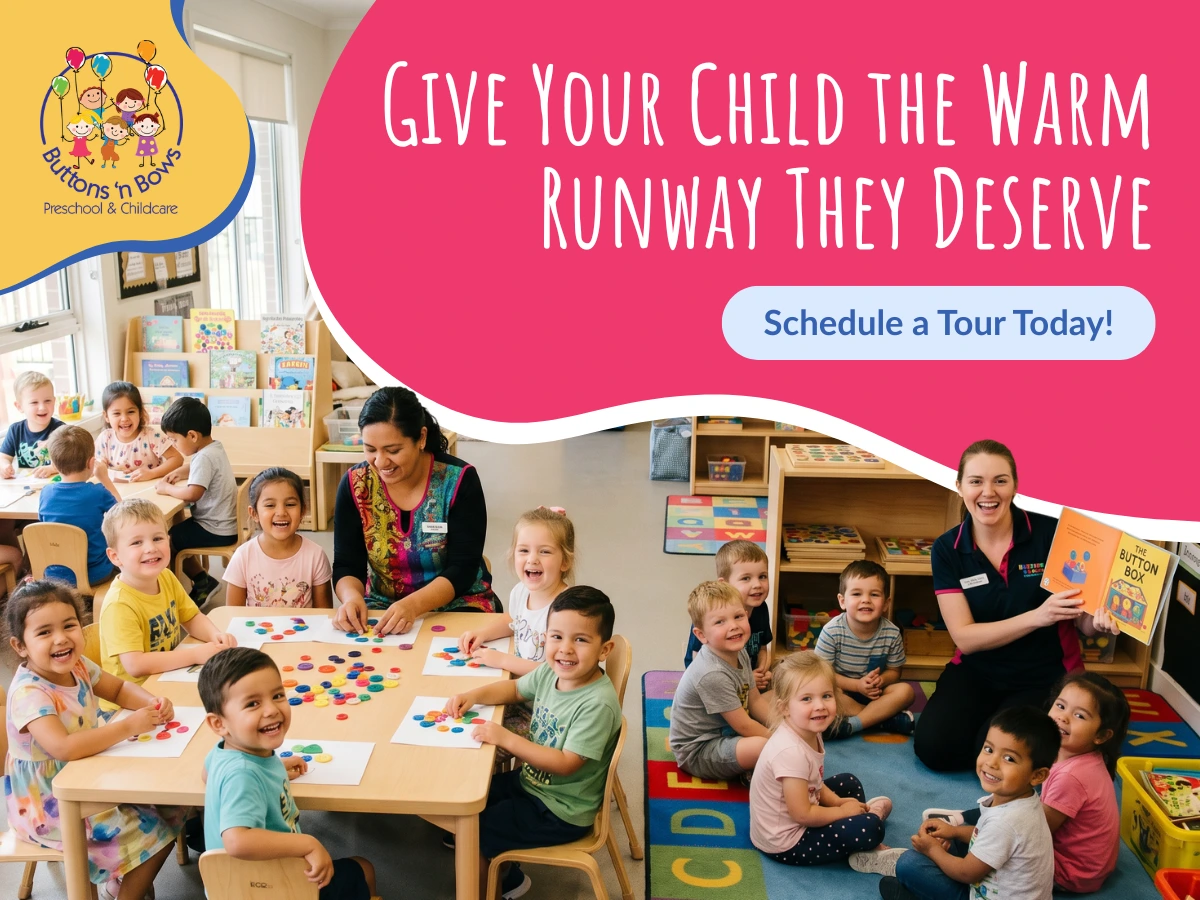
For more than four decades, Utah families have trusted us to provide the warm runway that leads to a lifetime of confident learning. We know that walking through the kindergarten gates is a massive milestone. But when your child has spent their preschool years learning how to share their ideas, navigate playground puzzles, and regulate big emotions in a joyful environment, they don’t just face that transition; they welcome it.
If you are wondering whether your little one is ready for the next big step, we would love to show you how friendship and confidence take root here. Schedule a tour of Buttons ‘n Bows today. Meet our caring teachers, peek into our joyful classrooms, and picture your child thriving in a place that has felt like home to Utah families for over 40 years. We cannot wait to meet you.