Walk into two preschool classrooms on the same afternoon, and you might notice they look almost identical. Both are clean. Both have bright artwork, low tables, and shelves packed with toys. Yet one feels alive with focused activity, and the other feels oddly flat.
Knowing what to look for in a preschool classroom means learning to read past the surface and understand how the room actually works for the children inside it.
Most parents can spot the obvious things during a tour: tidy floors, cheerful colors, friendly greetings. Those matter, but they don’t tell you much about how your child will spend their day. The details that reveal a quality preschool learning environment are usually quieter. They show up in how adults talk to children, how the room is set up, and what the kids are actually doing when no one is performing for visitors.
Here’s how to look, listen, and ask your way toward a clearer picture.
Start by Watching How Teachers and Children Interact
Before you study the wall displays, watch the people. The relationships between teachers and children tell you more about program quality than any decoration ever could. NAEYC lists positive relationships as Standard 1 among its standards for high-quality early learning, reflecting the central role relationships play in children’s development.
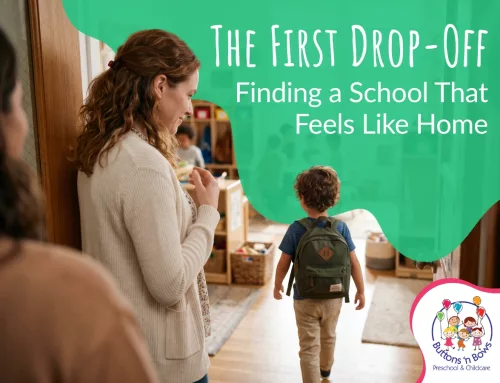
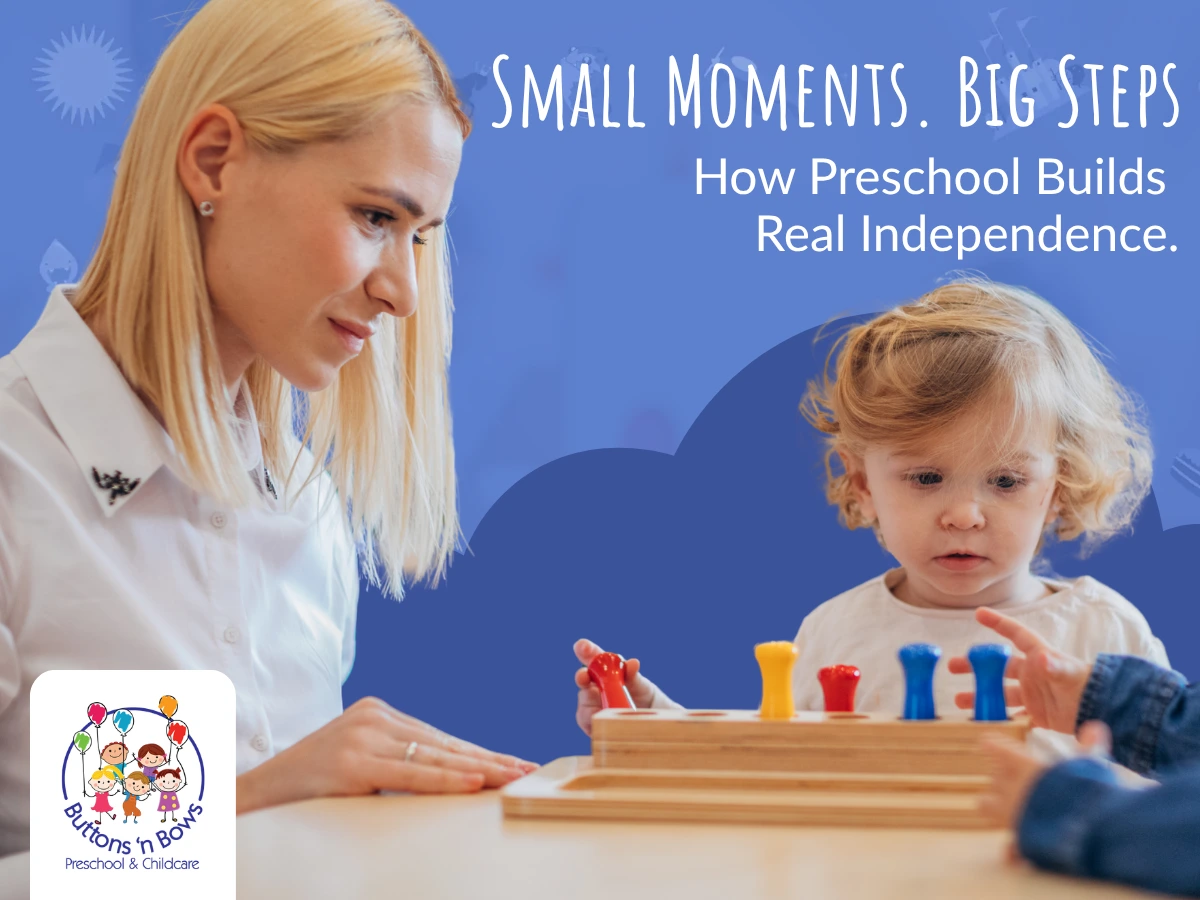
Look for small, ordinary moments. A teacher kneeling beside a child who is stuck on a puzzle, rather than solving it for them. An adult who pauses to answer a question about why the paint is turning purple. A child who wanders over to a teacher to show off a block tower and gets a genuine, curious response.
Those back-and-forth exchanges matter more than they might seem. Harvard’s Center on the Developing Child calls them “serve and return” interactions and states that these interactions shape brain architecture. Its resources also connect serve-and-return with language connections, emotional well-being, and social skills
What to ask: If you can’t observe long enough to judge, ask the director how teachers typically handle a child who is upset or refusing to participate. The answer can give you a useful sense of how the program approaches behavior and emotional support.
What a Quality Preschool Learning Environment Looks Like
A thoughtful classroom is designed around how preschoolers learn: through hands-on exploration and making their own choices. Look for child-sized furniture and distinct areas that support different kinds of play: a block corner, a dramatic play space, an art table, a book nook, and a spot for quiet breaks.
Pay attention to the shelves. Are materials stored low and open, where a three-year-old can reach a bin of markers or a basket of blocks without asking permission? Or is everything tucked high on adult-height shelves?
That single detail says a lot. When children can choose and return materials on their own, the room supports independence and self-directed activity. If everything requires adult permission to access, it’s worth asking how much of the day children spend waiting versus exploring.
What to ask: “How much of the day can children choose their own activities?” You’re listening for a real balance, not a schedule where every minute is teacher-directed.
Notice Whether Play Is Purposeful or Just Passive
Play is the heart of good preschool learning, but not all play is equal. There’s a difference between children deeply engaged in an activity and children simply being kept busy.
Purposeful play looks like a child stacking cups to see how high they’ll go before toppling, two kids negotiating who plays the customer at a pretend store, or a small group sorting leaves by size. The children make decisions, test ideas, and talk through what they’re doing. This is exactly what NAEYC’s guidance on developmentally appropriate practice describes: active engagement through play, exploration, and inquiry.
Passive play looks different. Children drift from toy to toy without settling. Activities have a single “correct” outcome. The room is quiet because kids are occupied, not because they’re absorbed.
Noise level alone won’t tell you much. An engaged classroom might be buzzing with conversation and movement, or it might be quietly focused – both can be signs of purposeful activity. The more useful question is: “Does the activity feel engaged and purposeful, or scattered and disconnected?”
Read the Artwork on the Walls
Children’s work offers a subtle clue about what really happens in the room. Glance at the crafts on display and notice whether they look individual or nearly identical.
Twenty snowmen that all look the same may suggest a more teacher-directed activity, where children followed similar steps toward a similar result. A wall of paintings that look wildly different – some messy, some abstract, some barely recognizable – may suggest children had more room to explore and create their own way.
Neither is inherently wrong, but the overall pattern tells you how much room children have for genuine creativity versus following instructions.
Watch for Independence, Not Perfection
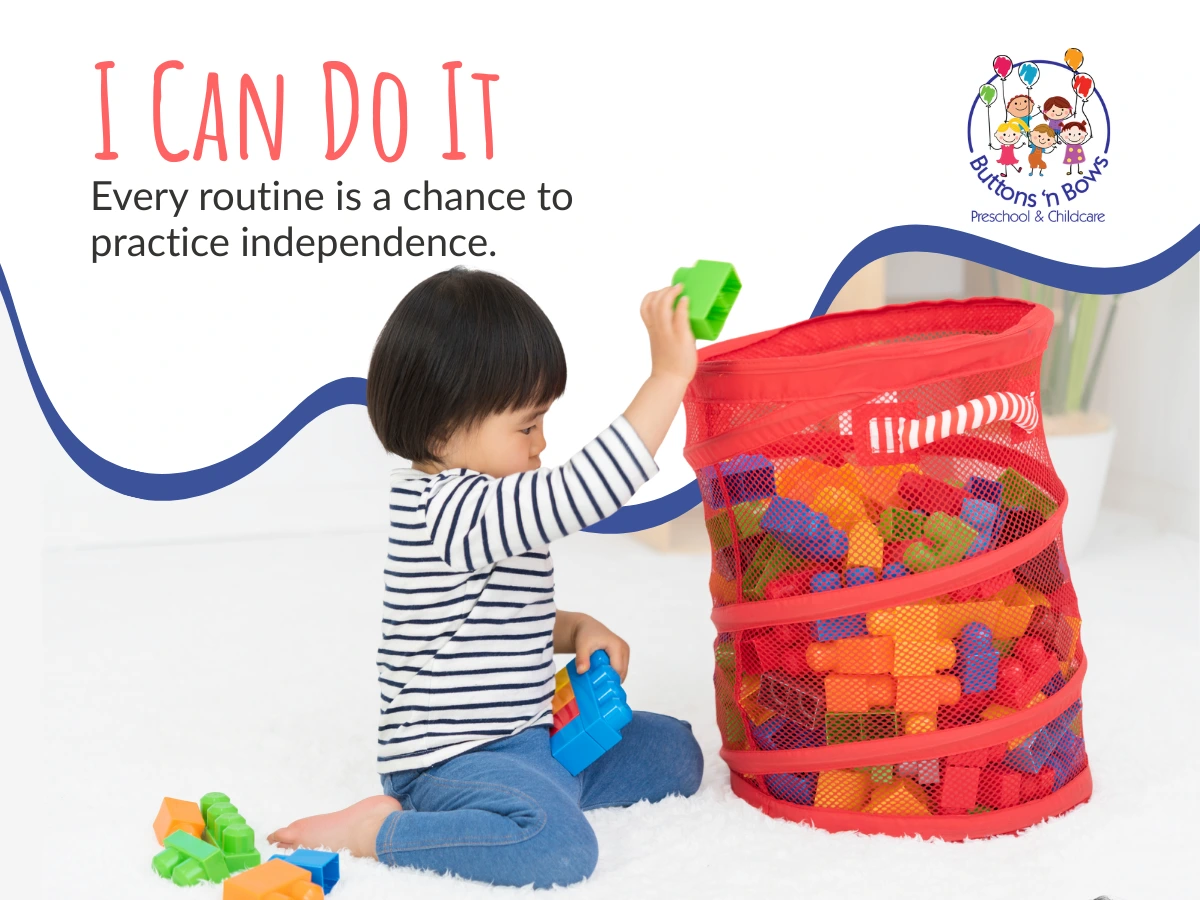
A strong preschool builds small, everyday competencies. During a visit, you might see children hanging up their own coats, pouring their own water, cleaning up a spill, or working out a disagreement with a little coaching from a teacher.
These moments look ordinary, but they reflect meaningful preschool classroom expectations. Children who are trusted with age-appropriate responsibilities practice independence, make decisions, and work through small problems. A room that’s spotless because adults do everything isn’t necessarily a better room.
What to ask: “What kinds of things do children do for themselves here?” Look for a program that expects age-appropriate independence, not one that keeps children entirely dependent on adults.
Understand the Balance Between Play and Structure
Parents often worry they have to choose between academics and play, as if a preschool is either rigorous or fun. Quality early education blends the two. Structured group time and child-led exploration can live comfortably in the same day.
This balance is central to how we at Buttons ‘n Bows approach our preschool program: learning as playful but purposeful. We weave early numbers, letters, and social skills into hands-on activities, group experiences, play, conversation, and exploration. That reflects developmentally appropriate practice, where academic concepts are introduced through experiences that support the whole child socially, emotionally, and cognitively.
What to ask: “How do you teach early math and reading?” A thoughtful answer describes games, stories, songs, and projects, not stacks of drills.
Social and Emotional Signs of a Good Preschool
How a classroom handles feelings and conflict says a lot about its quality. Watch what happens when two children want the same toy. Does a teacher swoop in and take it away, or do they help the children talk it through and find a solution?
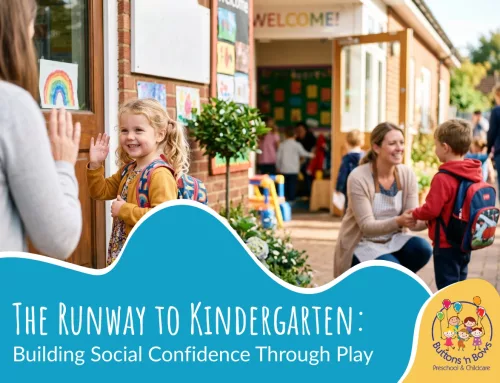
Transitions are another revealing moment. Moving from playtime to circle time can be chaotic in any preschool, but notice whether teachers guide the shift with warmth and clear routines, or whether the room dissolves into stress.
Children who feel safe approach adults comfortably, ask for help, and recover from small upsets. That sense of belonging is one of the clearest signs of a good preschool, and it’s something you can often feel within a few minutes of watching.
What You Can’t See on a Tour
A single visit is a snapshot, and some of the most important factors won’t be visible. This is where good questions matter most.
Consider asking about:
- Teacher consistency: How long have the current teachers been with the program? Frequent turnover disrupts the relationships children rely on.
- Ratios in practice: Utah sets legal maximums, but ask what the typical classroom ratio actually looks like day to day, not just the legal limit.
- Daily rhythm: What does an ordinary day include for indoor play, outdoor time, group activities, and rest?
- Family communication: How will you hear about your child’s day, progress, and any concerns?
Research shows that the best early childhood programs treat families and teachers as partners, recognizing that parents and educators each bring valuable insights that help support a child’s growth. A program that welcomes your questions and communicates openly is a strong signal that you’ve found the right fit.
How Buttons ‘n Bows Approaches the Preschool Classroom
Everything above points to the same idea: a strong classroom is built around how children genuinely learn, through relationships, purposeful play, and hands-on discovery.
That’s the foundation of the Buttons ‘n Bows philosophy. Our programs center on educational play, child-directed exploration, projects, and experiments, with teachers who draw on Developmentally Appropriate Practice to shape what happens in the room. The focus reaches beyond early academics to whole-child development, supporting how children grow socially and emotionally alongside their letters and numbers.
The Holladay setting adds something distinctive. Housed in a converted residence, the space is intentionally home-like, a reminder that a preschool doesn’t need to resemble an elementary school to support real learning. Families are treated as partners, with daily communication and events that keep parents connected to what’s happening.
None of this replaces seeing a classroom for yourself. It simply reflects the qualities worth watching for wherever you tour.
If you’d like to see these ideas in action, you’re welcome to schedule a tour of the Buttons ‘n Bows preschools, watch a classroom in motion, and ask how the environment supports your child’s development. It’s the best way to know whether a program feels right for your family.
===
Frequently Asked Questions
What should parents look for in a preschool classroom?
Parents should look beyond cleanliness and colorful displays. Pay attention to how teachers interact with children, whether materials are accessible, how engaged children appear, and whether the classroom supports play, independence, communication, and age-appropriate learning.
Should preschool be play-based or academically structured?
A strong preschool program can include both. Young children can develop early literacy, math, social, and problem-solving skills through structured group experiences as well as purposeful, child-led play and exploration.
How can you tell if preschool teachers are responsive to children?
Responsive teachers notice children’s cues, listen to their questions, respond calmly when they are upset, encourage problem-solving, and engage in back-and-forth conversations. Children should also appear comfortable approaching teachers when they need help.
What are reasonable preschool classroom expectations for independence?
Preschoolers may be encouraged to complete manageable tasks such as choosing materials, putting items away, hanging up belongings, helping clean small spills, participating in routines, and working through simple problems with teacher guidance.
What questions should parents ask before choosing a preschool?
Useful questions include how teachers handle challenging behavior, how much of the day is child-led versus teacher-led, how early math and literacy are introduced, what children are encouraged to do independently, how families receive updates, and what typical classroom ratios look like.