You drop your three-year-old off, and for the next several hours you have no idea what's actually happening. Are they crying? Learning anything? Just parked in front of a bin of toys? That gap between the door closing and pickup is where most parents' worry lives.
The antidote to that worry is understanding the daily rhythm behind the classroom door. When families evaluate early child care options across Utah, a well-built preschool daily routine for 3-year-olds isn't busywork; it's the backbone that turns a chaotic room into a place where preschoolers feel safe, curious, and ready to grow. Once you know what a strong day looks like, you can walk into any tour and quickly tell the difference between a real program and glorified babysitting.
This post breaks down what a good preschool day includes, why each piece matters for your child, and what to watch for when you're comparing options.
What a Typical Day Actually Looks Like
Most quality programs follow a similar shape, even if the clock times differ. The day usually opens with arrival and free play, moves into a morning meeting or circle time, then flows through learning centers, snack, outdoor play, lunch, quiet or rest time, and afternoon activities before pickup.
That order isn't random. At age three, children don't yet have a firm grasp on the concept of time. They don't understand "at 10:30 AM we do art." Instead, they understand the sequence: "After we have our morning snack, we get to paint."
A predictable preschool classroom schedule gives kids a mental map, which lowers anxiety and frees up their brains for actual learning.
You'll also notice that good schedules alternate between active and calm periods. A stretch of outdoor running is balanced by a quieter story or small-group activity. This rhythm keeps kids from getting overstimulated or checked out, two of the biggest triggers for preschool meltdowns.
Key takeaway: The specific times matter less than the balance and consistency behind them.
Why Structure Matters More Than You'd Think
It's tempting to assume a 3-year-old just needs love and a safe room. That's true, but structure is how care is delivered consistently, from kid to kid, day after day.
Research on early childhood development is clear that young children perform better when they know what to expect. A structured preschool routine builds self-regulation, the crucial skill of managing emotions and impulses. When a child learns that clean-up always comes before snack, they're practicing patience, sequencing, and cooperation without even realizing it.
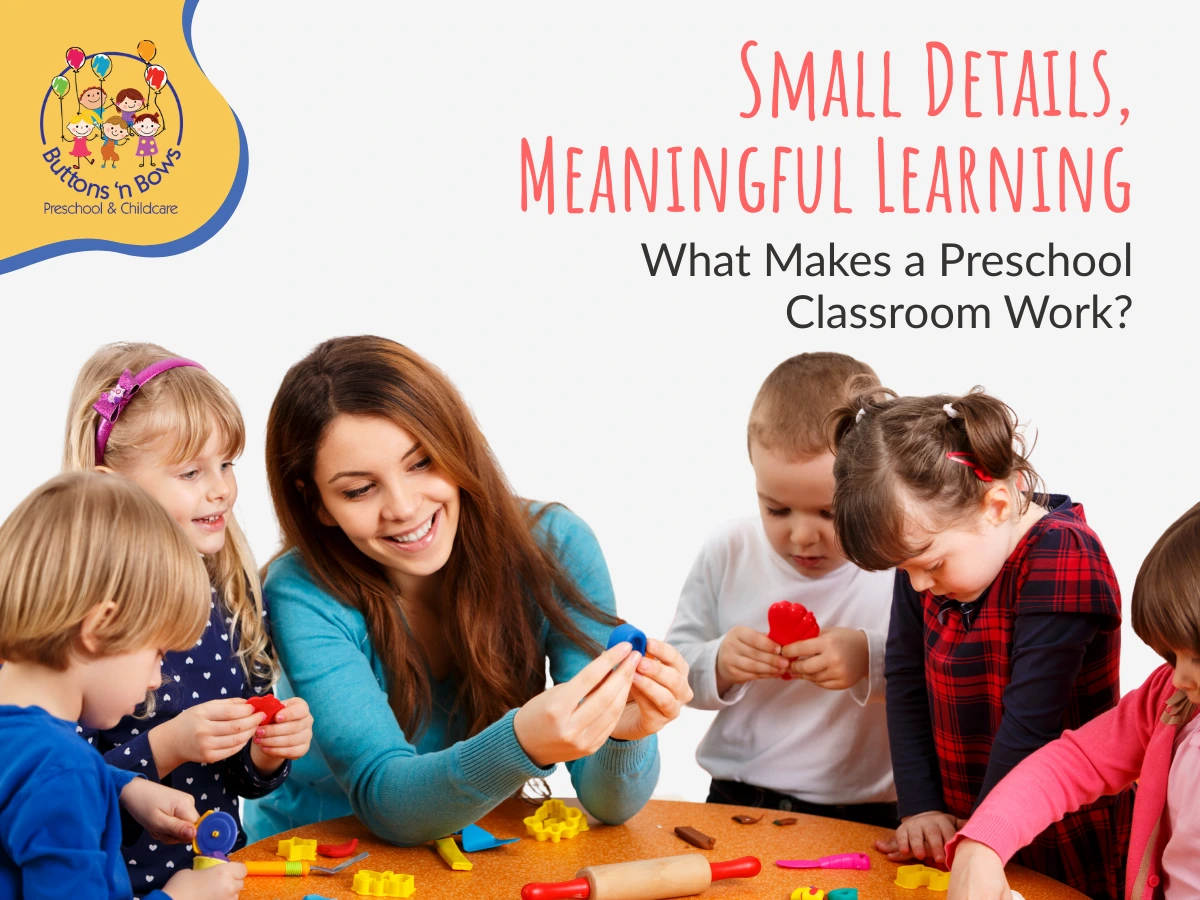
Structure also quietly builds academic readiness. Circle time introduces letters, numbers, weather, and calendar concepts. Our teachers let kids choose blocks, art, or pretend play, which helps develop fine motor skills and problem-solving skills.
The Part Parents Overlook: Transitions
Ask any experienced teacher what makes or breaks a preschool day, and they'll say the same thing: transitions. Moving 15 3-year-olds from the playground to the lunch table sounds simple until you've tried it.
This is where preschool transition activities earn their keep. Good teachers use songs, bells, countdowns, or a rotating "helper" role to signal that one activity is wrapping up and another is starting. These cues give kids a heads-up instead of a jarring switch, which prevents the resistance and tears that come from being suddenly yanked out of deep play.
When you tour a school, watch a transition if you can. A calm, sing-song shift from one activity to the next tells you the staff deeply understands how young children's brains work. A chaotic scramble tells you the opposite.
Does My 3-Year-Old Still Need a Nap or Rest?
Yes, and a good routine explicitly plans for it. Most full-day programs build in a rest or quiet period after lunch, usually lasting 60 to 90 minutes. Some children sleep; others rest quietly with books or puzzles.
This block does more than just recharge little bodies. Quiet time helps children absorb what they learned that morning and actively prevents the late-afternoon crankiness that makes pickup rough for families. If a program skips rest entirely for this age group, ask why.
What to Look For When You Compare Preschool Programs in Utah
Now that you know the anatomy of a good day, use it as your diagnostic checklist. When you visit a school, ask them to walk you through a typical day. Vague or inconsistent answers are a red flag.
- Watch how teachers talk to children during ordinary, unpolished moments.
- Ask whether the schedule stays consistent while still allowing flexibility for a rough morning drop-off or a spontaneous teachable moment.
- Notice the little layout details: Is there a posted visual schedule with pictures? Do the kids seem to know what comes next organically?
Choose a program that treats structure as a tool for warmth rather than corporate rigidity. The best schools use routine to make room for genuine connection, not to enforce control.
How Preschool Routines Support Kindergarten Readiness Without Pushing Kids Too Fast
Many parents searching for preschool routines are really asking a bigger question: Will my child be ready for kindergarten? At age three, readiness is not about drilling flashcards or pushing formal academics too early. It is about helping children build the habits that make a school day feel manageable and safe.
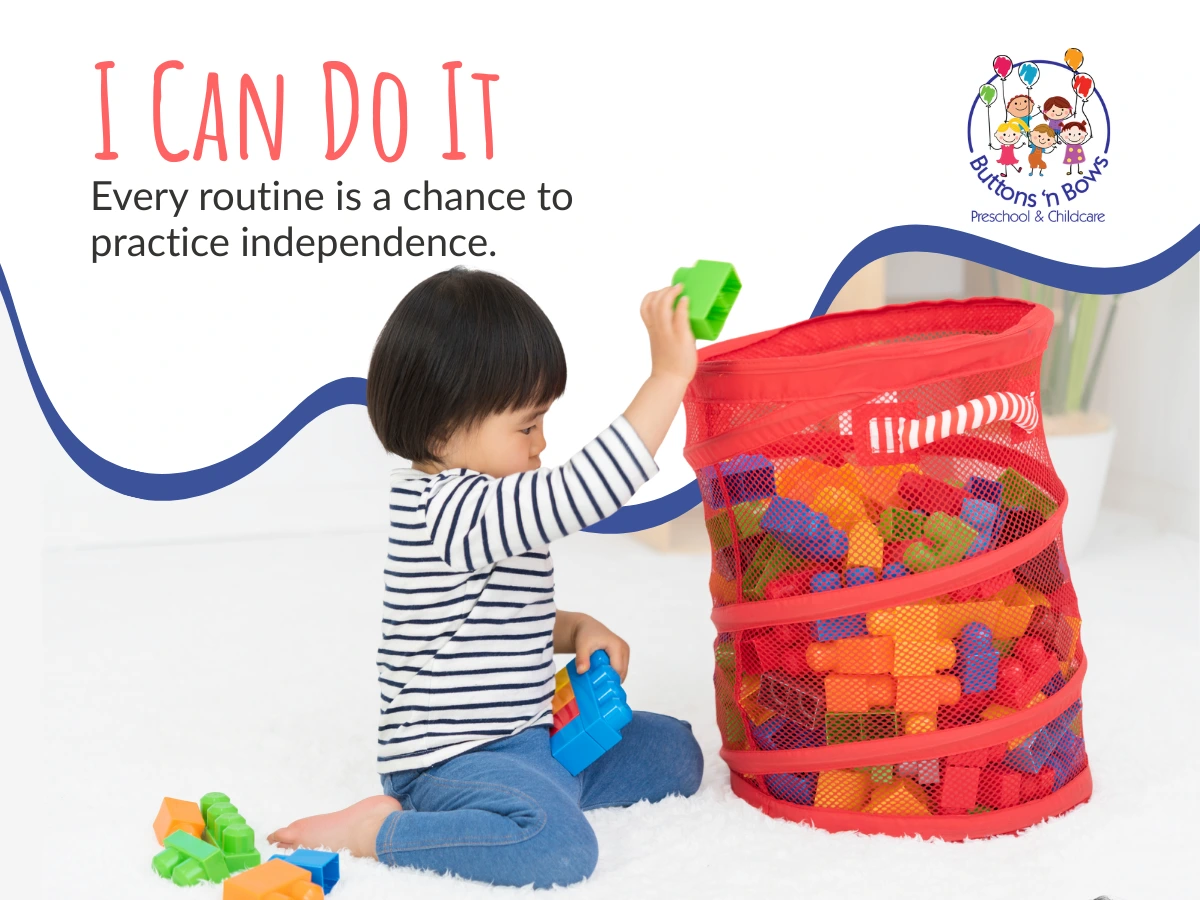
A consistent routine helps children practice the skills kindergarten will ask of them later: listening to simple directions, waiting for a turn, cleaning up before moving on, joining group activities, and recovering from frustration without falling apart. These skills grow naturally when children move through the same daily rhythm with caring adults who guide them along the way.
The best preschool programs understand that kindergarten readiness is not a race or a checklist. It is a slow, steady build. When a child can walk into class with confidence, follow the rhythm of the day, and feel secure trying new things, that child is being prepared in the way that matters most.
Frequently Asked Questions
How long should each activity last for a 3-year-old?
Short and varied works best. Circle time usually runs 10–15 minutes, free play or centers 30–45 minutes, and outdoor play 30 minutes or more. Keeping segments brief matches a 3-year-old's natural attention span and helps children stay engaged without becoming overwhelmed.
Should a preschool schedule be exactly the same every day?
The core anchors, such as arrival, meals, rest, and pickup, should remain consistent so children feel secure. Within that frame, teachers can flex for special activities, spontaneous learning moments, or a child who needs extra time. That balance between predictability and adaptability is what makes a daily routine feel supportive rather than rigid.
Is a structured routine too much for a 3-year-old?
No. Structure actually reduces stress because kids thrive when they know what to expect. A great preschool structure isn't rigid; it simply creates a secure boundary that leaves plenty of room for free choice, creativity, and play.
What if my child struggles with drop-off?
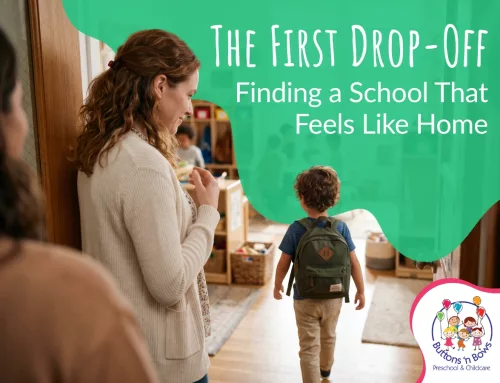
A strong program expects this and uses gentle morning transition routines to help. Our teachers work closely with families to ease separation anxiety, feel free to ask us exactly how we handle this during your tour!
More than Just a Daycare: How Buttons 'n Bows Builds the Day
At Buttons 'n Bows Preschool, our daily routine reflects more than 40 years of locally owned experience learning what actually works for young children. Our curriculum leans entirely into developmentally appropriate, hands-on learning, the kind that fills a day with purpose rather than structural filler.
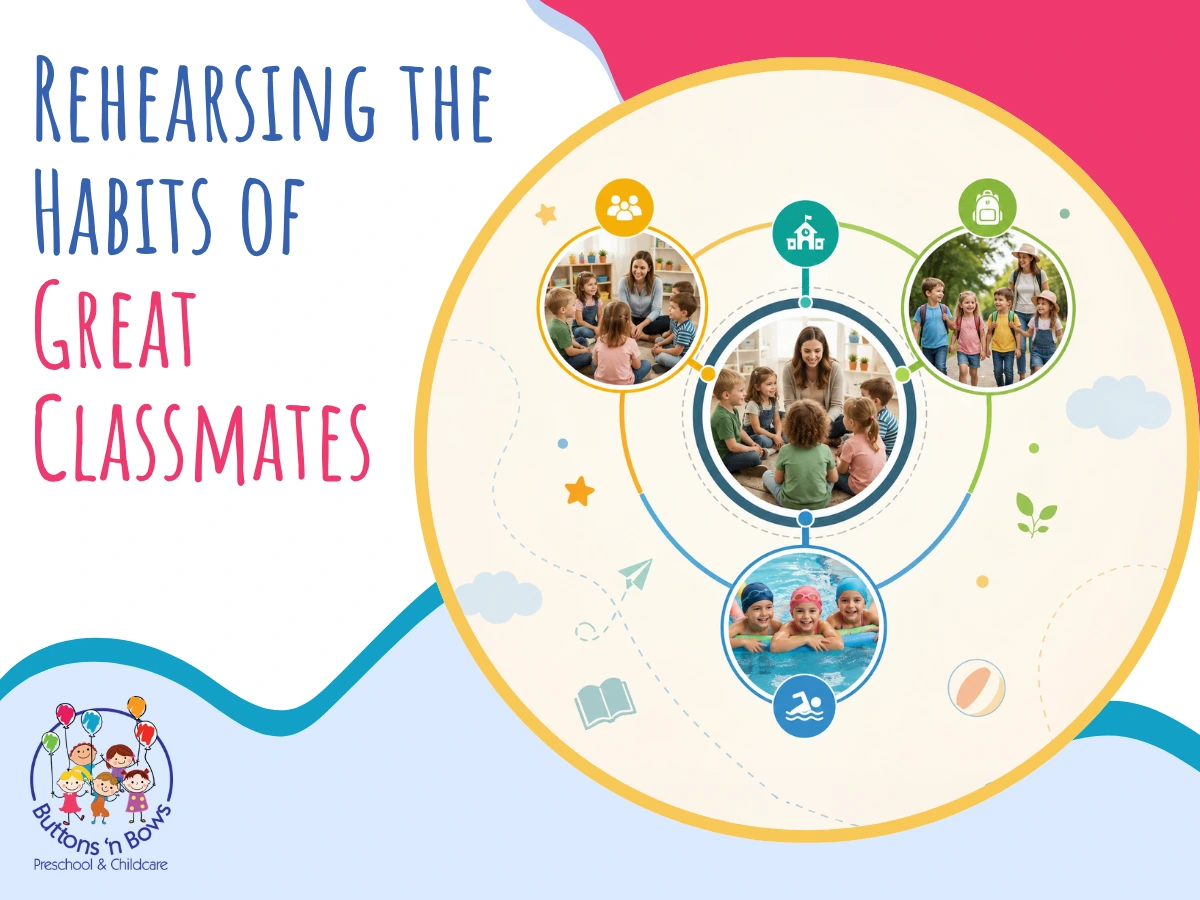
A 3-year-old's day here blends core building blocks with genuine development enrichment. Alongside circle time, learning centers, and outdoor play, children may take part in swimming lessons, yoga, science workshops, puppet shows, and seasonal field trips, depending on the time of year and campus. It's a major reason parents describe our program as "so much more than a daycare."
What makes this routine work is the dedicated people running it. With a team of 31 professional educators across our programs serving over 180 children, our class groups stay small, attentive, and highly personalized. Every teacher on our staff holds active CPR and First Aid certifications.
Our school offers flexible attendance options and immersive family events throughout the year, including Donuts with Dad, Mothers' Tea, and our annual Carnival, so our routine extends smoothly beyond the classroom into your family's life.
Ready to experience our daily rhythm in person? Click here to schedule a tour at Buttons 'n Bows Preschool today to walk our classrooms, meet our educators, and watch a real preschool schedule in action at our Holladay Campus or Cottonwood Heights Campus!