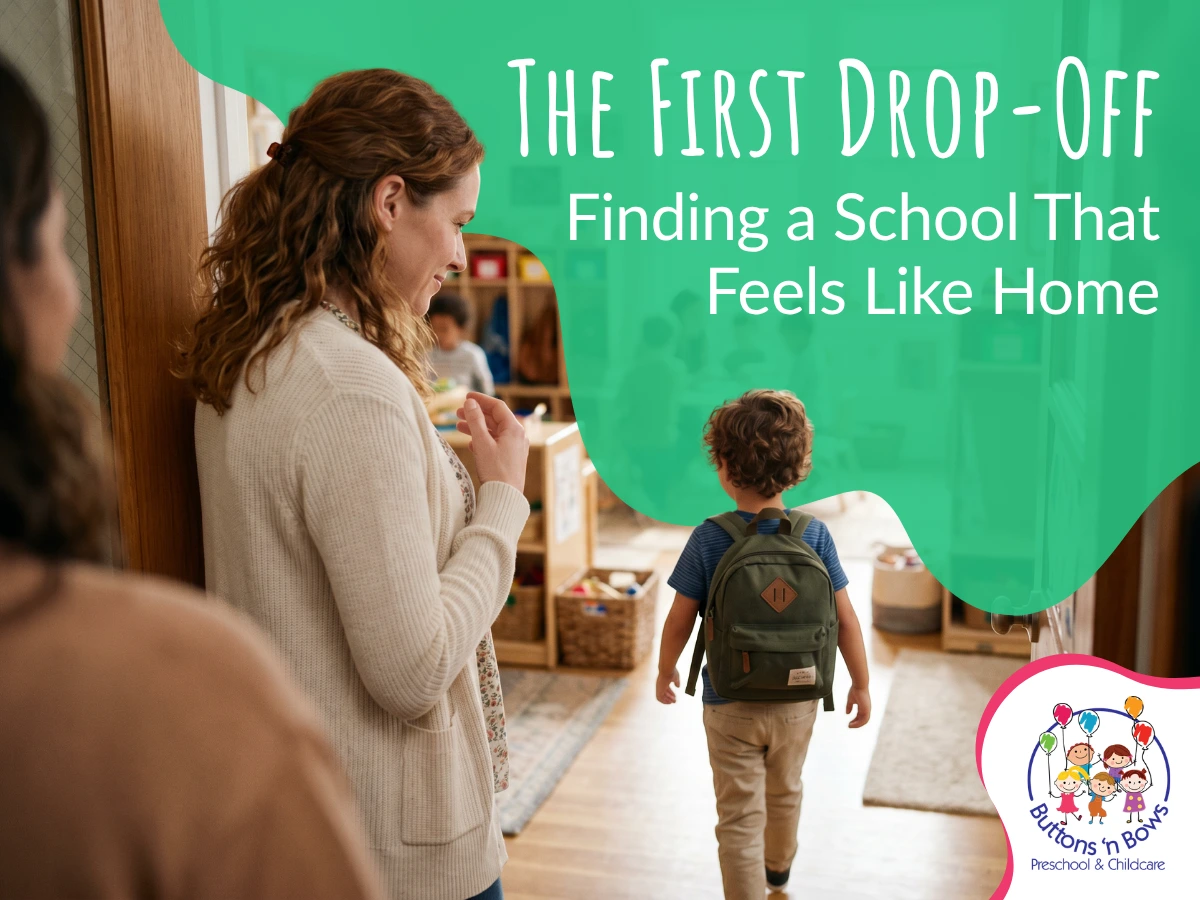
Watching your child grow brings a constant mix of intense pride and natural hesitation. One day, you are dropping off an infant who needs to be held. Seemingly, the next thing you are watching is a toddler marching into a room carrying their own lunchbox.
Moving from one stage to the next can be a meaningful adjustment for both children and parents. At Buttons ’n Bows, we know that gentle transitions in early learning can turn a stressful season into a more confident, supported step forward.
A child who feels secure during a big change will carry that confidence into every future challenge. They learn that new spaces are safe and that new teachers are helpful friends. We structure our transition process to match your child’s exact developmental pace.
In this guide, we will walk you through exactly how we manage these vital developmental shifts. You will learn the specific signs of readiness we look for, the steps we take in the classroom, and the actionable routines you can use at home to help your child thrive.
Navigating Age Group Changes in Daycare
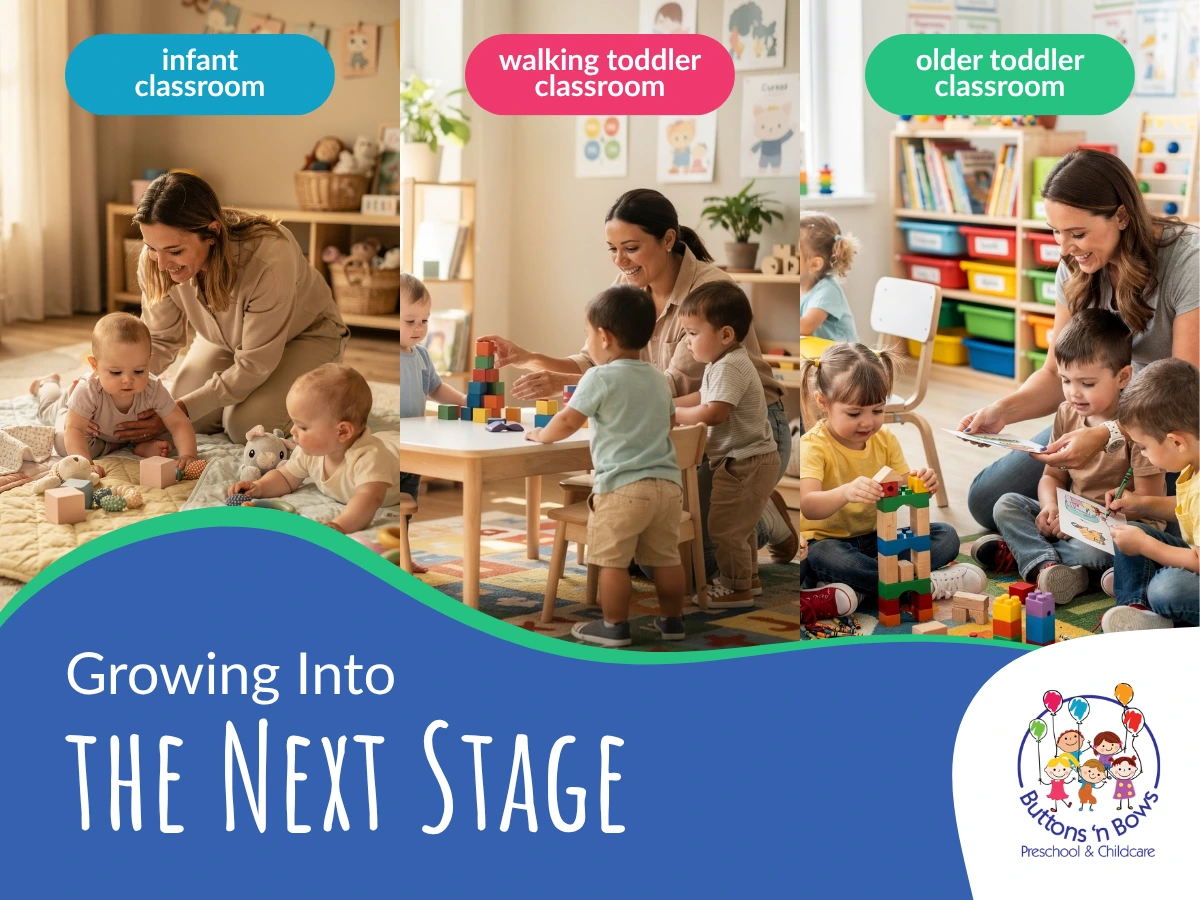
One of the most common transitions in early childhood happens when children move from one age group to the next. These age group changes in daycare may seem straightforward from an adult perspective, but for a young child, they can feel significant.
Consider the moment a child transitions from our Guppies infant program to the Jellyfish class for walking toddlers. Their whole world physically opens up. They go from safely observing their surroundings from a controlled spot to actively navigating a room on two feet. This single physical milestone changes everything about how they learn.
The Shift to Unified Schedules
In an infant room, every child follows their own specific rhythm for eating and sleeping. Once they move to a toddler environment, the structure changes. The class begins to eat meals together at small tables. They transition to a unified nap schedule. Age-group changes in daycare facilities require a thoughtful, gradual approach so that children do not feel overwhelmed by the new expectations.
We begin this process by observing the child’s natural schedule in the infant room. If they are already consolidating their naps and showing interest in sitting upright for snacks, we know they are physically preparing for the toddler routine.
Expanding Social Dynamics
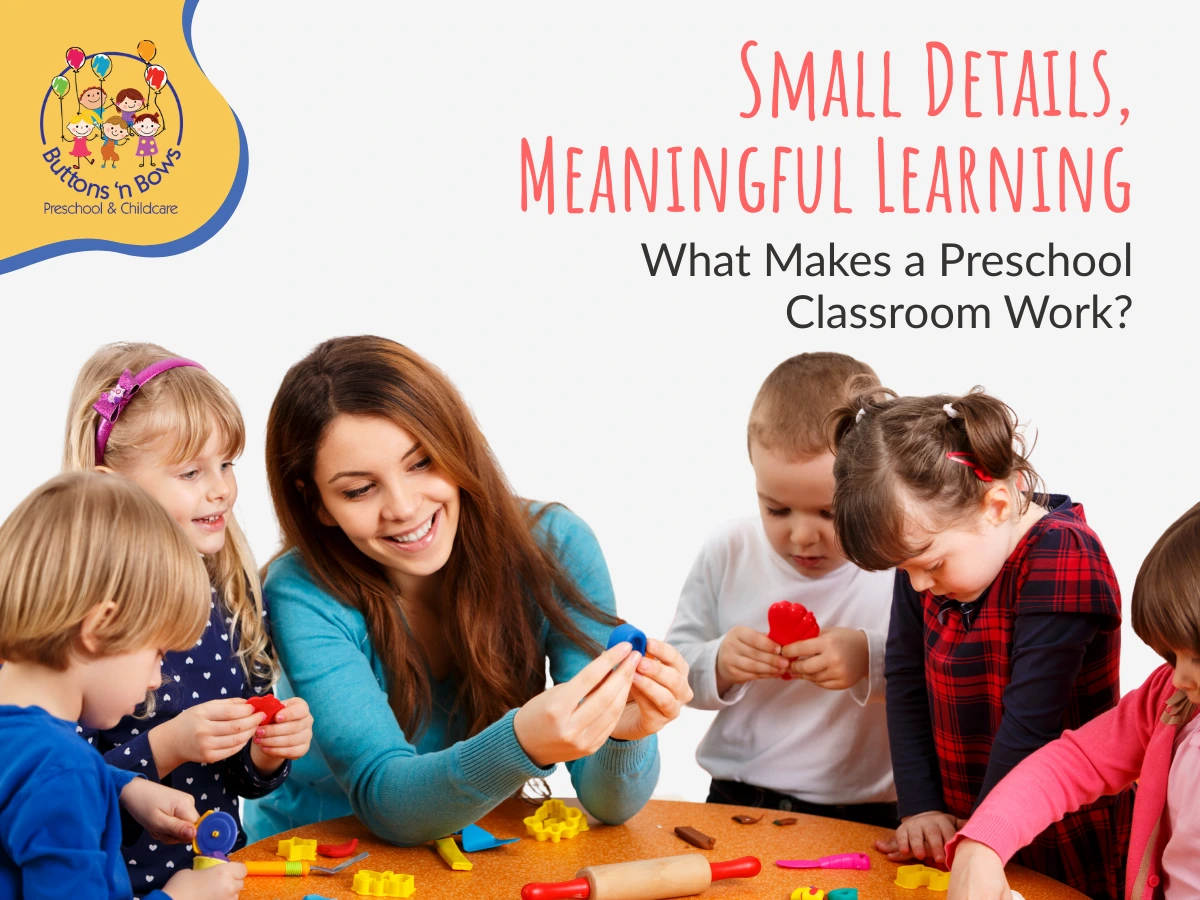
As children move into our Seals & Otters rooms for older toddlers, the social dynamics shift dramatically. They move away from parallel play, where they simply play next to another child, to interactive play. They have to learn how to share materials, wait for a turn, and communicate their frustrations.
A sudden drop into a room with older, more verbal children can be intimidating. We mitigate this by organizing mixed-group play outdoors or in common areas before a formal transition occurs. The child naturally begins to recognize the older children and the new teachers during their daily routine.
Our Approach to Supporting Child Milestones
Every child reaches developmental markers on their own unique timeline. Some children show readiness for structured preschool activities very early, while others need a few extra months to master independent play and emotional regulation. We never force a transition based simply on a birth date.
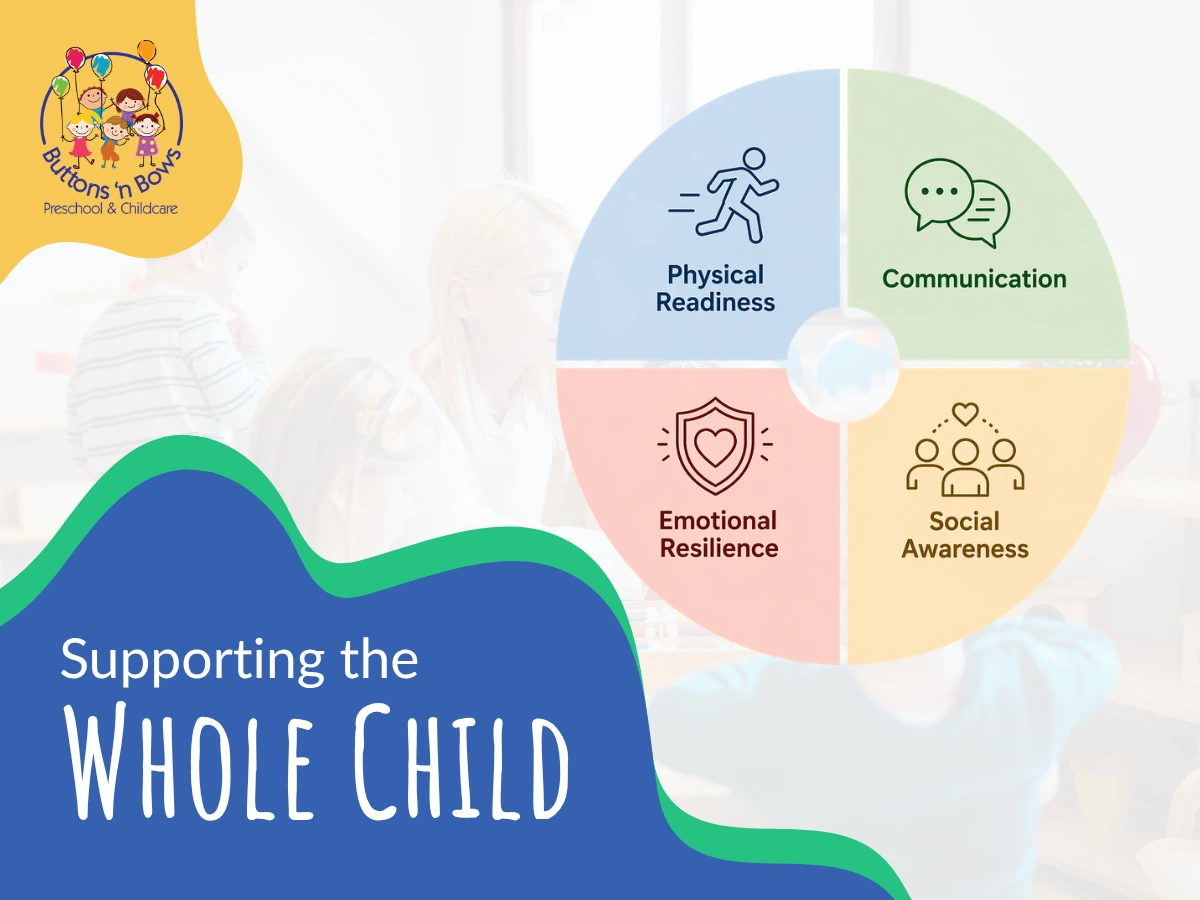
Supporting child milestones means looking at the whole picture of their development. We evaluate their physical readiness, social awareness, communication skills, and emotional resilience.
Recognizing the Real Signs of Readiness
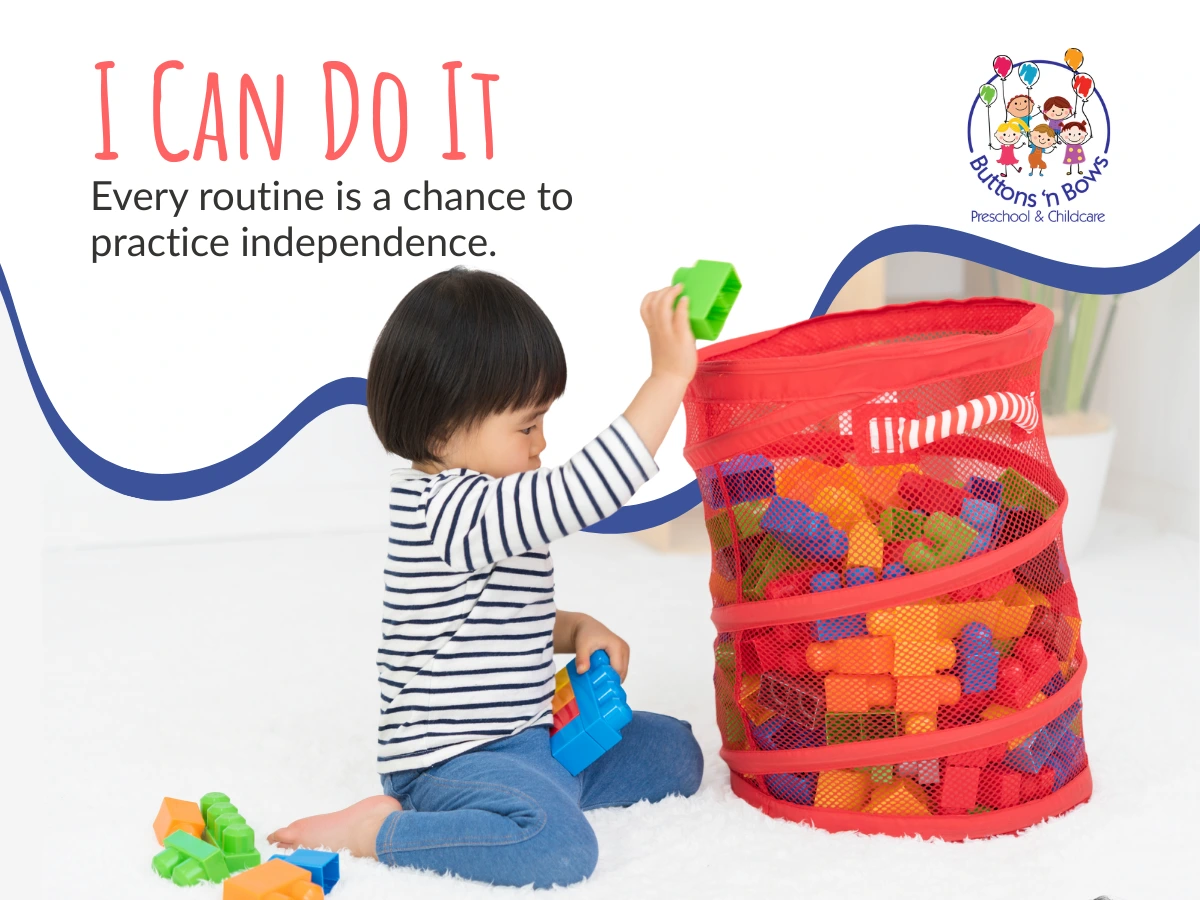
Our teachers are trained to watch for specific cues that indicate a child is ready for a more complex challenge. For example, when a toddler in the Jellyfish room starts showing intense interest in putting on their own shoes or attempting to pour their own water, they are signaling a desire for independence.
Cognitive milestones also indicate readiness. When a child begins sorting their toys by color without being prompted, or starts asking “why” questions about the weather or insects, they are demonstrating the critical thinking skills required for our preschool curriculum. We observe these small daily actions and use them to chart the best path forward for that specific child.
Collaborative Goal Setting with Parents
Open communication between teachers and parents ensures no milestone gets missed. We share daily observations about your child’s progress through our parent portal and face-to-face conversations.
If we notice they are mastering a new skill at school, we will discuss how you can encourage that same skill at home.
Perhaps your child has learned to use child-friendly scissors safely in class. We will let you know so you can set up a supervised cutting station with scrap paper at your kitchen table.
This partnership gives children a more consistent sense of support between home and school. When the home and the school share the same expectations, the child feels secure enough to take academic and social risks.
Proven Strategies for Adapting to New Classroom Environments
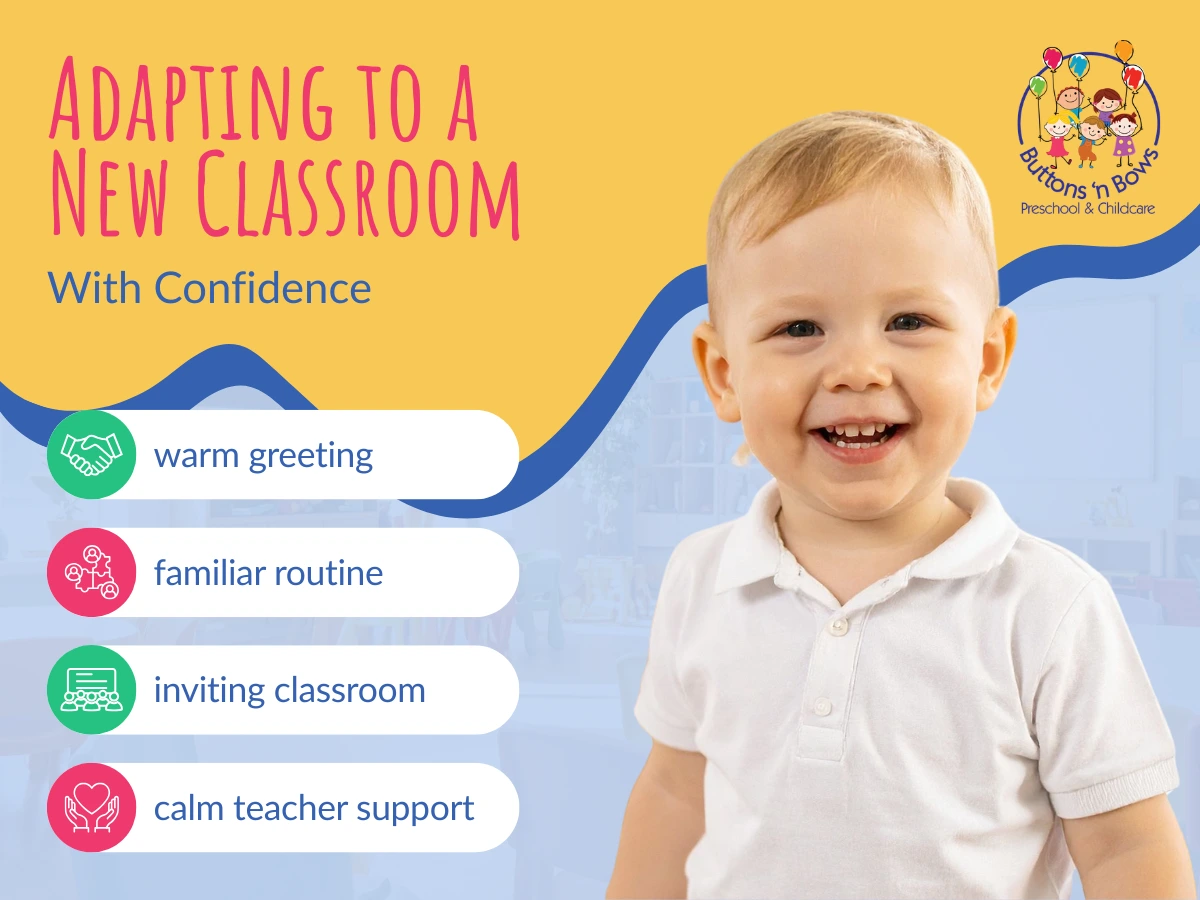
Adapting to new classroom environments requires a coordinated effort between teachers and families. We use specific strategies to build a bridge between the familiar old space and the exciting new one.
For many families, one of the biggest shifts comes with adapting to a new classroom routine, teacher, and set of expectations. Even when a child remains at the same school, a new classroom can still feel very different.
The schedule may change. Group activities may last longer. Children may have more opportunities for independence or more shared routines with classmates. The materials may feel unfamiliar.
That is why the classroom’s emotional tone matters so much.
Children settle more easily when the environment feels warm, steady, and welcoming. Remember, a supportive emotional climate is a key factor in helping your child adapt confidently during transitions.
Building the Bridge at Home
You can actively support this process in your own living room. Start talking about the new room several weeks before the move happens. Mention the new teacher by name frequently. Say things like, “I wonder what books Miss Sarah will read to you next week,” or “You are getting so tall, you get to play on the big climbing structure soon.”
During the transition weeks, keep your home routine entirely predictable. If your child is dealing with changes at school, they need their home life to remain a stable anchor. Stick strictly to your regular dinner times and bedtime rituals. Avoid introducing other major changes, like a new bed or potty training, during the same month they change classrooms. A well-rested child has far more emotional bandwidth to handle new social dynamics.
Addressing Common Transition Anxieties
Even with the best preparation, transitions can cause temporary stress. It is completely normal for a child to show signs of anxiety when their routine changes. Understanding what this stress looks like helps you respond with patience and effective support.
Normalizing Temporary Regressions
When children use all their mental energy to adapt to a new classroom, they sometimes lose ground in other areas. You might notice your fully potty-trained child suddenly having accidents. They might start waking up in the middle of the night again. They might become unusually clingy during drop-off or throw tantrums over minor issues, such as the color of their breakfast bowl.
These regressions are entirely normal. To help your child adjust, stay calm and maintain routines while offering extra affection. Most regressions resolve within two to three weeks as children adapt to their new school routine. Consistency and reassurance are essential during this period.
Partnering Through the Tough Mornings
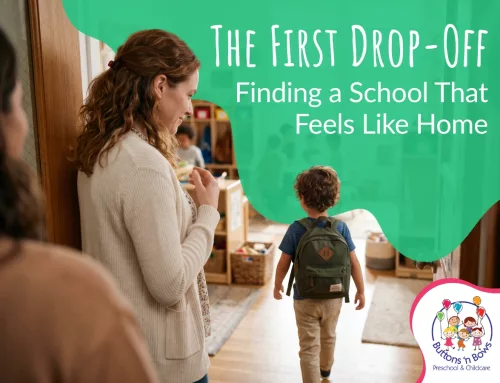
Morning drop-offs can become suddenly difficult during a room change. A child who happily walked into school last month might suddenly cling to your leg and cry.
When this happens, the best approach is the confident, swift goodbye. Kneel down to their level, tell them exactly when you will return (“I will pick you up after afternoon snack”), give them a firm hug, and hand them to the teacher. Prolonging the goodbye usually escalates the child’s anxiety. In almost all cases, the tears stop within a few minutes of the parent leaving the building, and the child quickly engages with an activity.
Growing Through Each New Stage at Buttons ’n Bows
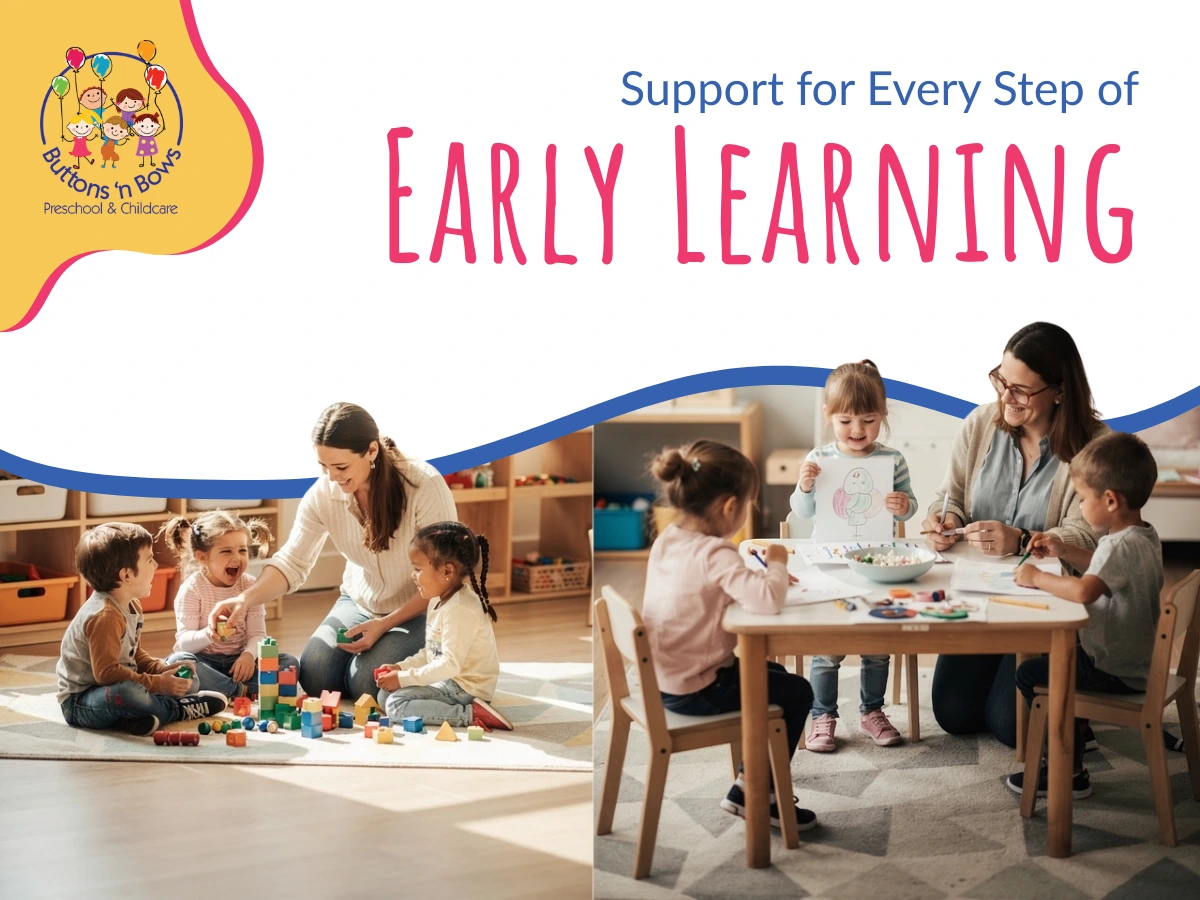
At Buttons ’n Bows, we believe children deserve support that matches both who they are now and who they are becoming. Every new stage brings fresh opportunities for learning, but it also brings emotional changes that deserve care and attention.
Whether your child is moving into a new age group, getting comfortable with a new routine, or preparing for the next classroom experience, our goal is to make that process feel thoughtful, steady, and developmentally appropriate. We want children to feel secure enough to explore, connected enough to trust, and confident enough to keep growing.
We also want parents to feel supported through those changes. Transitions can bring a mix of pride, hope, and uncertainty for families, too. A warm, communicative school community can make those moments feel easier for everyone involved.
If you are looking for an early learning environment that values both growth and gentleness, Buttons ’n Bows would love to welcome your family. Contact us to schedule a tour at our Holladay or Cottonwood Heights location and learn more about how we support children through each stage of early learning.