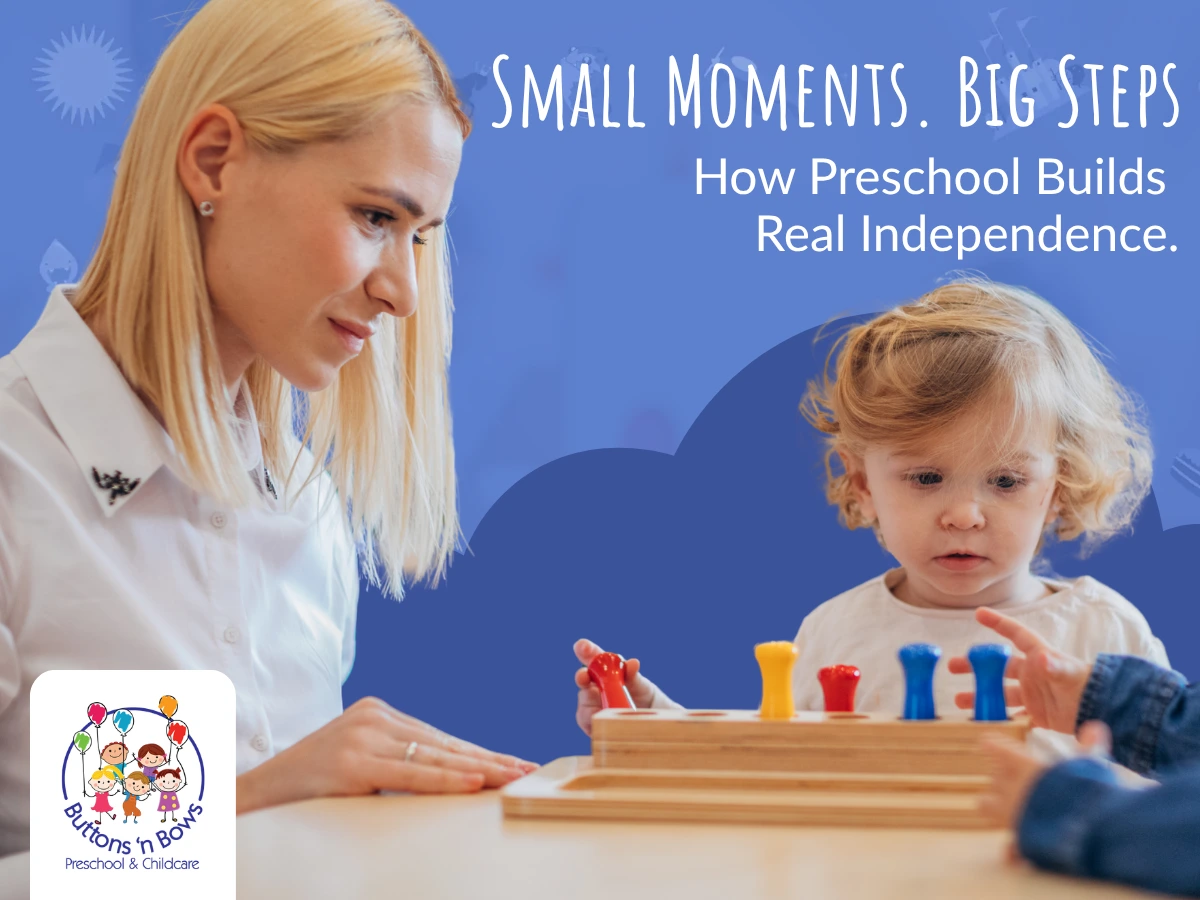
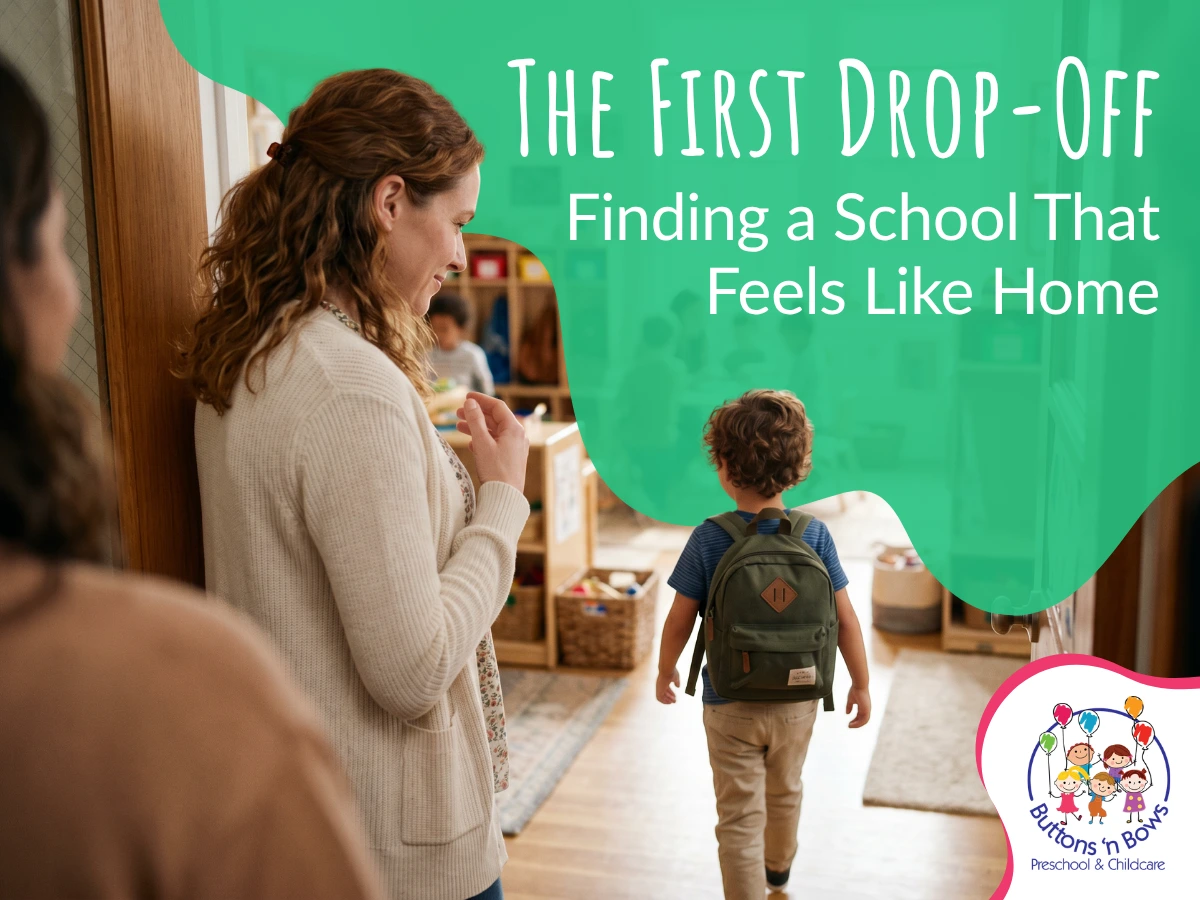
Play-based learning curiosity often begins in the smallest moments of childhood. A child stacks blocks higher to see what happens. Another mixes colors at the art table and pauses when something new appears. A question arises during outdoor play, turning a simple moment into a chance to observe, wonder, and learn.
At Buttons ’n Bows, we value those moments. They are not separate from learning, but an essential part of it. For over 40 years, we have created classrooms where children learn in active, engaging, and age-appropriate ways.
For many parents, one question sits underneath all of this: Will a play-based environment truly prepare my child for what comes next? We believe it will, because children gain far more than enjoyment from this approach. Through play-based learning, children build confidence, independence, communication skills, resilience, and early problem-solving abilities. Just as importantly, they begin to see learning as something inviting rather than intimidating. Developing these abilities in preschool supports academic success later, as children enter kindergarten ready to learn and approach challenges enthusiastically.
Fostering Child Curiosity Through Meaningful Daily Experiences
Young children do not need to be taught how to be curious. Curiosity is already there. They notice details adults might miss. They repeat actions to see if the same thing happens again. They ask unexpected questions. They make connections in ways that can surprise us.
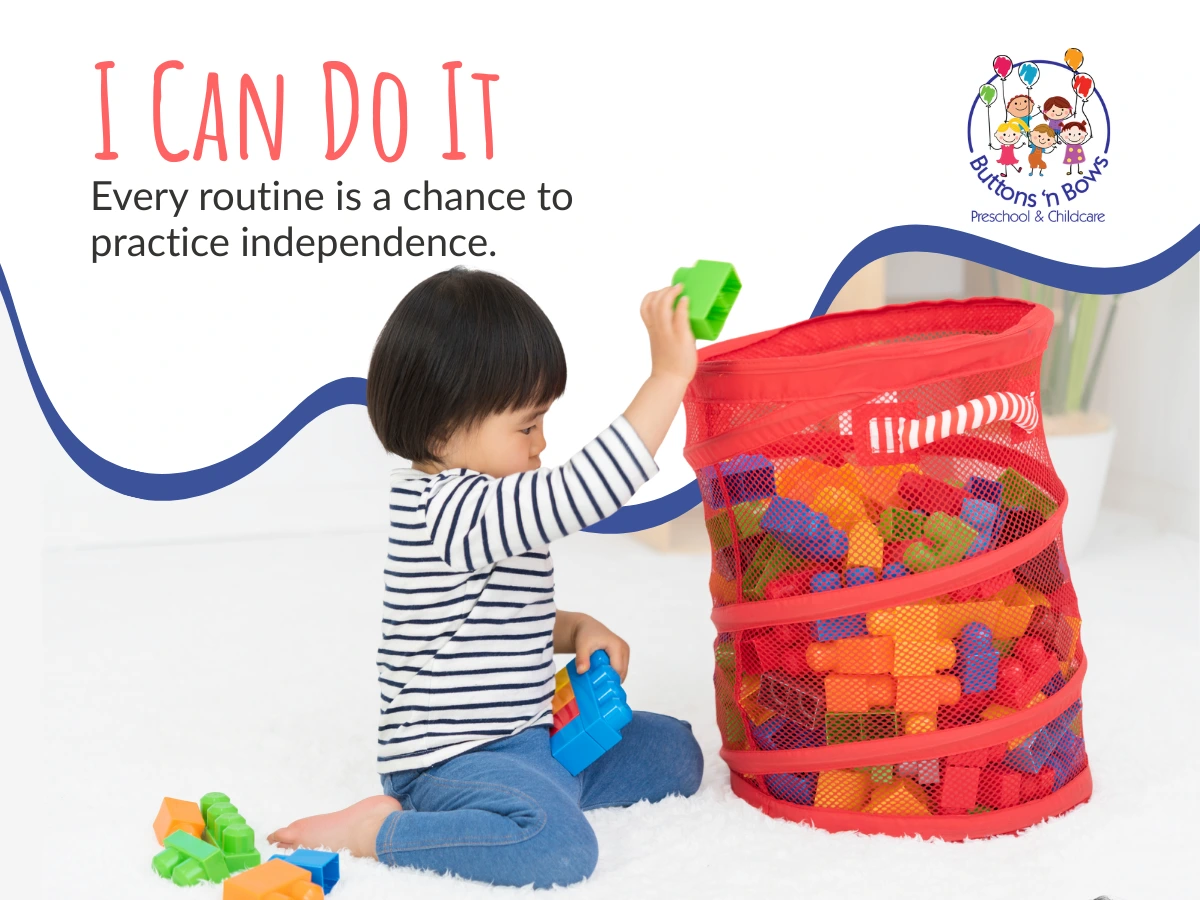
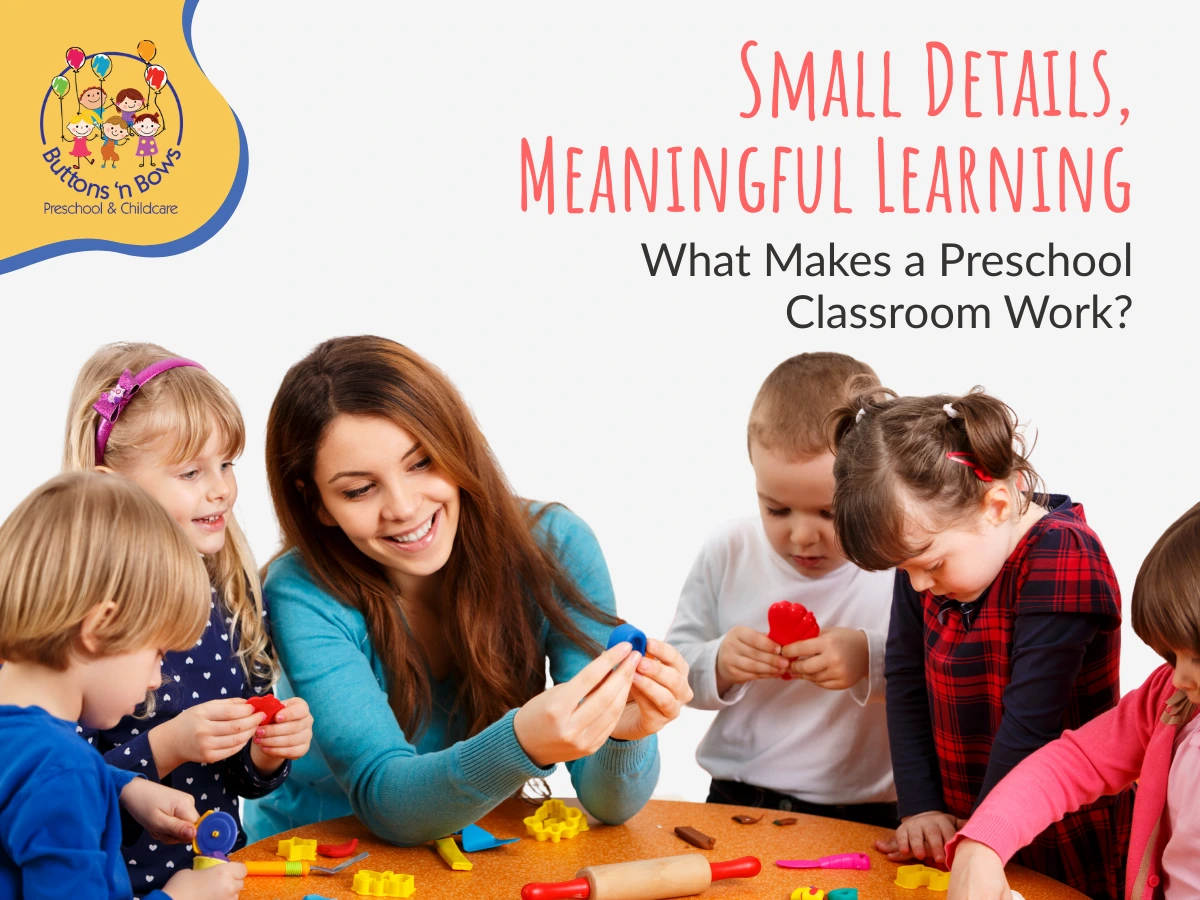
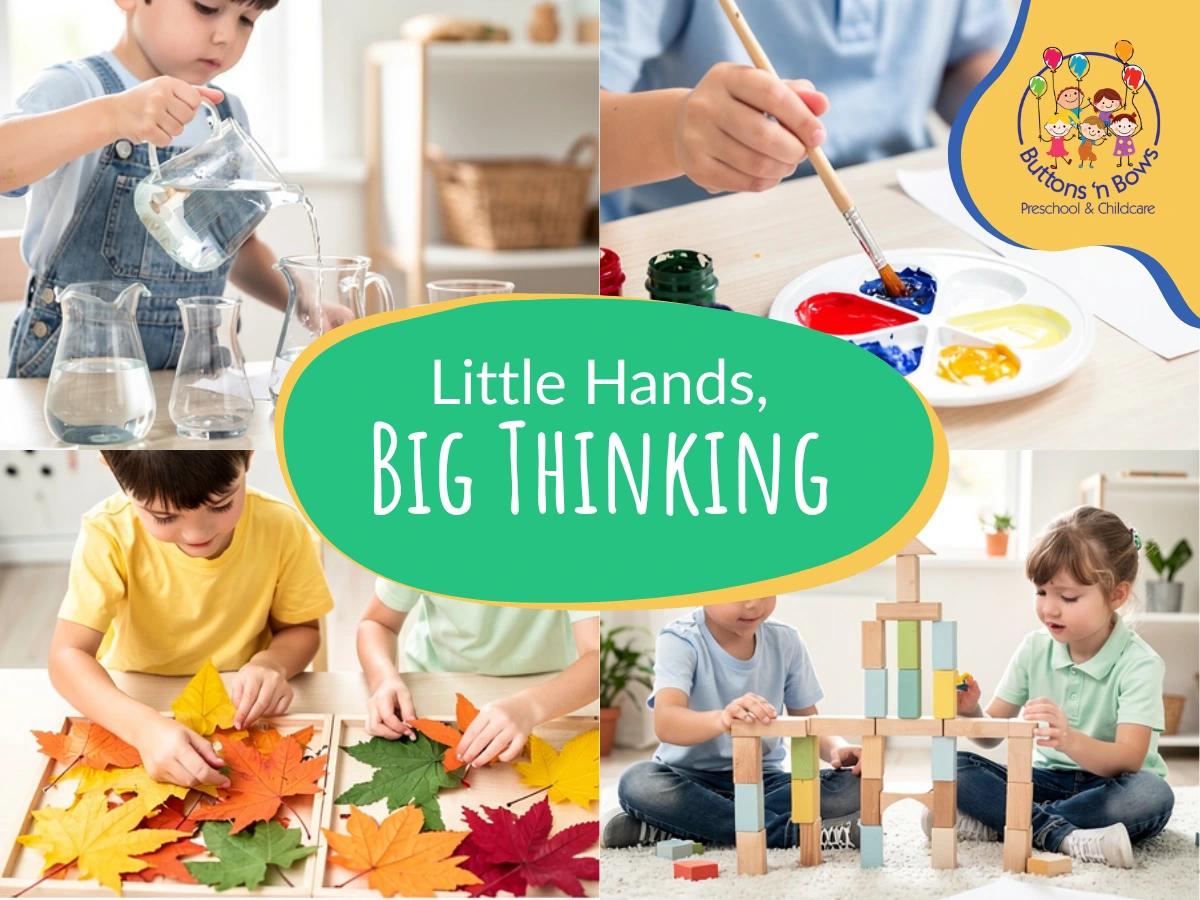
What children need is an environment that protects that instinct and gives it room to grow. That starts with time, space, and thoughtful guidance. When children are allowed to stay with an activity long enough to explore it fully, their thinking deepens. A child pouring water from one container to another is doing more than staying busy. A child sorting leaves by size, pressing clay between their hands, or testing how to balance blocks is doing more than playing. These are early experiences in observing, comparing, experimenting, and making sense of the world.
At Buttons ’n Bows, those everyday moments matter. Our classrooms build learning through hands-on experiences because children learn best when they participate. Instead of memorizing, they notice, try, adjust, and try again. This creates stronger engagement and confidence.
Emotional security plays an important role here as well. Children are more willing to explore when they feel safe, known, and supported by the adults around them. In a nurturing classroom, they learn that effort matters, questions are welcome, and mistakes are part of learning. That reassurance can change how a child approaches new experiences, not only in preschool, but for years to come.
Parents often see the results of this at home. Children begin asking more thoughtful questions. They want to explain what they noticed, recreate an activity they enjoyed, or show what they discovered. Those moments are worth paying attention to because they are signs that learning feels meaningful.
What a Discovery Learning Preschool Looks Like in Practice
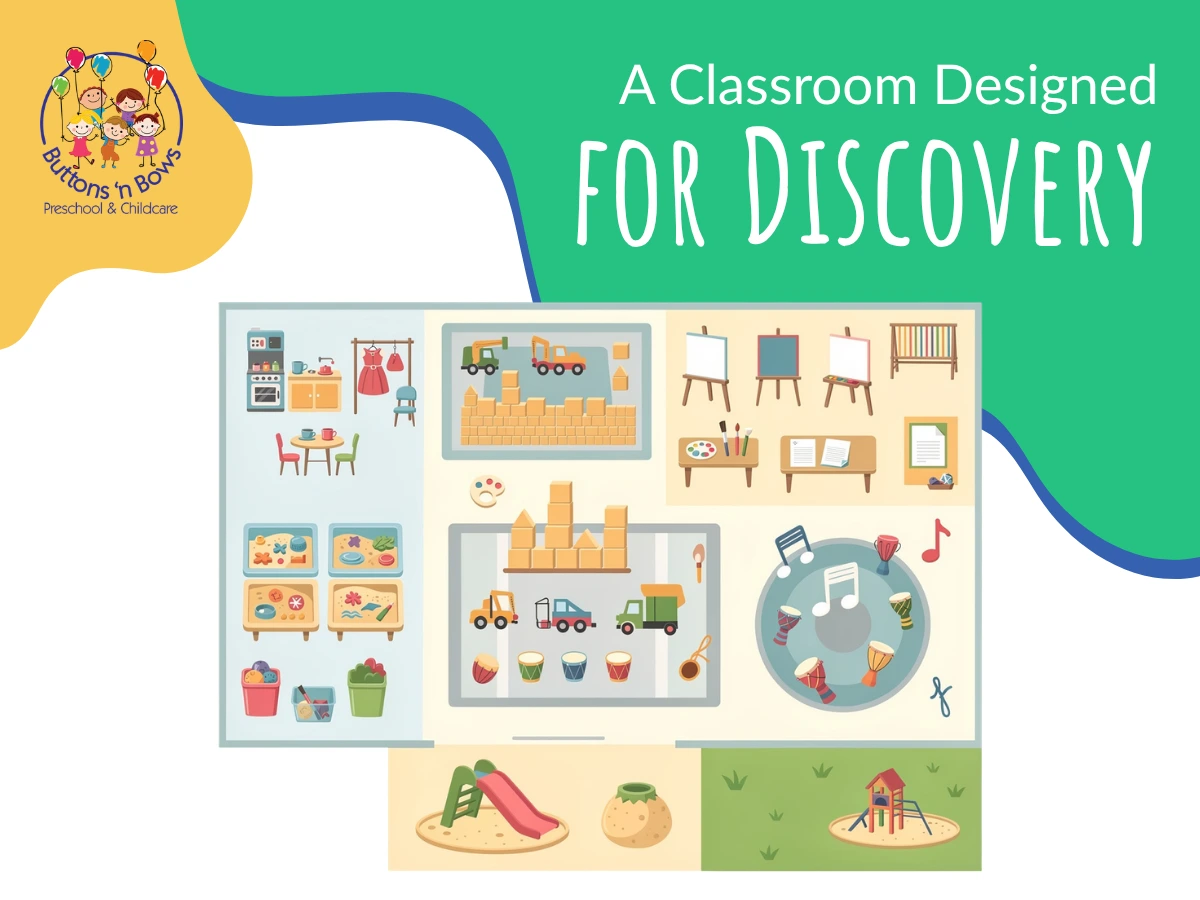
A strong discovery learning preschool like Buttons ’n Bows does not leave learning to chance. It feels natural and joyful, but relies on a carefully prepared environment.
Our classrooms are designed to encourage exploration while still providing the consistency and structure young children need. Teachers arrange materials with purpose, set up learning areas that invite participation, and guide children in ways that support both confidence and growth. The experience feels warm, engaging, and intentional. That balance is one reason so many families look for more than a simple daycare setting. They want an environment where their child is cared for and genuinely learning at the same time.
Dramatic play is one example. To a child, it’s pretending to run a grocery store or care for a baby. In reality, they develop vocabulary, explore math, build social awareness, and learn to share ideas with others. The same is true for sensory play, art, building activities, music, and outdoor play.
This is the strength of play-based learning. Children stay engaged because the experience matters. They don’t just receive information; they use, respond to, and understand it in real ways.
We also know variety matters. Children do not all learn, express themselves, or show their thinking in the same way. Some children are most expressive during pretend play. Some become deeply focused when building or drawing. Some process through movement, conversation, or observation. A strong preschool environment makes room for those differences while continuing to guide each child forward. Buttons ’n Bows supports that kind of learning with enriching experiences such as music classes, Spanish lessons, yoga, puppet shows, field trips, and other hands-on opportunities that broaden children’s early experiences.
For parents, this is reassuring. Children don’t need to fit one mold to thrive. Some eagerly try new things while others take their time. Both flourish in an environment that respects development and encourages growth.
How Inquiry-Based Learning Early Childhood Programs Encourage Deeper Thinking
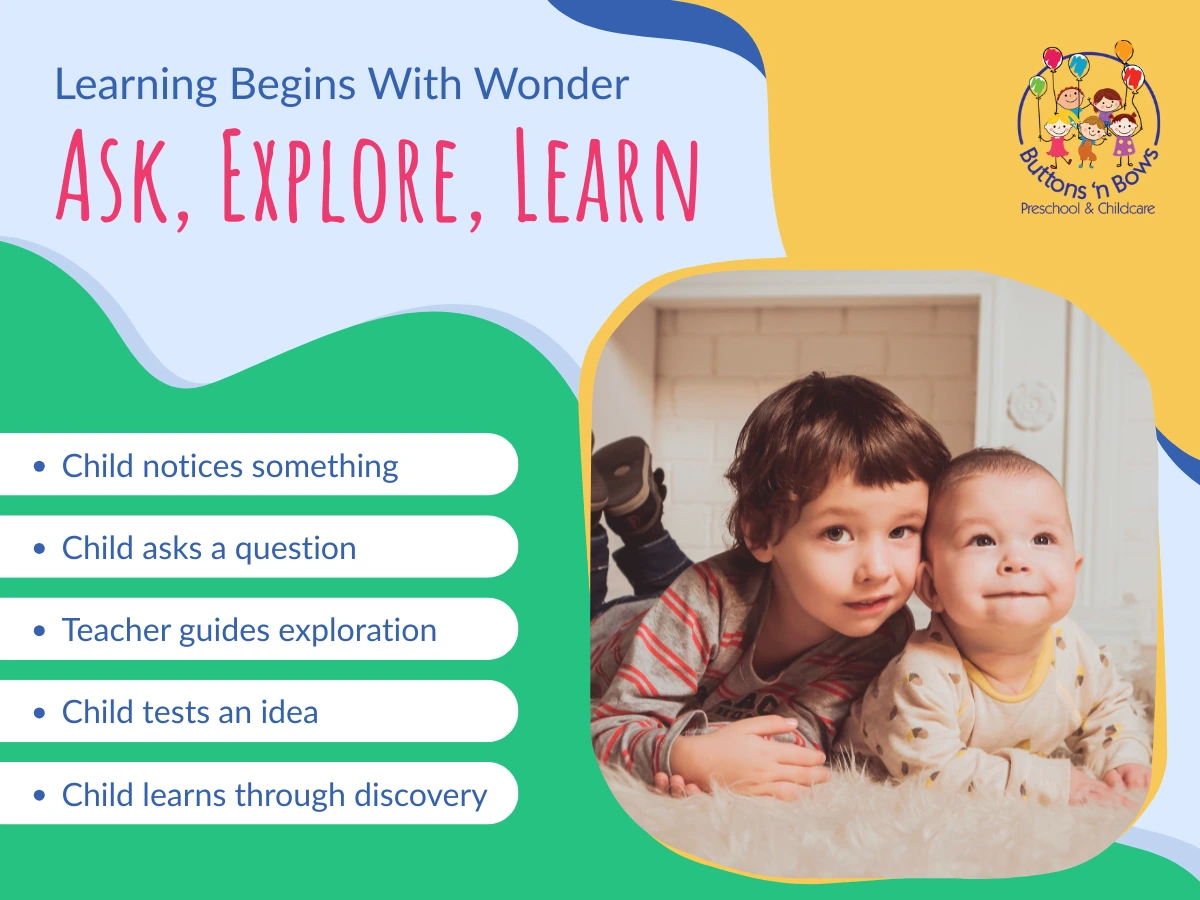
Inquiry-based learning in early childhood practices builds on something children do naturally: they notice, they wonder, and they want to understand more.
Sometimes that begins with a question spoken out loud. A child asks why ice melts, why one object floats while another sinks, or why the moon looks different at night. Other times, the question shows up through action. A child keeps adjusting a structure to make it balance. Another repeats an activity because they are still trying to understand what changes the result.
In these moments, the goal is not to rush in with the fastest answer. It is to guide children through the process of exploring. A teacher may ask what the child thinks, encourage closer observation, or offer materials that help them compare and test ideas. That process supports more than knowledge. It strengthens attention, language, patience, and confidence.
Children begin to learn that answers can be discovered. They learn that observation matters, that ideas can be tested, and that understanding often grows through small steps. These early habits shape how children approach learning later. A child who is used to wondering, exploring, and thinking things through is often more willing to stay with a challenge and less intimidated by something unfamiliar.
Inquiry also builds communication. Children learn to describe what they see, explain their thinking, listen to others’ ideas, and revise their understanding as they encounter new information. These school-readiness skills also build independence.
Families often notice this in simple, practical ways. Children may start asking more questions during everyday routines. They may want to help measure ingredients while cooking, compare objects, sort items, or explain how they think something works. When that happens, it is a sign that curiosity is carrying over into daily life, which is exactly what early learning should do.
Why Play-Based Learning Builds Real Readiness
One of the biggest misconceptions in early childhood education is the idea that play and preparation are somehow separate. In reality, thoughtful play-based learning helps children build many of the exact skills they need for future success.
Children develop early literacy, math, language, and social-emotional skills through experiences that keep them involved. They practice listening, taking turns, communicating their needs, solving problems, and managing frustration. They learn how to work within a classroom community, try something new, and keep going when something feels challenging. Those are not extras. They are part of real readiness.
Kindergarten readiness is about more than reciting information. It also includes confidence, flexibility, emotional regulation, and the ability to participate in a group. Children need to feel comfortable asking for help, interacting with peers, following routines, and staying engaged even when the work is not easy. A nurturing, play-based classroom provides opportunities for them to build those abilities naturally each day.
For families, that balance matters. You want your child to build a strong academic foundation while also enjoying learning, feeling secure, and developing confidence in who they are. When those pieces come together, children are often better prepared not only for school, but for the relationships and responsibilities that come with it.
Growing Curious, Confident Learners at Buttons ’n Bows
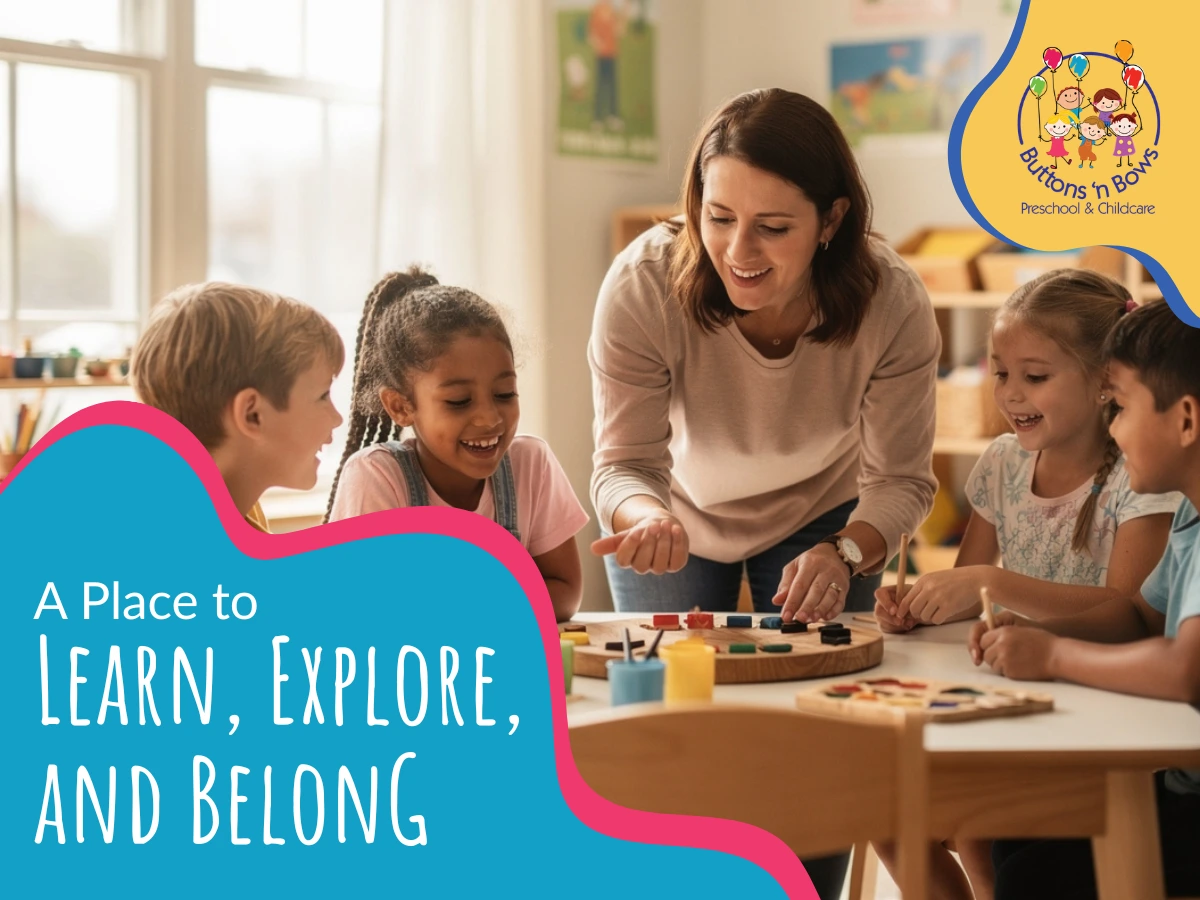
At Buttons ’n Bows, we want children to experience learning as something engaging, joyful, and meaningful. We want them to ask questions, make discoveries, build friendships, and feel proud of what they can do. That is why our programs are designed to support the whole child through educational play, hands-on learning, qualified teachers, and environments that encourage and care for children. Families can explore that experience at either our Holladay location, known for its cozy, home-like atmosphere, or our Cottonwood Heights location, where children learn through creativity, connection, and hands-on discovery.
If you are looking for a preschool where your child can grow through hands-on experiences, develop a love of discovery, and feel supported every step of the way, we would love to welcome your family to Buttons ’n Bows.
Contact us today to schedule a tour at our Holladay or Cottonwood Heights location.