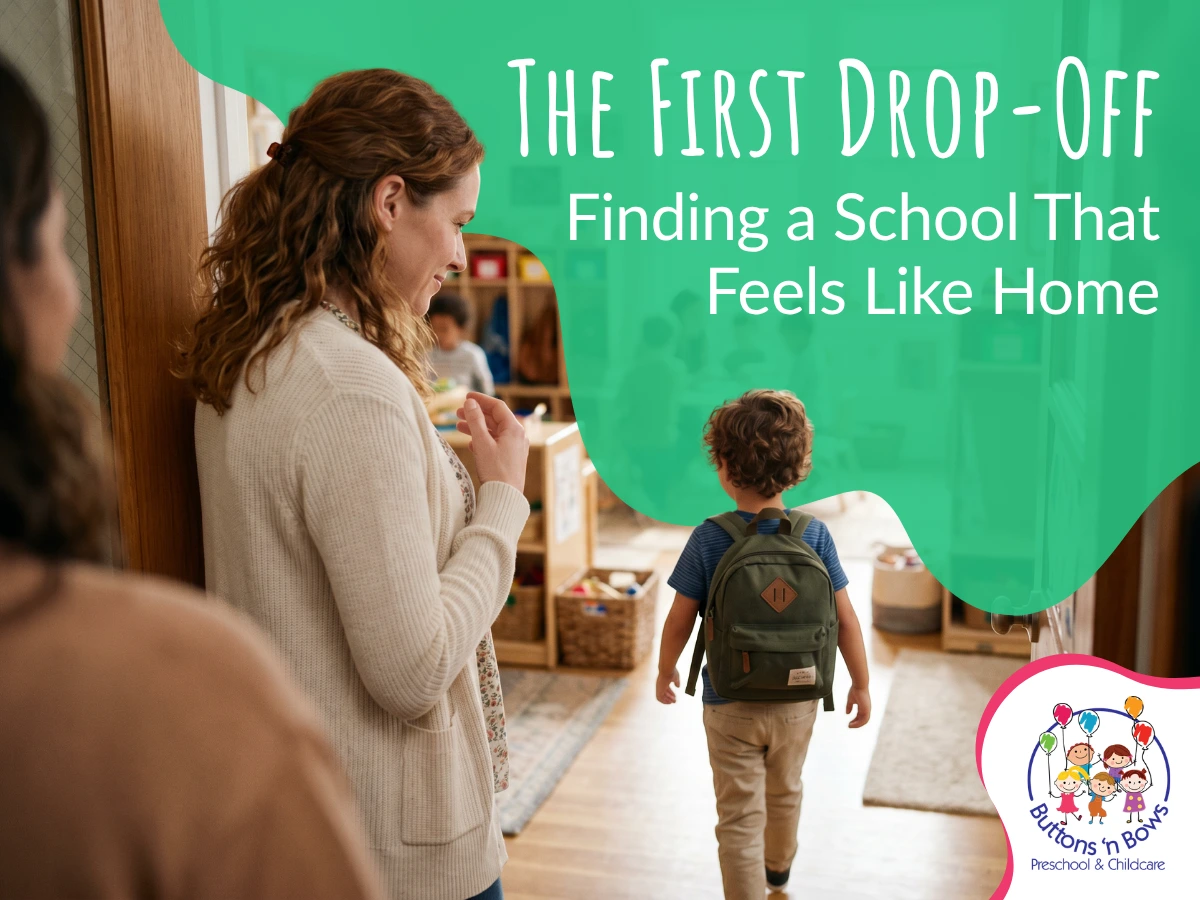
You can picture the morning already. Your little one walks through the door with their backpack, and you stand there feeling proud, hopeful, and just a little bit teary all at once. Choosing your child's first school is one of the biggest decisions you will make as a parent, and learning how to know a preschool is the right fit can ease so much of that worry before you even step inside.
Finding the perfect early childhood environment shouldn't feel like guesswork. For families navigating early education across the Salt Lake Valley, the right environment isn't just about a flashy building or a massive list of activities. It is about a place where your child feels safe enough to explore, loved enough to take risks, and known enough to grow.
By looking for seven meaningful indicators when you visit a local center, you can trust your heart and your eyes to choose a school that truly fits your family.
Sign One: The Space Feels Like a Second Home
Children learn best when they feel comfortable, and comfort starts with the environment around them. One of the strongest indicators of preschool fit is whether the space feels warm and inviting rather than cold and overwhelming.
Look for cozy corners, soft lighting, and a layout that invites little hands to touch and discover. Notice whether books are within reach, whether there are soft spaces to settle into, and whether the classroom is organized in a way that gives children some independence to choose what they explore.
A homey setting helps ease separation anxiety because the transition from your living room to the classroom feels gentle rather than jarring. When a school feels like a second home, your child settles in faster and shows up ready to play and learn.
Pay attention to how the space smells and sounds, too. A calm, unhurried atmosphere with natural light and manageable noise levels tells you a lot about how the daily rhythm is managed. Children are deeply sensitive to their environment, and a space that was thoughtfully designed for little people communicates care before a single word is spoken.
Sign Two: Teachers Connect With Children Warmly
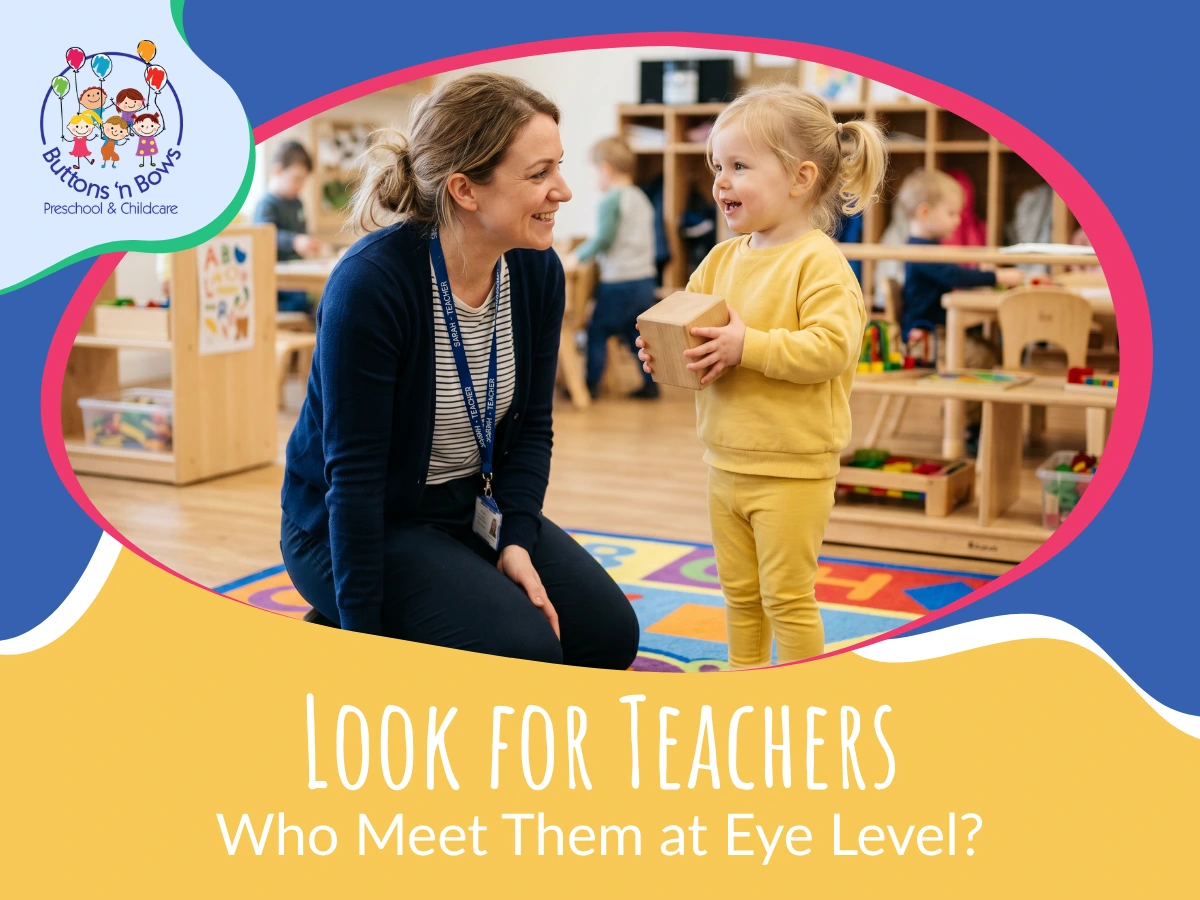
Watch how the teachers talk to the children. Do they kneel down to eye level, listen carefully, and respond with patience and genuine interest? Warm teacher-child interactions are the heartbeat of a strong program.
You want to see adults who act as gentle guides and facilitators of play, not just supervisors managing a group. A teacher who notices that one child needs a moment of quiet and another needs a little extra encouragement is practicing what early childhood educators call Developmentally Appropriate Practice. This approach recognizes that children at the same age can be at very different places socially, emotionally, and cognitively, and it treats each child accordingly.
These relationships also shape your child's relationship with learning itself. When a child feels seen and respected by their teacher, they become more willing to try new things, ask questions, and push through frustration. That inner confidence is one of the most valuable things a preschool can give your child, and it starts with the quality of the people in the room.
Sign Three: The Art on the Walls Looks Wonderfully Different
Here is a simple test that tells you a lot. Walk past the art display and ask yourself whether every project looks identical or whether each one is gloriously unique.
Process-based art, where children choose their own colors, shapes, and ideas, shows that a school values creativity and individual expression. When twenty paintings look exactly the same, it often means the focus was on following directions rather than exploring. Unique, joyful, slightly messy art is a beautiful sign that children are encouraged to think for themselves.
This matters beyond art class. A school that values process over product is one that understands how young children actually learn. They need to experiment, make mistakes, try again, and feel proud of what they created on their own terms. When creative thinking is honored at the easel, it tends to show up everywhere else in the curriculum too.
Quick Preschool Tour Checklist: Structural Signs vs. Red Flags
Use this quick reference matrix during your preschool classroom evaluation to see exactly how a center prioritizes child development:
| Look For (Healthy Fit Indicators) | Avoid (Potential Red Flags) |
| Gloriously unique, open-ended process art displayed at child eye level. | Uniform, copy-pasted crafts where every child's looks identical. |
| Teachers kneeling down to interact, actively listening at the child's level. | Instructors standing over children or calling out directives from afar. |
| Dedicated quiet spaces, plush pillows, and cozy library corners. | Institutional, rigid rows of desks with zero soft spaces to decompress. |
| Play-based, hands-on sensory counters, block areas, and math manipulatives. | Heavy reliance on rigid paper worksheets and daily flashcard drills. |
Sign Four: A Deep Focus on Preschool Social Development
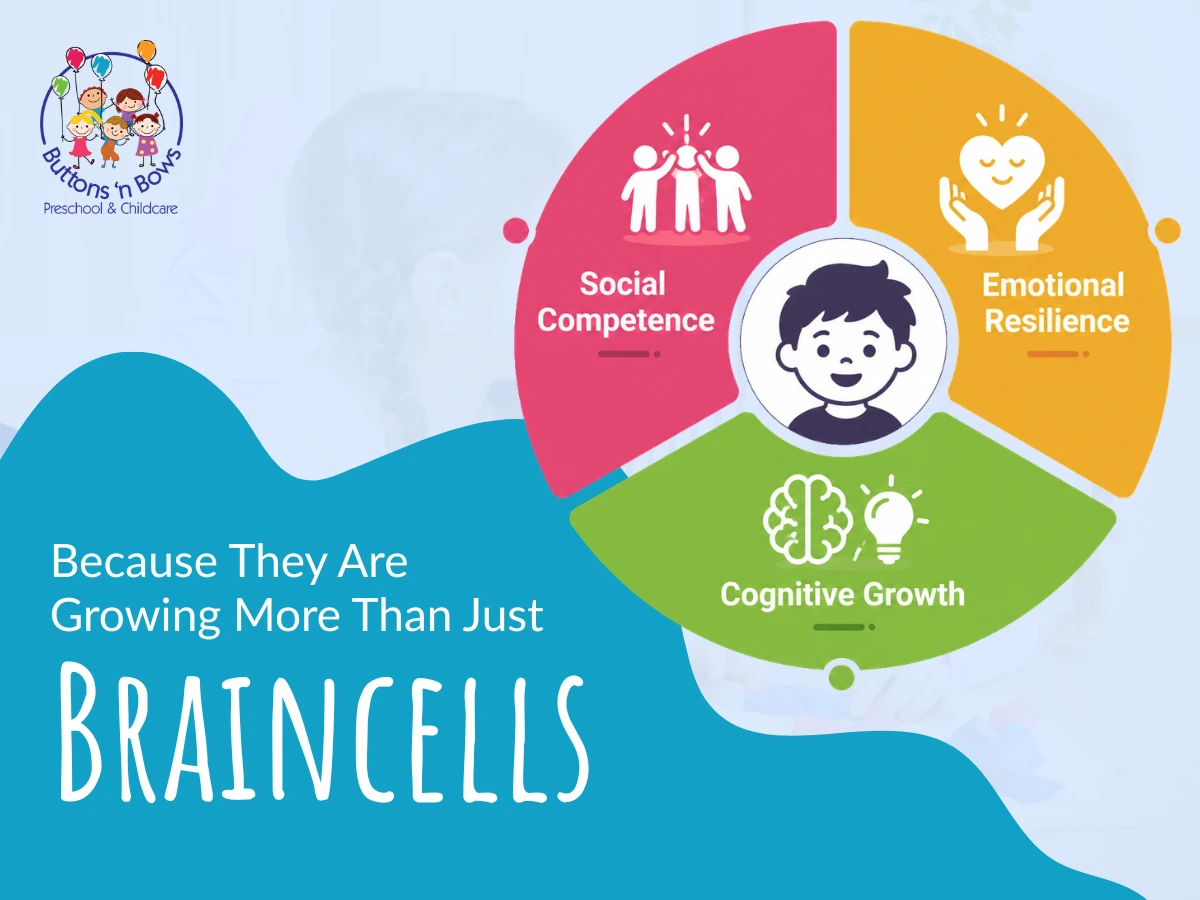
A great preschool cares about far more than letters and numbers. It supports the whole child, integrating social, emotional, and cognitive growth together rather than treating them as isolated subjects.
When you are assessing a center, ask how the school intentionally fosters preschool social development. These early emotional milestones, such as learning to share, managing big feelings, and building initial friendships, are not soft extras. Research in early childhood development consistently shows that children who develop strong emotional regulation and social awareness in their early years are better prepared for academic learning and positive peer relationships later in life.
Ask a teacher what they do when two children have a conflict over a toy. The answer will tell you a great deal. A strong program will use those moments as teaching opportunities rather than simply removing the problem. You want to hear about language modeling, empathy coaching, and patient guidance rather than quick corrections and timeouts.
Sign Five: Learning Happens Through Play and Discovery
Young children are wired to learn by doing. Hands-on discovery, such as building, sorting, pretending, and exploring, is how concepts truly stick at this age.
Educational play is not the opposite of learning. It is learning, dressed up in joy. A child who builds a tower and watches it fall is learning about gravity, balance, and cause and effect. A child playing house is practicing language, negotiation, and creative thinking all at once.
Look for thematic learning that ties activities together around a shared idea each month, giving children rich context and plenty of room to wonder. When you observe a classroom, ask yourself whether children look deeply engaged or whether they look bored and managed. Children who are genuinely absorbed in their play are building focus, persistence, and curiosity, skills that matter enormously when kindergarten arrives.
Sign Six: A Proven Kindergarten Readiness Program Baseline
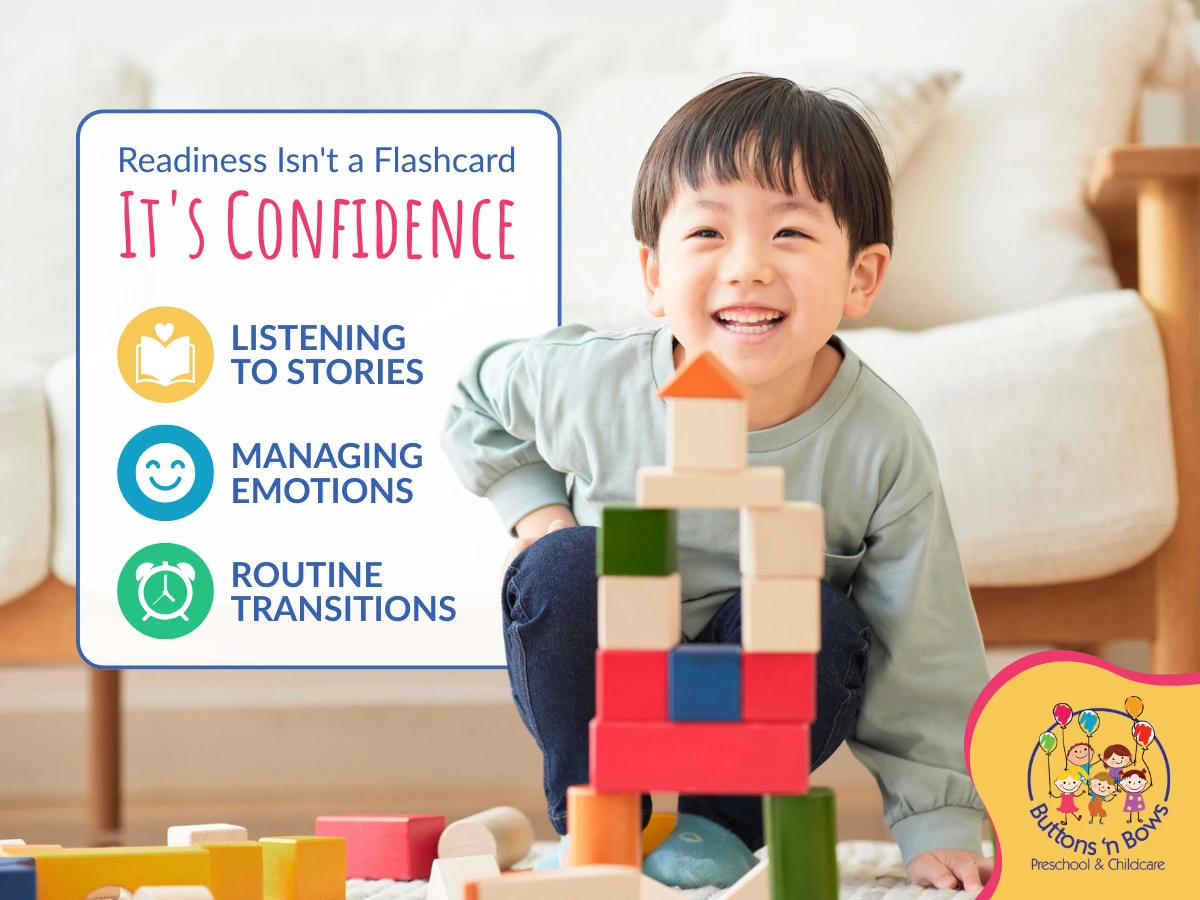
Many parents quietly worry when their three- or four-year-old is not yet naming every letter or counting past twenty. A wonderful preschool meets that worry with reassurance, perspective, and a deep understanding of developmental milestones.
A quality kindergarten readiness program honors each child's individual pace and understands that social readiness matters just as much as early academics. What you want to hear from administrators is not a rigid, stressful checklist of skills your child must master by a certain month, but rather a thoughtful explanation of how growth unfolds differently for every child.
Be cautious of programs that push rigorous letter drills and rote memorization on very young children. True kindergarten readiness means aligning early play with structured educational guidelines, such as the Utah Education Network (UEN) standards, ensuring children can follow routines, manage their emotions, listen to stories, and approach new challenges with curiosity rather than fear.
Sign Seven: Safety and Family Communication Are Strong
Safety is the foundation on which everything else rests. Look for a state-licensed program with staff certified in CPR and First Aid, and clear, consistent hygiene practices throughout the day.
Beyond the basics, observe the physical environment carefully. Are outdoor spaces fully enclosed and well-maintained? Are cleaning routines visible and regular? Are there clear procedures for drop-off, pick-up, and emergencies? These details matter, and a school that takes them seriously will be happy to walk you through every one of them.
Just as important is communication. A school that fits your family will keep you in the loop through regular updates, welcome your questions without making you feel like a bother, and treat you as a true partner in your child's day. When families and teachers are aligned and talking openly, children feel that stability on both ends, and it makes an enormous difference in how settled and confident they become.
💡 Parent Tour Tip: Don't just look at the classroom layout. Listen carefully to the room's acoustics. A healthy learning space has a gentle hum of busy conversation and collaborative play, not an uncomfortably rigid silence or chaotic, unmanaged yelling.
Why Buttons 'n Bows Offers the Ideal Preschool Learning Environment
By now, you can see that the right preschool is one that balances protective warmth with clear educational intention. That is exactly what we have strived for every single day for over forty years at Buttons 'n Bows.
Our school settings are intentionally built inside cozy, converted residential homes. This means the very moment your child walks through our door, the preschool learning environment already feels familiar, calm, and safe. There are no intimidating institutional hallways or overwhelming common areas, just cozy, child-sized spaces and a predictable rhythm to the day that children quickly learn to trust.
Our curriculum is organized around engaging monthly themes, featuring built-in music and Spanish lessons, that give children a rich, connected experience across every subject. Our teachers act as warm guides who nurture the whole child, utilizing UEN kindergarten guidelines to prepare your little one for elementary school without stripping away the joy of being little.
For families across Holladay and Salt Lake City who want more than a cold childcare factory, yet less than a high-pressure program pushing flashcards before children are ready, we offer the heartfelt middle ground.
Frequently Asked Questions
What are the most important signs that a preschool is the right fit for my child?
The most important signs include a warm and homelike environment, teachers who connect with children at their eye level, a curriculum that values play and hands-on learning, and a school culture that supports social and emotional growth alongside early academics. Trust what you observe during a visit. The natural feel of a school on an ordinary morning tells you more than any brochure can.
At what age should my child start preschool?
Most children start preschool between the ages of three and five. The right time depends on your child's individual readiness, including their ability to separate comfortably, follow simple directions, and engage with other children. A good preschool will work with you to understand your child's needs and help with the transition regardless of where they are starting from.
How do I know if a preschool's approach to learning is developmentally appropriate?
Look for a program where children spend meaningful time in play-based exploration rather than sitting at tables completing worksheets. Ask teachers how they handle milestones and whether they individualize their approach for each child. A developmentally appropriate program trusts the natural pace of early childhood and prioritizes curiosity, social skills, and emotional growth alongside early cognitive learning.
What questions should I ask during a preschool tour?
Ask about the daily schedule, how conflicts between children are handled, what the school does to support children who are shy or slow to warm up, how families are kept informed about their child's day, and what the staff turnover has looked like over the years. You can also ask to see examples of children's work and ask what a typical theme week looks like in practice.
How does preschool prepare children for kindergarten?
The most meaningful kindergarten preparation happens when children build confidence, curiosity, self-regulation, and social skills in a safe and nurturing environment. A strong preschool helps children learn how to listen, take turns, express their feelings in words, follow a routine, and approach new challenges without shutting down. These foundations matter far more in the early years than early mastery of letters and numbers.